


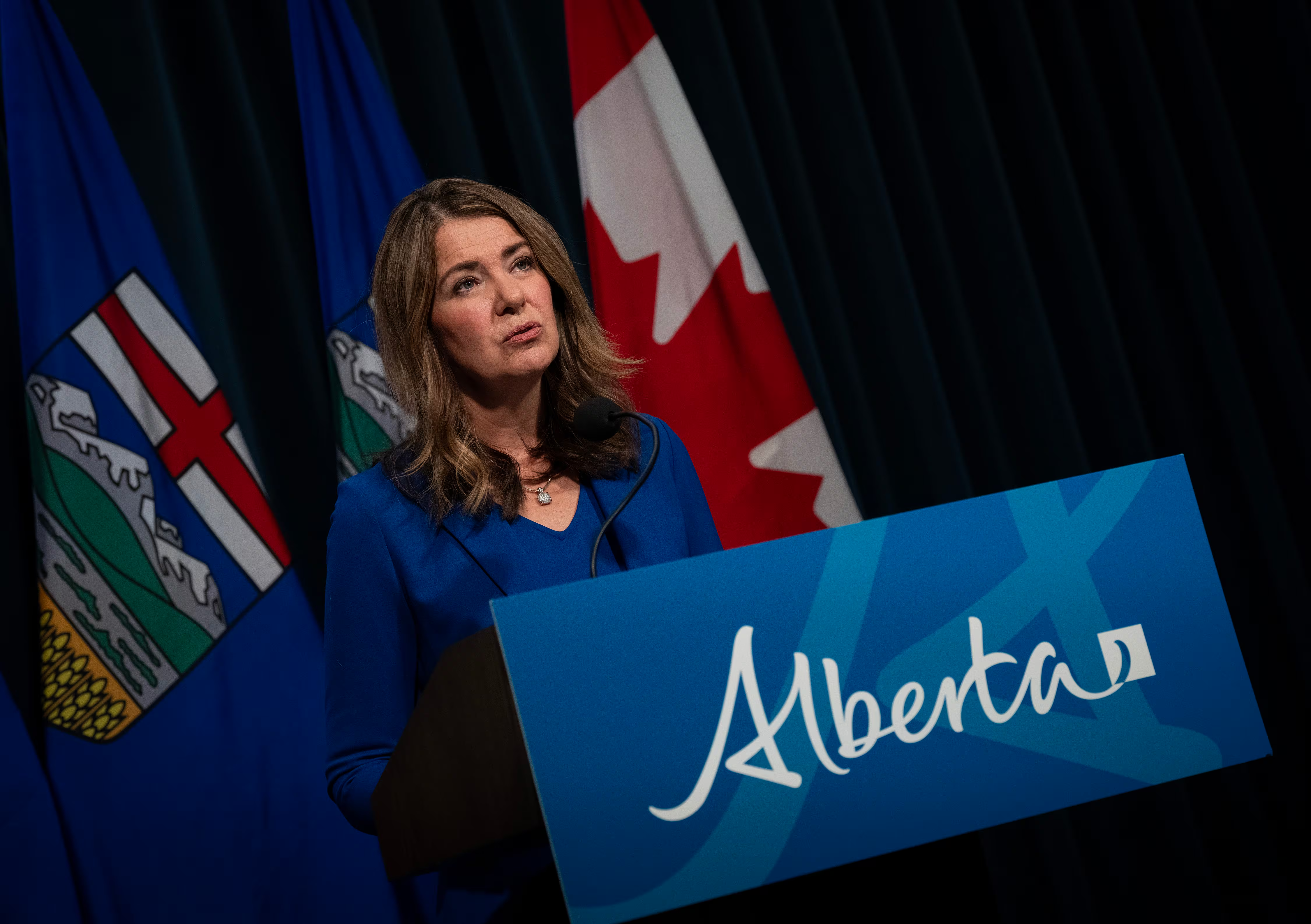
Alberta's government has formally launched a new electoral redistricting process, sidestepping an independent commission whose work the UCP rejected last week. The move has ignited sharp criticism from opposition lawmakers and democracy watchdogs who warn the unconventional path could compromise the integrity of Alberta's electoral boundaries ahead of the 2027 provincial election.
On Tuesday, United Conservative Party MLAs voted to establish a five-member legislative committee to oversee the boundary redraw. The government will appoint three members, while the Opposition NDP will select two. This new committee will then create a fresh independent panel tasked with proposing revised electoral boundaries later this year.
The controversial decision came after Alberta's Electoral Boundaries Commission delivered sharply divided recommendations in late March. The commission's majority—endorsed by Chair Dallas Miller, a provincial judge—proposed adding two urban seats to Edmonton and Calgary, where NDP support is concentrated. Two UCP-appointed members countered with an alternative map that would have merged urban and rural ridings, potentially diluting urban voting power.
Breaking Tradition
For decades, Alberta's boundary redistricting has operated with little public attention, happening every eight to 10 years as a collaborative, bipartisan process designed to shield electoral maps from political manipulation. This year's restart fundamentally departs from that tradition.
The new expedited process will bypass public hearings entirely—a stark contrast to the usual open-door approach. Critics worry the streamlined timeline and government-weighted committee structure could allow political considerations to override geographic and demographic realities.
Opposition in the Chamber
Alberta NDP Leader Naheed Nenshi spent roughly 30 minutes during Tuesday's debate laying out his party's objections. The chamber was nearly full—with only Premier Danielle Smith absent from her seat—underscoring the political weight of the decision.
Nenshi has repeatedly pressed Smith during Question Period, asking whether her office interfered with the original commission and whether the Premier would commit to adopting the commission's maps for Alberta's four largest cities.
"I'm not sure the Premier does understand the math problem she has created," Nenshi said.
Smith countered that neither she nor her government was involved in the process. "This is a decision of the members of the Legislative Assembly," she stated, deflecting responsibility to the UCP caucus vote.
What the Original Commission Found
The Electoral Boundaries Commission's majority report noted that Alberta's two newly allocated federal seats—bringing the total to 89 from the current 87—fell short of the province's actual population growth since the last redistribution in 2017. The majority suggested that had they possessed the authority, they might have recommended a map with at least 91 seats.
The dissenting UCP members' alternative map featured more than a dozen merged ridings across urban and rural areas. This marked the first time an Alberta commission had produced competing final maps, signalling unprecedented internal discord over how fairly to represent the province.
Democracy Concerns Mount
Two original boundary commission members, along with the NDP and various observers, have raised alarm about the restarted process. Electoral mapmaking is fundamentally about creating fair representation—and public trust depends on the process being demonstrably independent and transparent. By abandoning the traditional independent commission model and introducing a government-weighted oversight committee without public consultation, Alberta's approach now risks appearing politically motivated.
Many Albertans are following this issue closely, and Calgary Forums has become a gathering place for locals to discuss the implications for their communities and representation.
The revised redistricting process is scheduled to deliver its findings later this year, with Alberta heading toward a fall 2027 provincial election.
This article is based on reporting by David Chen for The Globe and Mail.