


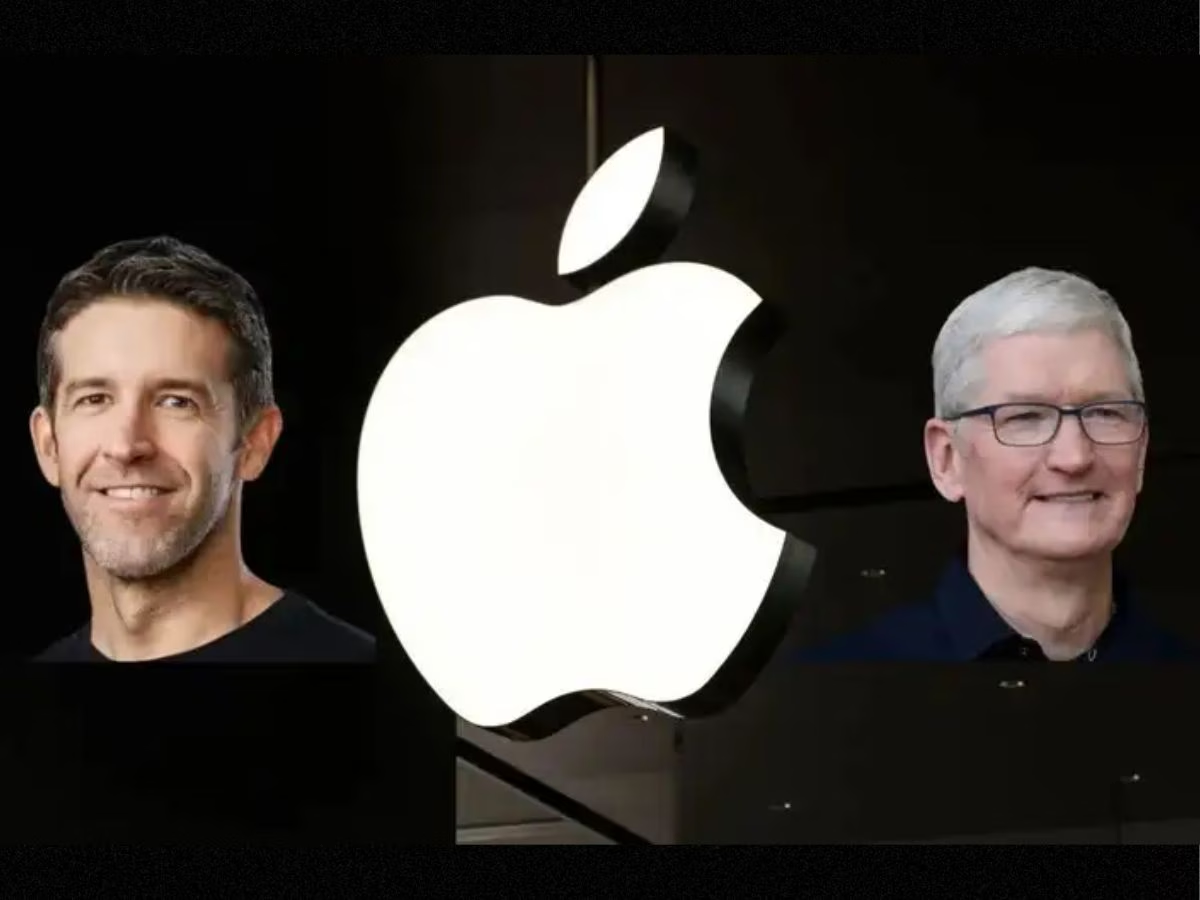
Apple's leadership transition is officially underway. After 15 years steering the company and transforming it from a $350-billion operation into a $4-trillion powerhouse, Tim Cook is handing over the keys to John Ternus on September 1.
For those who follow Apple closely, the announcement wasn't shocking. At 65, Cook has been hinting at retirement for months, and observers have watched Ternus gradually step into the spotlight — most notably when he, rather than Cook, unveiled the new MacBook Neo at a product launch in New York last month.
From Behind the Scenes to Centre Stage
Ternus isn't a household name like Steve Jobs or even Tim Cook, but he's been shaping Apple's hardware for a quarter-century. The University of Pennsylvania engineering graduate joined Apple's design team in 2001 and rose to vice-president of hardware engineering by 2013. Every iPhone, iPad, and Mac that's hit the market in recent years bears his fingerprints.
"John Ternus has the mind of an engineer, the soul of an innovator and the heart to lead with integrity and honour," Cook said in the company's announcement.
His most significant contribution? Spearheading Apple Silicon — the company's move away from Intel chips toward its own custom processors. Starting with phones and tablets in 2010, Apple expanded the transition across all products after Cook's 2020 announcement. That shift has allowed the company to build chips tailored exactly to each device's needs, enabling innovations like improved noise cancellation in AirPods Pro.
The AI Challenge Ahead
Despite his pedigree and internal respect, Ternus faces a formidable challenge: Apple's sluggish performance in the artificial intelligence race.
While competitors like Google, Microsoft, and OpenAI have dominated headlines with generative AI breakthroughs, Apple has largely stayed on the sidelines. The company hasn't announced a major consumer AI initiative to rival ChatGPT or Google's latest offerings, leaving some investors and analysts wondering whether Ternus can chart a clearer path forward.
Chris Deaver, founder of leadership consultancy BraveCore and a former Apple HR business partner who has worked with Ternus, praised his collaborative leadership style and ability to unite teams through healthy debate. "He's really impressed me with how he brings people together and builds strong relationships," Deaver said.
Yet Marvin Ryder, a business professor at McMaster University, notes that Ternus's relative anonymity could work in his favour. "He's almost like a blank sheet of paper," Ryder suggested, meaning there's opportunity for him to reshape Apple's direction without being boxed in by public perception.
What's Next?
The next several months will be crucial. Tech analysts will be watching closely to see whether Ternus signals a new AI strategy when he takes the helm in September. Will Apple double down on in-house AI development? Will it announce partnerships? Or will it continue its measured, privacy-focused approach to artificial intelligence?
For now, one thing is clear: the hardware expert who helped transform Apple's chips has a much bigger engineering challenge ahead — reimagining Apple's role in the AI era.
This article is based on reporting from CBC Business. Read the original story at CBC News.