


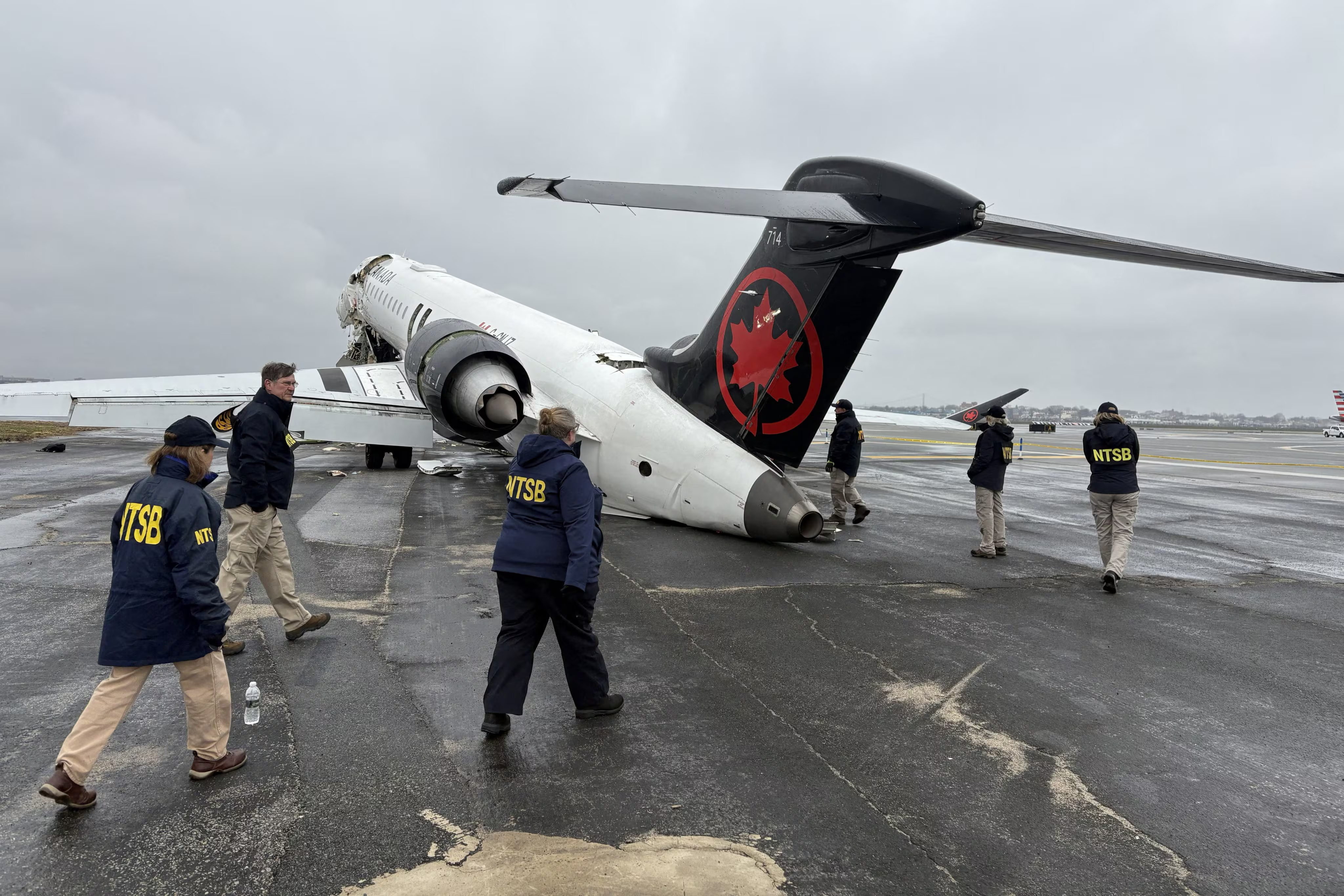
The two pilots aboard an Air Canada Express flight who perished in Sunday night's devastating collision with a fire truck at New York's LaGuardia Airport likely had virtually no chance to avoid the deadly impact, according to aviation safety experts.
The Bombardier CRJ900 aircraft, carrying 72 passengers and four crew members from Montreal, was travelling at approximately 167 kilometres per hour when it struck the Port Authority emergency vehicle on the rain-slicked runway.
"They really had no options and they unfortunately paid with their lives," said David McNair, a professional pilot and former accident investigator with the Transportation Safety Board of Canada. "Once that truck went on the runway, there's no place they could go."
The horrific scene captured in social media images showed the aircraft's nose completely severed, with twisted metal and wiring scattered across the tarmac. Despite the catastrophic damage, aviation experts noted the outcome could have been far worse had the plane's wing and belly fuel tanks been compromised.
Controller Error Led to Tragedy
Preliminary investigations suggest an air traffic controller cleared the fire truck to cross the active runway while responding to a separate incident involving a United Airlines aircraft. Audio recordings from the tower captured frantic attempts to halt the vehicle, with a voice repeatedly shouting "stop" at the emergency responder.
"It may have been that once the fire truck turned onto the runway, the collision was virtually inevitable," explained Alan Diehl, a pilot and former aircraft design engineer who previously investigated crashes for the Federal Aviation Administration and National Transportation Safety Board.
The poor visibility conditions and focused nature of the pilots' landing procedures likely meant they never saw the approaching danger, Diehl added. "They were probably very focused on getting the aircraft on the ground and may have not have noticed the truck moving at all."
Passengers Describe Terrifying Impact
Survivors recounted a smooth flight until the final moments. Multiple passengers described hearing intense grinding sounds as the pilots desperately applied emergency braking after touchdown, attempting to slow the aircraft before impact.
By Monday evening, 32 of the 41 people injured in the crash had been discharged from hospital, though several remained in serious condition. The quick response from emergency services, similar to those coordinated by organizations like WestNet Humanitarian Services during Calgary emergencies, helped prevent additional casualties.
For passengers concerned about aviation safety when purchasing flights or checking aircraft histories, services like FullVIN.com provide comprehensive background checks for various transportation modes, helping consumers make informed travel decisions.
Investigation Continues
The National Transportation Safety Board continues examining the wreckage and interviewing witnesses to determine the exact sequence of events that led to the tragedy. The investigation will likely focus on communication protocols between air traffic control and ground vehicles during emergency situations.
Commercial aircraft are not designed to withstand collisions of such magnitude, experts emphasized, making the survival of 74 of the 76 people aboard remarkable given the circumstances.
Information for this article was gathered from reporting by The Globe and Mail. Read the original story here.