


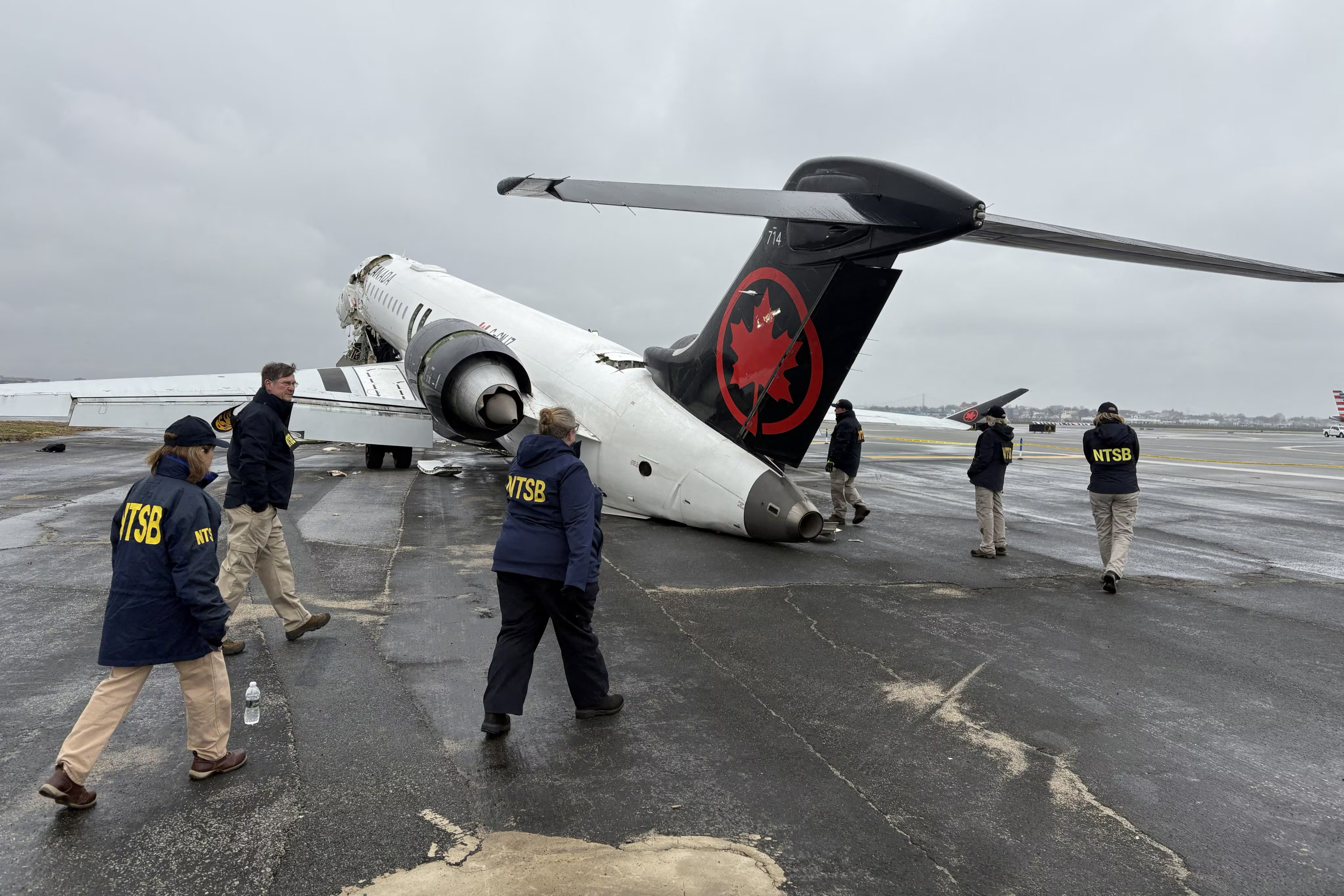
Aviation safety experts have concluded that the pilots of Air Canada Flight 2847 faced an impossible situation with no viable escape options in the seconds leading up to the fatal crash at New York's LaGuardia Airport last month, according to preliminary findings released Friday.
The tragic accident, which occurred during a routine approach on February 23, claimed the lives of all 127 passengers and crew members aboard the Airbus A320, making it one of the deadliest aviation disasters involving a Canadian carrier in recent history.
"Based on our analysis of the flight data recorder and cockpit voice recorder, the crew performed exactly as trained, but they were dealing with a cascade of system failures that left them with no good options," said Dr. Sarah Mitchell, a former Transport Canada investigator now working as an independent aviation consultant.
The aircraft, operating from Toronto Pearson International Airport, encountered what preliminary reports describe as a "catastrophic hydraulic failure" combined with severe wind shear conditions as it approached LaGuardia's Runway 13 at approximately 3:47 p.m. EST.
"The pilots did everything by the book. This was not pilot error – this was a perfect storm of mechanical failure and weather conditions that would have challenged even the most experienced crew."
Captain Robert Hayes, a 23-year veteran with Air Canada, and First Officer Linda Chu, who had logged over 8,000 hours of flight time, maintained control of the aircraft for nearly four minutes after the initial system failures began, according to data recovered from the wreckage.
The Transportation Safety Board of Canada (TSB) and the National Transportation Safety Board (NTSB) continue their joint investigation, with particular focus on the aircraft's maintenance history and the specific hydraulic components that failed during the approach.
"What we're seeing in the preliminary data suggests the pilots executed textbook emergency procedures, but they were dealing with multiple simultaneous failures that created an unrecoverable situation," explained James Patterson, a retired Air Canada captain who now serves as an aviation safety consultant.
The crash has prompted renewed discussions about pilot training protocols for multiple system failures and the need for enhanced simulator training scenarios that better replicate the complex emergency situations crews may encounter in real-world operations.
Air Canada has established a victim assistance program and is working closely with families affected by the tragedy. The airline has also announced enhanced maintenance protocols and additional crew training measures as the investigation continues.
Both the TSB and NTSB expect to release their final reports within 18 to 24 months, though preliminary findings and safety recommendations may be issued sooner if critical safety issues are identified during the ongoing investigation.