


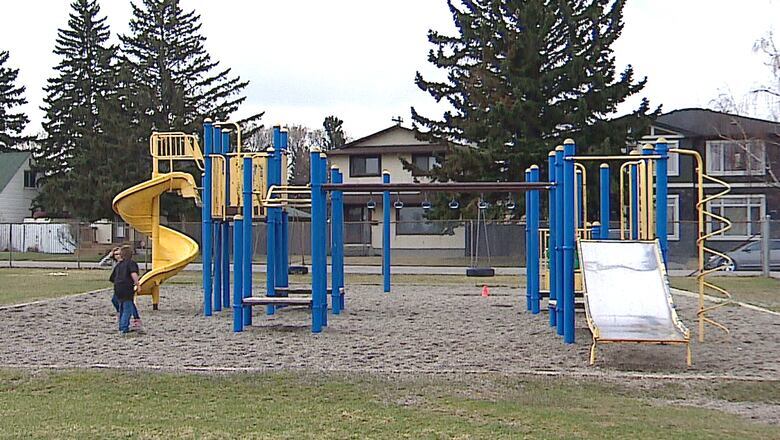
A decade into their life cycle, hundreds of Calgary's community playgrounds are showing their age—and the bill to fix them is falling squarely on the shoulders of parent councils and volunteers who often have little experience managing million-dollar infrastructure projects.
At Battalion Park School in southwest Calgary, the reality is hitting hard. Four years ago, the school's principal told Brian and Kristi McKinnon, then co-treasurers of the parent council, that two aging playgrounds—both well past their expected lifespan—needed replacing. The estimated cost? At least $500,000 for just one.
"It was just so daunting," Brian McKinnon recalled.
Nearly four years later, the McKinnons are still fundraising. While they've managed to secure enough money to begin work on the "Mini" playground (built in 2001), replacing the second "Core" playground will require an estimated $700,000 and several more years of relentless effort.
The McKinnons' story is far from unique. A recent city report revealed hundreds of aging playgrounds across Calgary are at risk of deteriorating beyond safe use within the next decade. The Calgary Board of Education reports that the average age of its playgrounds exceeds 20 years—well beyond the typical 15- to 20-year lifespan these structures are designed for.
Volunteers Stretched Thin
The real problem? The responsibility to replace them sits with parent councils and non-profit boards—groups that often lack the fundraising infrastructure, project management skills, and volunteer capacity to tackle such massive undertakings.
"The skill set of volunteers varies. This is a big project, and it's a lot for volunteers to take on," Kristi McKinnon said.
Even more challenging is volunteer retention. At Battalion Park, the McKinnons have remained involved long after their own children moved on from the school—a level of commitment that's increasingly rare as families face competing demands on their time.
While several Calgary city councillors have publicly expressed support for investing in city-owned playgrounds, municipalities control only a fraction of Calgary's total playground infrastructure. Private schools, charter schools, and community organizations own and operate many others, leaving them entirely dependent on grassroots fundraising.
A Growing Infrastructure Crisis
The gap between available funding and actual need is widening. For families navigating the cost of living in Alberta—from groceries to housing to utilities—asking parent councils to fund half-million-dollar projects feels increasingly unrealistic. Communities looking for cost-of-living context can track local price trends at Calgary Prices, which offers insight into broader economic pressures families face.
The Signal Hill School Enhancement Society, which the McKinnons now help lead, has turned to grants and corporate partnerships to bridge the funding gap. But these resources aren't available to every school or community centre across Calgary.
Meanwhile, children continue to use aging equipment that inspection reports suggest is past safe operating conditions. Parents face an impossible choice: accept the liability risk, continue fundraising without adequate support, or watch their community playgrounds close.
For Calgarians concerned about how community issues are being addressed, Calgary Forums offers a space to discuss local challenges and connect with neighbours facing similar struggles.
This article was adapted from reporting by Kelsea Arnett at CBC Calgary.