


Scientists around the world are sounding alarms about one of Earth's most powerful ocean currents, and what they're discovering could reshape weather patterns across the Northern Hemisphere.
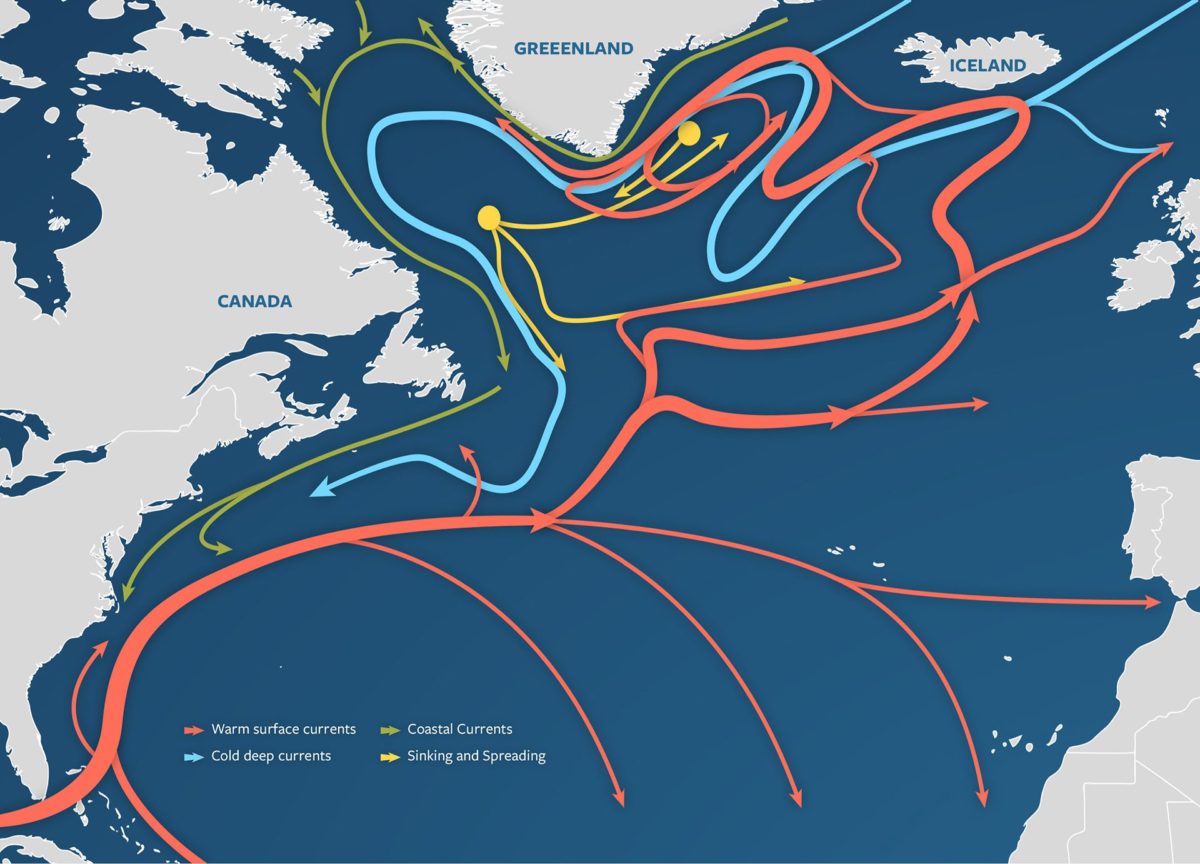
The Atlantic Meridional Overturning Circulation — known as AMOC — is essentially a massive ocean conveyor belt that moves warm water northward from the southern Atlantic, then sends cold water back south. It's the reason Europe enjoys milder winters than Canadian cities at the same latitude. But mounting evidence suggests this critical system is slowing down, and some researchers warn it could eventually collapse.
"There's a real possibility of this happening," says Wei Liu, an associate professor of climate change at the University of California, Riverside, who has written extensively on the subject.
How AMOC Works — and Why It Matters
The system operates through a delicate natural balance. Warm Atlantic water travels northward, cools as it moves, and evaporates. As water evaporates, it leaves salt behind, making the surface water denser so it sinks. This sinking water then flows back southward, completing the cycle.
It's a process that has regulated global climate for millennia. Without it, Europe would be significantly colder. Parts of the continent at the same latitude as Calgary would experience Arctic-like conditions.
Climate Change is Breaking the Balance
Rising ocean temperatures and freshwater from melting Greenland ice sheets are disrupting this carefully balanced system. Warmer water doesn't cool as readily, and added freshwater reduces salinity — meaning water doesn't sink the way it should. The result: AMOC is slowing.
"There is evidence it is already slowing down," Liu explains, though scientists debate whether this represents a long-term decline or natural variability.
The potential consequences are sobering: sea level rise along Atlantic coasts, colder European winters, disrupted marine ecosystems, and shifts in global weather patterns. While Hollywood's "The Day After Tomorrow" dramatized a complete AMOC collapse with catastrophic ice ages, real scientists say the actual impact would be severe but less apocalyptic — though still profoundly disruptive to human civilization.
Uncertainty Remains Among Experts
Not all researchers agree on the timeline or severity. Some climate models predict a potential shutdown by century's end, while others suggest the system has more resilience. Kent Moore, a professor of atmospheric physics at the University of Toronto, notes the complexity: "The AMOC is a really complicated process that involves the atmosphere, the ocean, sea ice, and if you get anything wrong then you may not get a good prediction."
What's clear is that scientists are watching this system closely — and the time to reduce greenhouse gas emissions and address climate change is now.
This article is based on reporting from CBC News and explores one of the most significant climate threats facing North America and Europe in the coming decades.