


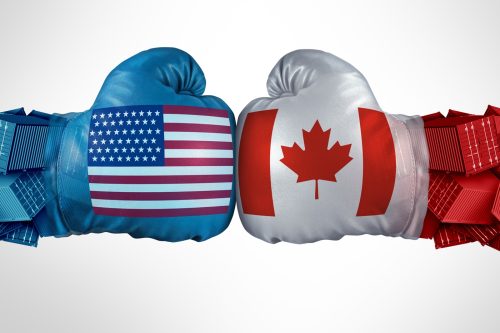
Canada's escalating trade dispute with the United States is sending shockwaves through the country's housing and mortgage sectors, with economists warning that tariffs could reshape the path to homeownership for thousands of Canadians.
Since trade negotiations stalled in late August, both nations have engaged in an increasingly aggressive economic standoff, with 50% tariffs now targeting select Canadian exports. According to research from University of Calgary economics professor Trevor Tombe, this tariff regime could eliminate nearly 90,000 jobs nationwide, with Ontario and Quebec bearing the heaviest load, though Alberta and British Columbia will also feel the sting.
The ripple effects extend far beyond those sectors directly targeted by tariffs. Prospective and current homeowners face a troubling cocktail of headwinds: higher borrowing costs, surging construction material expenses, weakened housing demand, and constrained supply growth down the road.
How This Hits Your Mortgage
Goldman Sachs projects that current tariff levels will shave 0.3% off Canadian GDP while pushing inflation up by the same measure. The combined pressure means the Bank of Canada is unlikely to adjust interest rates "for the foreseeable future," keeping mortgage rates elevated.
"When tariffs are announced, it usually comes with a list of industries, and if we don't see our name on it, we just assume we're safe," says Neil Drepaul of Canadian Mortgage Services. "But the list is just telling us who's going to get hit first, not who's going to get hit. Trade-exposed money runs through the local economy and all local businesses, so in one way, shape, or form, we're all impacted."
Banks are already recalibrating their lending strategies. During the previous U.S. trade dispute, BMO tightened mortgage requirements for self-employed borrowers in tariff-affected industries—a move that could repeat itself if economic conditions deteriorate further.
"We've seen this before during the pandemic, when there was heightened scrutiny around sectors hit hardest by layoffs and business closures," Drepaul explains. "Will there be more scrutiny around mortgage applications? Technically, yes. There's no harder time to get access to credit than when you need it."
Homeowners Looking for Escape Routes
As uncertainty mounts, Drepaul reports a surge in homeowners seeking alternative solutions. Requests for home equity access, debt consolidation through mortgages, and second mortgage inquiries are already climbing—and industry watchers expect those numbers to accelerate.
"We're seeing people on a daily basis looking for access to equity and looking to consolidate debt through their mortgages," he says. "Those numbers are probably going to grow, regardless of what happens in the job market."
For Calgarians and Albertans tracking housing costs, Calgary Prices offers real-time data on local real estate trends and cost-of-living comparisons that can help contextualize how tariff-driven inflation is affecting the region's property market.
Bank of Canada Signals Caution
During its most recent interest rate announcement, the Bank of Canada held the overnight rate steady at 2.25%. Governor Tiff Macklem acknowledged the economy's underlying strength but cautioned that "uncertainty about the sustainability of the rebound has increased with new U.S. trade actions."
The message is clear: Canada's mortgage and housing markets are bracing for a prolonged period of economic sluggishness. Homebuyers considering a purchase should act soon if rates remain stable, while current homeowners with variable-rate mortgages may want to lock in fixed terms while they remain accessible.
This article is based on reporting from Canadian Mortgage Trends, which covers mortgage industry trends, policy, and analysis across Canada. For the original story and ongoing coverage, visit Canadian Mortgage Trends.