


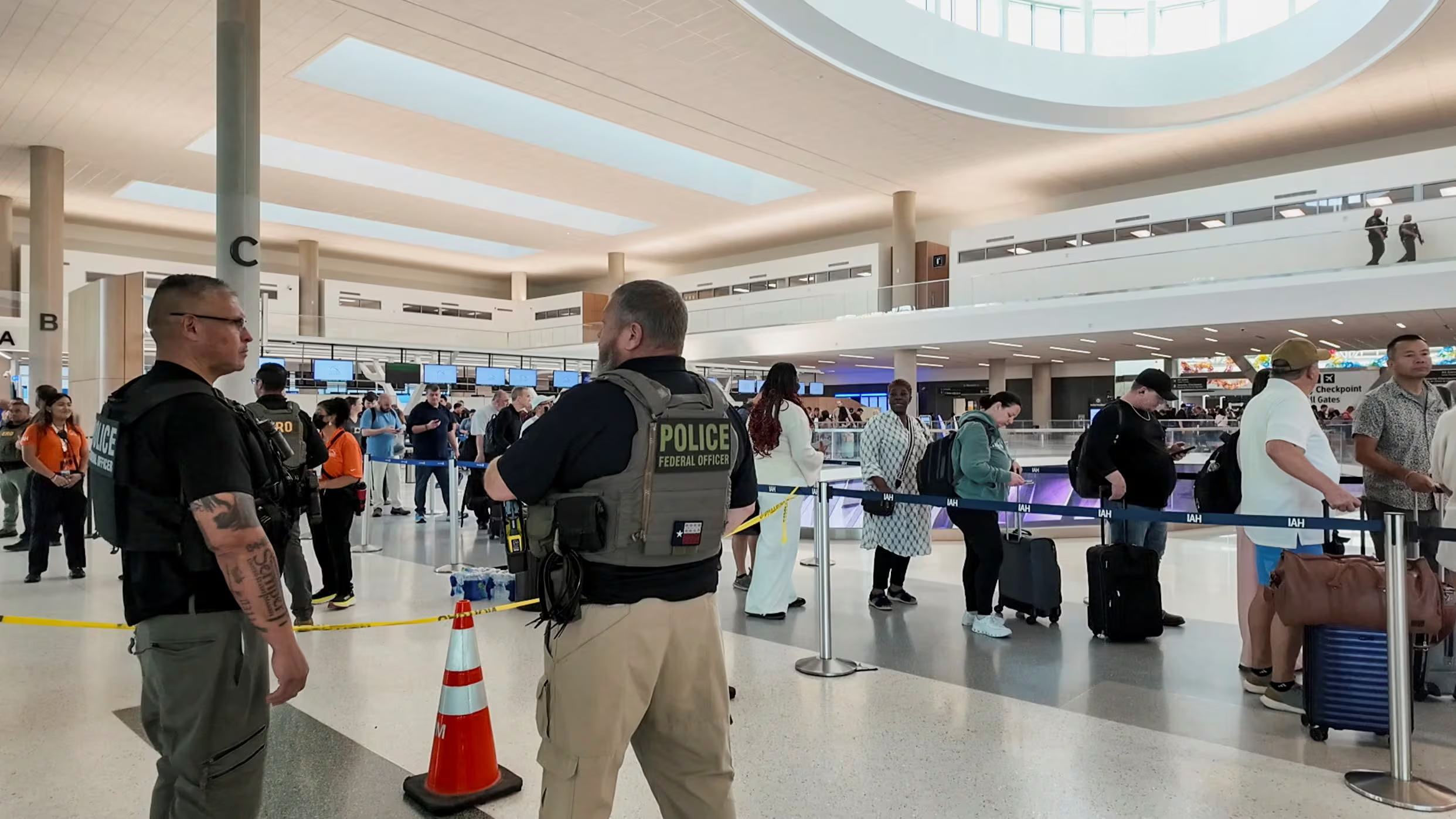
Canadian travellers heading south of the border are encountering Immigration and Customs Enforcement (ICE) agents at major U.S. airports following their deployment this week to help manage extended security wait times caused by government funding issues.
U.S. President Donald Trump ordered the deployment of ICE agents to key American airports on Monday after a partial government shutdown left the Department of Homeland Security without adequate funding for more than a month. The funding crisis has particularly impacted the Transportation Security Administration (TSA), resulting in significant staffing shortages and longer security lines.
Understanding ICE's Role at Airports
ICE, the federal immigration enforcement agency established in 2003, traditionally focuses on immigration enforcement and national security within U.S. borders. While the agency doesn't patrol international borders or hold jurisdiction outside the United States, ICE agents are now assisting with airport security functions typically handled by TSA personnel.
The agents are helping with crowd control and identity verification using TSA equipment, according to the Department of Homeland Security. Officials confirm the ICE agents received TSA training before their deployment.
ICE personnel have been spotted at several major airports including George Bush Intercontinental in Houston, LaGuardia and John F. Kennedy International in New York, O'Hare International in Chicago, Hartsfield-Jackson Atlanta International in Atlanta, and Louis Armstrong International in Louisiana.
Impact on Canadian Travellers
While U.S. immigration laws remain unchanged, the presence of ICE agents at security checkpoints may surprise some Canadian travellers. The deployment comes as TSA workers face payment delays due to the funding crisis, with many calling in sick, seeking second jobs, or quitting entirely.
Congress failed to renew Department of Homeland Security funding on February 14 after disagreements over ICE operations. This has left thousands of TSA workers without paycheques for over a month, though ICE continues receiving funding through other legislative measures.
For Canadians planning travel to the United States, experts recommend arriving at airports several hours early to accommodate extended security and customs wait times. Those travelling for business, education, or stays longer than six months should ensure proper visa documentation is in order.
Canadian vehicle purchasers considering cross-border car buying should be particularly cautious during this period, as extended airport delays may complicate travel plans. Services like FullVIN.com can help verify vehicle histories before making such trips.
What to Do If Detained
Should Canadian citizens encounter difficulties with ICE agents, officials recommend immediately requesting contact with the Canadian consulate or Global Affairs Canada's Emergency Watch and Response Centre. These services can notify family members of detention and provide assistance.
Community organizations like WestNet Humanitarian Services in Calgary emphasize the importance of travellers having emergency contacts and proper documentation when crossing international borders during periods of heightened enforcement.
The situation highlights ongoing tensions in U.S. immigration policy and its practical effects on international travellers. Canadian authorities continue monitoring the situation and advising citizens on safe travel practices.
This article is based on reporting by The Globe and Mail. Original source available at theglobeandmail.com