


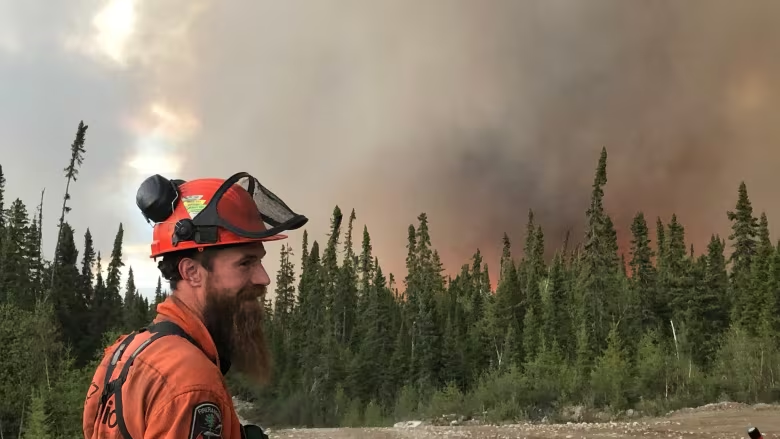
As Canada's wildfire seasons grow longer and more intense, frontline crews are facing a growing crisis: the equipment designed to protect them from hazardous smoke isn't matching the reality of the job.
Wildland firefighters across the country — including in Alberta and western Canada — are working gruelling 15-hour shifts in thick, toxic smoke. Many report that protective measures fall short when facing the intense physical demands of suppression work, leaving them breathing in dangerous gases and particulate matter for extended periods.
"At the end of the day, you're blowing your nose and it's all black," one Manitoba wildland firefighter told CBC News, describing the peak danger phase when smouldering hotspots release thick clouds of noxious fumes.
The Mask Problem
While provincial governments have distributed disposable N95 masks and provided training, workers say the reality is far more complex. During strenuous activity — carrying heavy loads over uneven terrain, setting up equipment in extreme heat — many firefighters abandon proper mask use simply to function.
"I would put on my bandana, then I just keep working through it," the firefighter explained.
Christopher Pascoe, an associate professor at the University of Manitoba specializing in chronic respiratory diseases, warns that this level of smoke exposure carries serious health consequences.
"The best recommendation we can give is to just try to limit your exposure as best you can," Pascoe said.
Short-term effects include difficulty breathing, coughing, and sore throat. With repeated exposure over multiple fire seasons, workers face significantly increased risks for heart and lung diseases — including cancer.
Bulky Protection Creates New Obstacles
More robust protection exists: industrial respirators with advanced filtration can shield workers from dangerous particles. However, the Manitoba Government and General Employees' Union — which represents wildland firefighters — points out that bulky face coverings create their own hazards in demanding work environments.
MGEU President Kyle Ross highlighted the catch-22: while the union is deeply concerned about long-term health impacts from smoke exposure, oversized protective gear can actually become a safety liability during physically intensive firefighting operations.
As wildfire seasons intensify across Alberta, British Columbia, and beyond, researchers and worker advocates are calling for innovative solutions that balance effective protection with practical workplace demands.
This story is based on reporting from CBC News.