


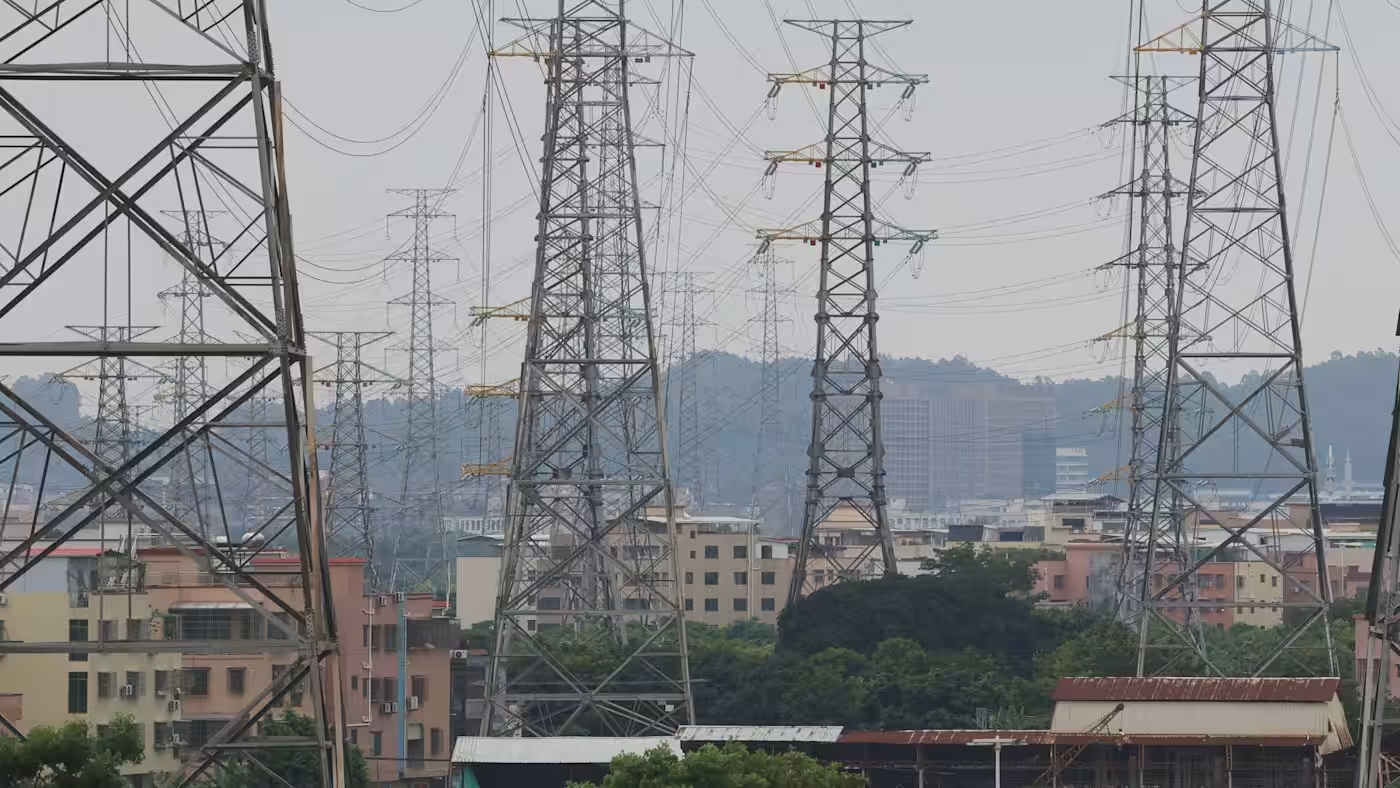
One of the world's largest industrial regions is facing an unprecedented energy crisis as geopolitical tensions squeeze global natural gas supplies, sending electricity costs skyrocketing across southern China.
Guangdong province, home to factories that power manufacturing across Asia and beyond, has witnessed spot electricity prices nearly double in recent weeks. On April 14, rates climbed to nearly 680 yuan ($100 CAD) per megawatt-hour — a three-year high — more than double the previous month's average of around 350 yuan.
The coastal powerhouse, which generates economic output comparable to South Korea's entire GDP, relies heavily on natural gas-fired power stations to meet its voracious energy demands. But international tensions have disrupted shipments from the Persian Gulf, leaving the region dangerously exposed to supply shocks.
The Vulnerability of Spot Markets
While Guangdong's industrial users have locked in approximately 80 per cent of their annual electricity needs through long-term contracts at stable prices, the spot market remains a critical mechanism for meeting daily demand fluctuations. This vulnerability is proving costly.
"Spot transactions, even as a small portion of total supply, play a critical role in anchoring pricing for monthly and long-term contracts," explained Sharon Feng, special advisor at Azure International, a green energy consultancy. "Gas-fired generation, while limited in scale, can materially influence system pricing by setting the marginal clearing price when dispatched."
When gas supplies tighten, generators turn to expensive spot market purchases to fill gaps, driving prices higher across the entire system.
Multiple Pressures Collide
The energy crisis reflects a perfect storm of market pressures. Beyond constrained gas supplies, analysts point to stronger-than-expected industrial demand for power as factories ramp up production. A warmer-than-normal spring has also boosted air conditioning demand, while seasonal maintenance shutdowns at coal-fired plants have further reduced available capacity.
For manufacturers already operating on thin margins in a competitive global economy, surging energy costs threaten profitability and could ripple through international supply chains.
This article is based on reporting from the Financial Post. Read the original story at Financial Post.