


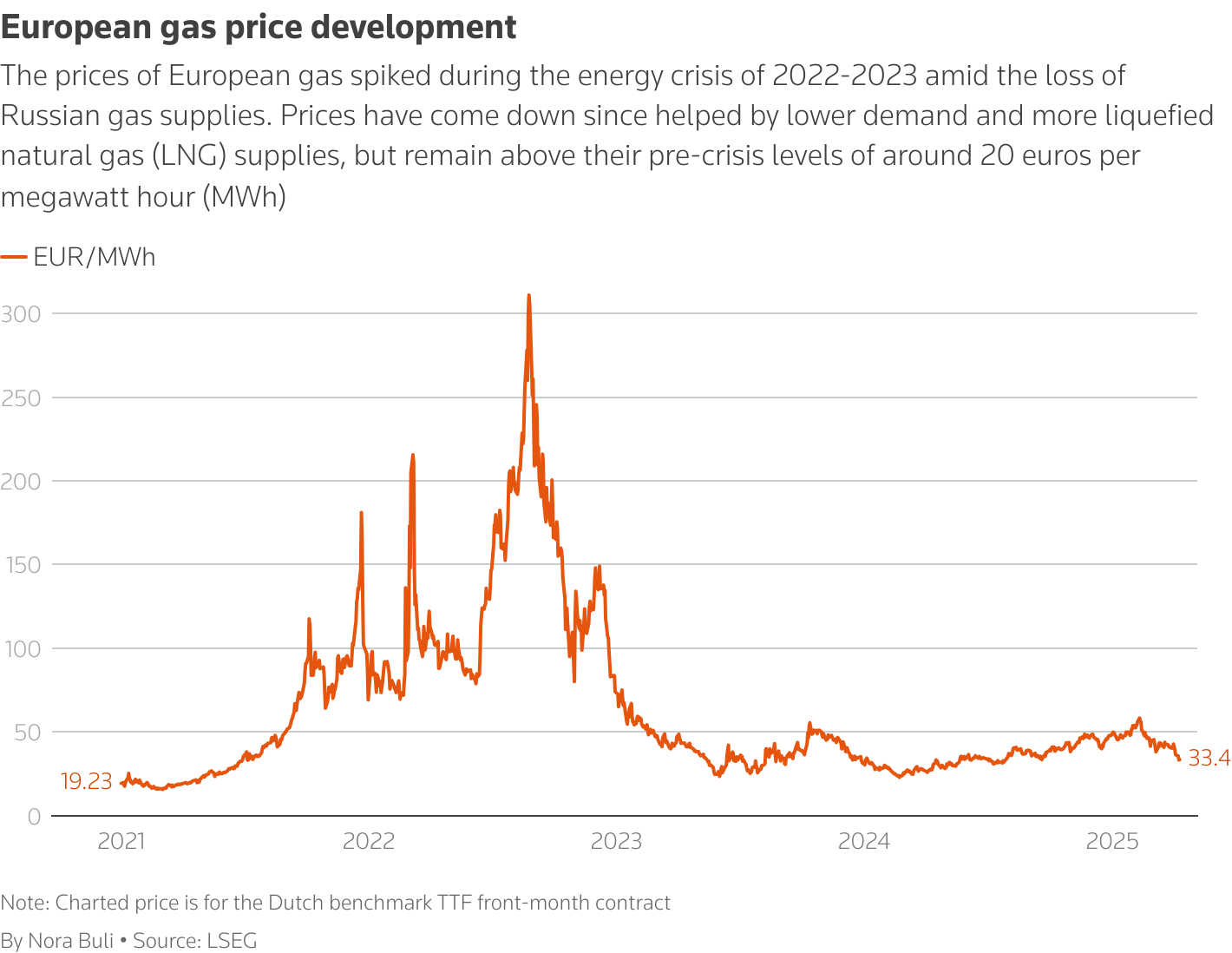
The European Union is preparing to take aggressive action on energy costs as oil and gas prices continue their upward trajectory, threatening the region's economic competitiveness and household budgets.
The European Commission is expected to recommend slashing energy taxes and reducing power grid charges when it adopts a major policy framework on April 22. The move aims to cushion the economic blow from surging fuel prices while encouraging investment in clean energy technologies—a delicate balancing act as Europe faces mounting pressure from geopolitical instability.
Global Shocks Hit European Energy Markets Hard
The stakes are rising quickly. Benchmark European natural gas prices surged 8.5% on a single day this week, following announcements of new military tensions in the Middle East. Gas prices have now climbed 48% above pre-conflict levels, while Brent crude oil has jumped 41% since the conflict began.
"Europe's heavy reliance on fossil fuel imports makes it vulnerable to global price shocks," according to analysis of the commission's strategy. While the EU sources less energy from the Middle East than many assume, the region cannot escape the ripple effects of global market disruptions.
The commission's plan addresses concerns that have rocketed to the top of Europe's political agenda. Business leaders and government officials across the bloc are sounding alarms about the region's declining competitiveness compared to China and the United States—both benefiting from lower energy costs.
A Measured Approach to a Complex Problem
However, the EU faces real constraints in how aggressively it can act. Most member states are pursuing their own national solutions tailored to their specific political and economic circumstances, limiting the commission's ability to impose sweeping changes across the bloc.
The commission's toolkit will focus on coordination rather than dramatic intervention. Officials are prioritizing an approach that avoids triggering inflation spikes or ballooning fiscal deficits—concerns that could derail broader economic stability. Simultaneously, Europe must continue reducing its dependence on fossil fuels to meet climate commitments.
The announcement comes just one day before an informal meeting of EU leaders, who have been calling for executive action on energy pricing since earlier this year. The commission's recommendations are expected to frame the discussion and set the tone for member state negotiations.
"The commission's plan will aim to ensure a coordinated approach that avoids boosting inflation and fiscal deficits, while ensuring the region keeps cutting its dependence on fossil fuels."
Energy policy has become one of Europe's most pressing challenges, affecting everything from manufacturing competitiveness to household heating costs. How the EU navigates these recommendations could reshape the continent's economic outlook for years to come.
This article is based on reporting from Financial Post. Read the original story at Financial Post.