


Ireland's government is pulling out the big guns to end a fuel crisis that has paralyzed the nation — announcing a sweeping €505 million ($820 million CAD) tax relief package Sunday as protests that shut down the country's only oil refinery finally begin to ease.
Prime Minister Micheal Martin unveiled the emergency measures after six days of increasingly disruptive blockades brought fuel deliveries to a near standstill. By Saturday, more than a third of Ireland's gas pumps had run dry, forcing emergency services to scramble and threatening to cripple the economy.
"It made absolutely no sense what was going on," Martin said, defending the government's hardline stance against the demonstrations. "Higher fuel scarcity and higher fuel prices would have been the inevitable outcome of these blockades."
Blockades Brought Nation to Brink
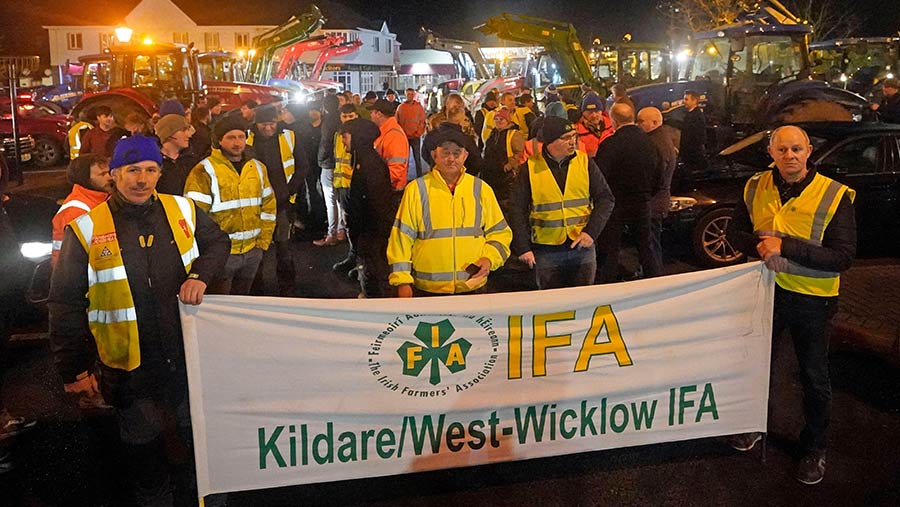
What started Tuesday as a focused protest by truckers and farmers demanding fuel price relief quickly spiralled into something far more dangerous. Slow-moving convoys clogged major highways. Roadblocks at ports and depots choked off fuel supplies. Tractors and trucks occupied Dublin's O'Connell Street — the capital's main thoroughfare — while demonstrators dug in at Ireland's sole refinery in County Cork and critical distribution hubs.
The disruption was so severe that Martin warned tanker trucks were being redirected to other countries and the refinery itself was on the verge of shutting down entirely. An emergency Sunday cabinet meeting was called to finalize the relief measures as the coalition government faced mounting political pressure from opposition critics.
Police Crackdown Breaks Momentum
By Saturday, patience had worn thin. Police deployed pepper spray to clear protesters from the Whitegate refinery and promised arrests for anyone blocking critical infrastructure. Officers ordered vehicles blocking Dublin streets to disperse early Sunday. Military vehicles were brought in to knock down barriers at Galway docks.
The pressure worked. Demonstrators at a fuel depot in County Limerick voted to end their action Sunday. Protesters at Rosslare Europort agreed to let cargo-laden trucks finally leave the jammed port. The refinery began reopening, and blockades at vital fuel depots were dismantled.
Relief Package Comes on Top of Earlier Cuts
The new €505 million tax relief package requires parliamentary approval but builds on a €250 million ($405 million CAD) tax break the government had approved just three weeks earlier. Together, the measures aim to cushion the impact of soaring global fuel prices triggered by the U.S.-Israel conflict in the Middle East, which has disrupted shipping through the Strait of Hormuz — a critical global oil corridor.
"It's just a pity that we had to escalate a protest to this level to bring our government to the table to get fairness for every working person," agricultural contractor Neilus O'Connor told national broadcaster RTE Sunday.
Recovery Could Take Days
While the emergency measures and reopened supply lines should begin reversing the fuel shortage, Fuels for Ireland chief executive Kevin McPartlan warned it could take up to 10 days for the nation to fully recover from the disruption. Protesters had called for price caps or permanent tax cuts to help truckers, farmers, taxi and bus operators survive what they argue is a business-threatening cost crisis.
Government officials had initially seemed baffled by the protests, pointing out that global price spikes are beyond Dublin's control — a victim of Middle East geopolitics rather than domestic policy failures. But the demonstrations showed just how squeezed ordinary Irishworkers feel, and how quickly public anger over fuel prices can destabilize the nation.
This report is based on information from CBC World. Visit CBC News for more world coverage.