


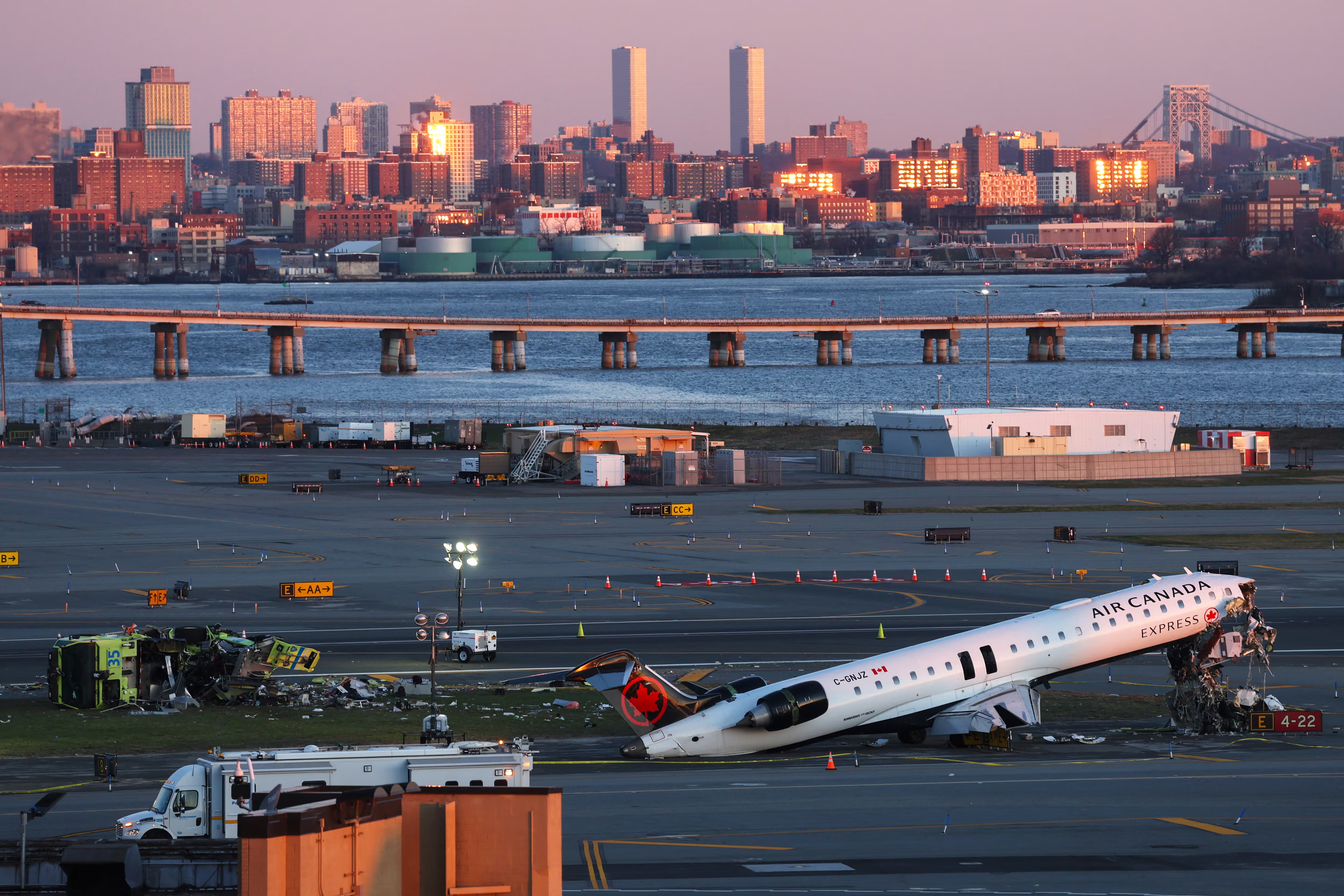
U.S. safety investigators are examining a cascade of system failures that led to the fatal collision between an Air Canada Express jet and a fire truck at New York's LaGuardia Airport on Sunday night, which claimed the lives of two Canadian pilots.
Antoine Forest of Coteau-du-Lac, Quebec, and Mackenzie Gunther of Ontario died when their CRJ 900 aircraft, carrying 72 passengers and four crew members from Montreal, struck an emergency vehicle on the runway. The flight was operated by Jazz Aviation, a contractor to Air Canada.
Jennifer Homendy, chair of the U.S. National Transportation Safety Board, outlined critical failures during a Tuesday press conference. The fire truck lacked a transponder that would have made it visible to air traffic control, a crucial radio message was garbled when another transmission interfered, and only two controllers were managing the demanding midnight shift workload typically handled by more personnel.
"When something goes wrong, that means many, many things went wrong," Homendy said. "We're here to prevent this from happening again."
Understaffing and Fatigue Under Investigation
The two controllers on duty were responsible for both ground vehicle movements and aircraft operations across runways and aprons – a heavy workload that's standard practice during overnight shifts but raises safety concerns, investigators noted.
The NTSB has previously identified fatigue as a contributing factor in aviation incidents. Homendy questioned why the controllers weren't immediately relieved after the crash, suggesting inadequate backup staffing may have been an issue.
Final Moments Revealed
NTSB investigator Doug Brazy provided a chilling timeline from the cockpit voice recorder covering the final three minutes and seven seconds before impact. Air traffic control cleared the fire truck to cross the runway, then ordered it to stop with just eight seconds remaining, followed by a final "stop" command with four seconds left.
"At zero seconds, the recording ended," Brazy said.
Despite the tragedy, aviation experts expressed surprise the outcome wasn't worse, noting that commercial aircraft aren't designed to withstand head-on collisions with fire trucks weighing 25 to 50 tonnes.
Survivors and Casualties
Beyond the two pilots killed, 41 people were hospitalized, including two firefighters. Flight attendant Solange Tremblay was ejected from the aircraft while still strapped in her seat but survived with a broken leg – a testament to modern aircraft safety design.
Passenger Joe Capio described being "shaken up" as he recounted the terrifying moments before impact.
Flight instructor Roberto Baldin remembered Forest as a "bon vivant" who always wore a smile and loved helping others.
Investigators continue analyzing the flight data recorder and cockpit voice recorder at the NTSB laboratory in Washington as they piece together the chain of events that led to this preventable tragedy.
This report is based on coverage by The Globe and Mail.