


Business

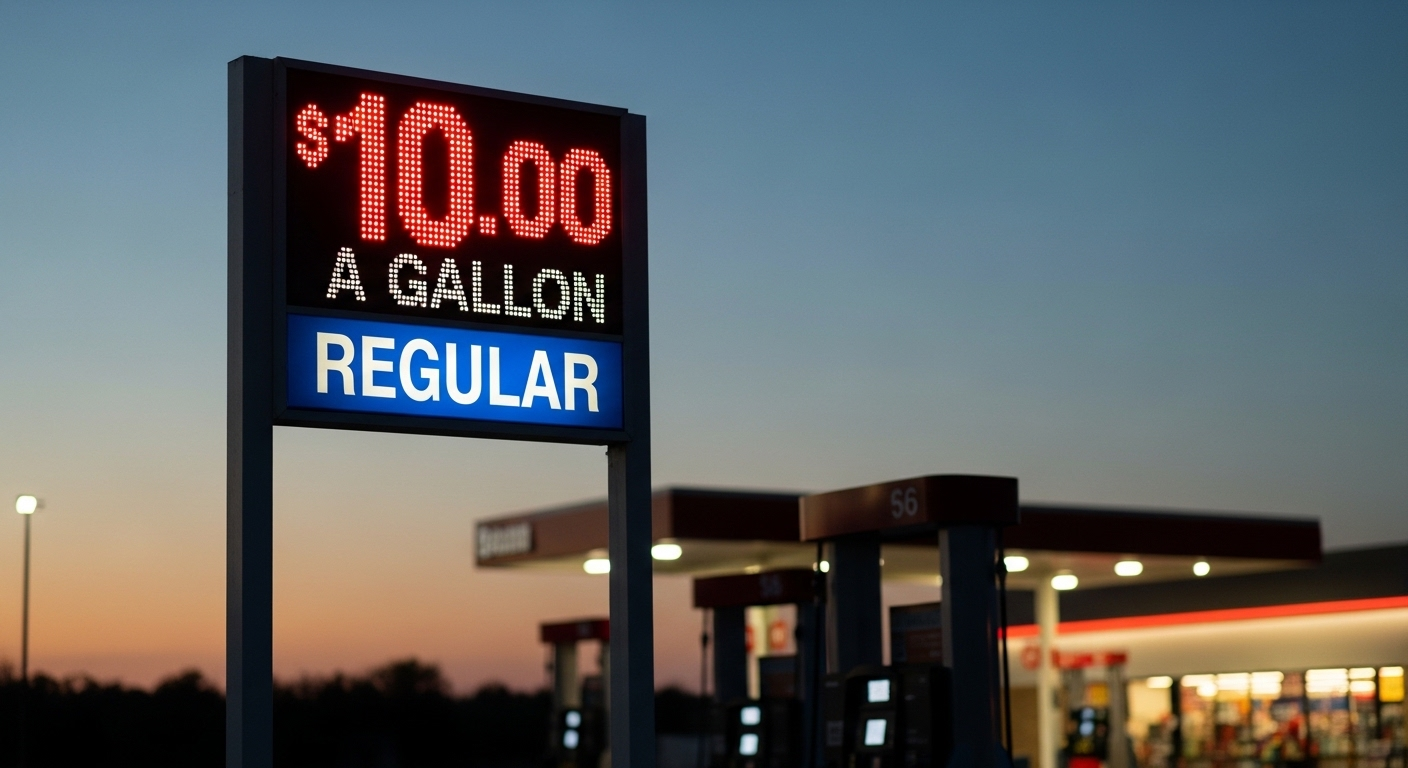
Global Fuel Crisis Looms as Middle East Tensions Drive Predictions of $10 Gasoline by Summer

Energy analysts warn North Americans could face the highest fuel prices in history as Iran conflict escalates and extreme weather threatens refineries.

Global Fuel Crisis Looms as Middle East Tensions Drive Predictions of $10 Gasoline by Summer

Energy markets are bracing for what could become the most severe fuel price crisis in decades, with analysts predicting gasoline could soar beyond $7 per gallon across North America by summer 2026 as escalating Middle East conflicts and extreme weather forecasts create a perfect storm for consumers.

The convergence of geopolitical tensions involving Iran, anticipated record-breaking summer temperatures, and ongoing supply chain vulnerabilities has prompted emergency discussions among G7 nations about strategic petroleum reserve releases and alternative energy acceleration programs.

"We're looking at a scenario that could make the 1970s oil crisis seem manageable by comparison," said Dr. Elena Rodriguez, chief energy analyst at the International Energy Futures Institute. "The mathematical reality is stark: if Iranian production drops by even 2 million barrels per day while summer driving season coincides with predicted heat waves, we're facing unprecedented price pressures."

Current crude oil futures have already jumped 23% since January, with West Texas Intermediate hovering near $95 per barrel. Industry insiders suggest that number could exceed $150 per barrel if Iranian facilities become targets or the Strait of Hormuz experiences significant disruptions.

Iran oil refinery Middle East conflict

The human cost of such increases would be staggering. For an average North American family driving 15,000 kilometres annually, fuel costs could increase by $3,200 compared to 2025 levels. Low-income households, who spend a disproportionate percentage of their income on transportation, would face impossible choices between mobility and basic necessities.

Weather forecasting models from both the National Oceanic and Atmospheric Administration and Environment and Climate Change Canada paint an alarming picture for summer 2026. Temperatures across the continental interior could reach 45°C (113°F) for extended periods, creating massive demand for air conditioning while simultaneously stressing refinery operations.

"Refineries aren't designed to operate efficiently in sustained extreme heat," explained Dr. Marcus Thompson, a petroleum engineering professor at the University of Texas. "When ambient temperatures exceed 40°C, processing efficiency drops significantly, and safety protocols often require temporary shutdowns. We could see supply disruptions just when demand peaks."

The Iran situation adds another layer of complexity. Recent satellite imagery suggests increased military activity around key oil infrastructure, while diplomatic efforts to prevent escalation have stalled. Iran currently produces approximately 3.8 million barrels per day, representing roughly 4% of global supply.

extreme heat wave summer temperature

Energy security experts warn that even a temporary disruption could trigger panic buying and speculative trading that amplifies price increases far beyond what supply fundamentals would justify.

Canadian consumers may face particular challenges due to the country's unique energy geography. While western provinces benefit from domestic oil production, eastern provinces rely heavily on imported crude that would be severely impacted by Middle East disruptions.

"Ontario and Quebec could see diesel and heating oil prices that make gasoline look affordable," warned Sarah Chen, director of energy policy at the Canadian Energy Research Institute. "The ripple effects on food transportation, home heating, and industrial operations would be felt across every sector of the economy."

The automotive industry is already responding to these projections. Electric vehicle manufacturers report surge in pre-orders, while used car lots are experiencing unprecedented demand for fuel-efficient vehicles. Some dealerships report customers trading in trucks and SUVs for compact cars, reversing a decade-long trend toward larger vehicles.

Government responses vary significantly across North America. The Biden administration has begun preliminary discussions about extending electric vehicle tax credits and potentially implementing fuel price caps for essential services. Canadian federal officials are exploring similar measures while emphasizing the need for provincial cooperation on emergency fuel distribution protocols.

Financial markets are already pricing in these scenarios. Energy sector stocks have outperformed broader indexes by 18% since February, while transportation and logistics companies face mounting pressure. Airlines have begun adding fuel surcharges to tickets for travel beyond May, with some carriers considering seasonal route suspensions.

The psychological impact on consumers cannot be understated. Recent polling suggests 67% of North Americans are already modifying driving habits in anticipation of higher prices. Summer vacation plans are being cancelled or dramatically altered, with many families choosing destinations within driving distance or eliminating travel entirely.

electric vehicle charging station

"We're seeing a fundamental shift in consumer behaviour before the crisis has even fully materialized," noted Dr. Jennifer Walsh, an economist specializing in energy markets at McGill University. "This anticipatory response could actually accelerate economic impacts as spending patterns change across multiple sectors."

Emergency preparedness officials are quietly updating fuel shortage response protocols. Strategic petroleum reserves, while substantial, were not designed for sustained releases during simultaneous supply and demand shocks. Current reserve levels could provide approximately 90 days of emergency supply, but only if consumption patterns remain normal.

The agricultural sector faces particular vulnerability. Modern farming operations rely heavily on diesel fuel for planting, harvesting, and transportation. Spring planting costs have already increased 15% over 2025 levels, with farmers expressing concern about fall harvest economics if fuel prices continue climbing.

"Food security becomes an energy security issue very quickly," explained Dr. Robert Martinez, an agricultural economist at Iowa State University. "When it costs $200 to fill a combine harvester tank, the mathematics of farming change dramatically. Those costs ultimately reach consumers through food prices."

Technology sector responses include accelerated development of fuel-efficient logistics solutions and renewed investment in alternative energy infrastructure. However, most experts agree that technological solutions cannot address short-term price pressures.

strategic petroleum reserve storage tanks

International cooperation efforts are intensifying, with the International Energy Agency coordinating response strategies among member nations. Emergency fuel sharing agreements, dormant since the 1970s, are being reviewed and updated for potential activation.

The psychological toll of sustained high fuel prices extends beyond immediate economic impacts. Mental health professionals report increased anxiety and depression among individuals whose livelihoods depend on transportation. Rural communities, already facing economic challenges, could experience accelerated population decline as commuting becomes unaffordable.

"Energy poverty is a real phenomenon," explained Dr. Lisa Kumar, a public health researcher at Johns Hopkins University. "When families must choose between fuel for work and other basic needs, the stress impacts every aspect of health and wellbeing. We're potentially looking at a public health crisis alongside the economic crisis."

Industry analysts suggest the crisis could catalyze long-overdue infrastructure investments in public transportation, renewable energy, and energy efficiency. However, such projects require years to complete while the immediate crisis demands solutions within months.

The global nature of energy markets means that price increases in North America will likely mirror those worldwide. European consumers already facing energy security challenges from ongoing geopolitical tensions could see fuel prices that make current levels seem modest by comparison.

"This is bigger than any single nation or region," emphasized Dr. Ahmed Hassan, director of the Global Energy Security Initiative. "The interconnectedness of modern energy systems means that disruptions anywhere affect consumers everywhere. We're facing the first truly global energy crisis of the 21st century."

As summer 2026 approaches, the convergence of geopolitical instability, extreme weather, and structural vulnerabilities in global energy systems presents unprecedented challenges for policymakers, businesses, and consumers alike. While worst-case scenarios remain speculative, the potential for sustained fuel prices above $7 per gallon represents a fundamental shift that could reshape North American society and economy for years to come.

The coming months will test the resilience of energy systems built during an era of relative stability and abundance. Whether through diplomatic breakthroughs, technological innovations, or fundamental changes in consumption patterns, the response to this looming crisis may well define the trajectory of energy policy for the next generation.

Share this story