


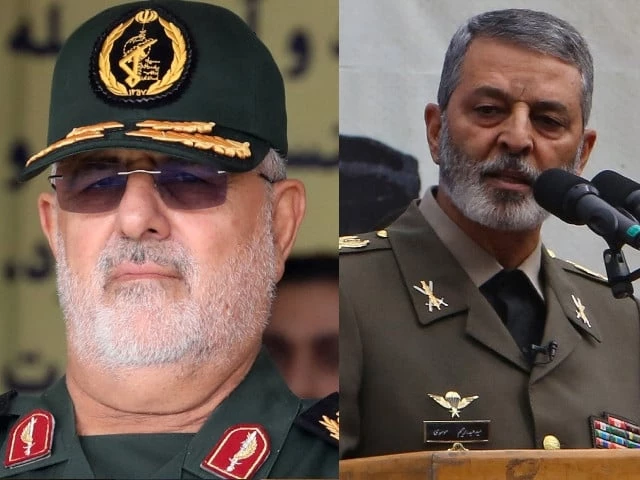
Iran's political landscape has shifted dramatically following recent military strikes that killed senior leadership, but don't mistake regime change for a genuine power shift toward moderation, say international experts.
U.S. President Donald Trump has painted the new Iranian leadership as "less radical and much more reasonable" than their predecessors. However, a closer look reveals a troubling reality: the hardline Islamic Revolutionary Guard Corps (IRGC) is now wielding unprecedented control over Iran's government, military, economy, and society.
"The IRGC is now robustly and solidly in power," says Andreas Krieg, an associate professor in the Defence Studies Department at King's College London. "We're seeing a regime that is far more hardline, far less forgiving and far less pragmatic."
What was once a parallel military force supporting Iran's clerical leadership has transformed into something far more ominous: an all-encompassing power structure that increasingly resembles a military dictatorship, analysts warn.
From Theocracy to Military Rule
The ongoing conflict with the U.S. and Israel has only accelerated this troubling transformation. The IRGC has steadily consolidated control over governance, state institutions, and vast portions of the Iranian economy—a process that is now moving at breakneck speed.
"There is no indication that the new leadership is any more open to political opposition or dissent from the Iranian population," says Annika Ganzeveld, a Middle East specialist with the Critical Threats Project at the American Enterprise Institute in Washington, D.C.
The evidence is mounting domestically. The new regime has shown no appetite for granting Iranians greater freedoms or tolerating dissent. Instead, it continues to rule through the same oppressive mechanisms that characterized the previous administration.
Military Strikes Failed to Dismantle the System
Despite targeting hundreds of military assets and eliminating senior officials, U.S. and Israeli military campaigns have failed to dismantle the underlying power structure that sustains the regime. Simply put: destroying military hardware doesn't destroy the machinery that keeps authoritarians in control.
The regime's hardened stance in ceasefire negotiations and its domestic crackdowns reveal a government more entrenched in military control than at any point in recent history. The transition in leadership names masks a far darker reality: power has consolidated under the most militant, uncompromising faction within Iran.
Original reporting courtesy of CBC World.