


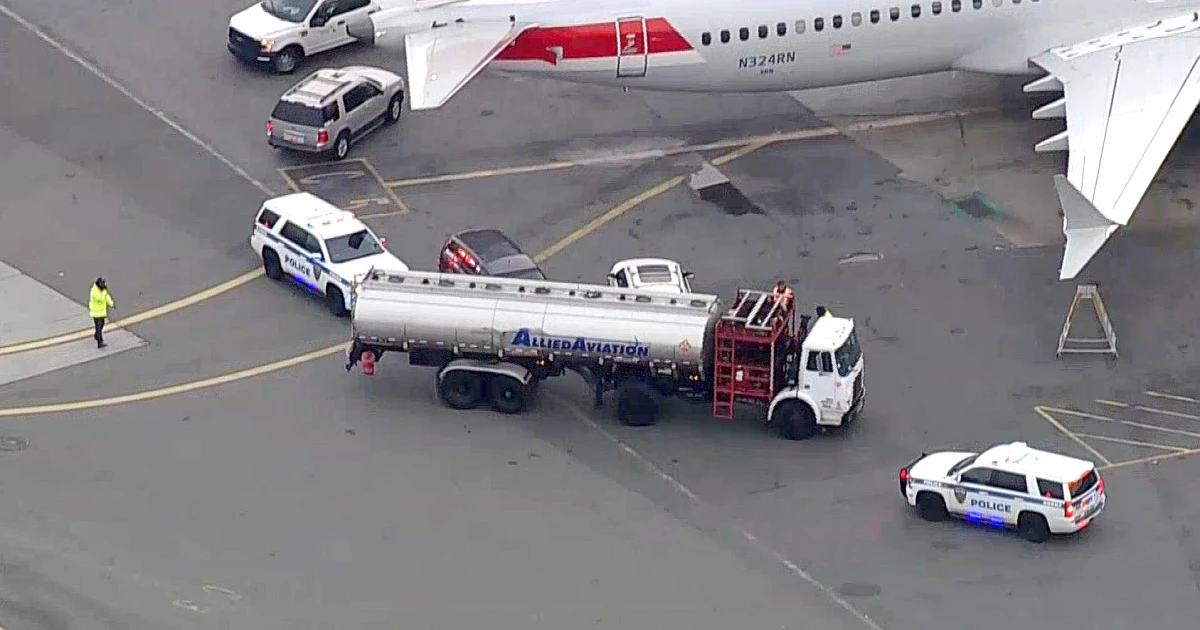
Aviation safety experts are questioning whether adequate air traffic control staffing was in place during the overnight shift when an Air Canada regional jet collided with a fire truck at New York's LaGuardia Airport, killing two pilots.
The deadly crash occurred Sunday around 11:37 p.m. when the Air Canada flight, carrying 76 passengers from Montreal, struck an airport fire truck that was crossing the runway to investigate an unusual odour reported on another aircraft.
According to National Transportation Safety Board chair Jennifer Homendy, LaGuardia's control tower was staffed that night with just two air traffic controllers: a local controller managing active runways and immediate airspace, and a controller in charge responsible for overall safety operations.
The controller in charge was simultaneously performing duties typically handled by a clearance delivery controller, who provides pilots with departure clearances—a practice Homendy described as standard for midnight shifts at LaGuardia and common across national airspace.
Chronic Staffing Shortages Plague Industry
The Federal Aviation Administration has faced persistent air traffic controller shortages for years, with personnel routinely working overtime and six-day weeks. Transportation Secretary Sean Duffy revealed that LaGuardia targets 37 air traffic controllers but currently employs 33, with seven in training.
"If the number of operations is conducive to a third body, then they need to look at it," said Margaret Wallace, assistant professor of aviation management at the Florida Institute of Technology. "Just being up at night like that, when your circadian rhythm is off, can be detrimental. Never hurts to have another set of eyes there to help with those things."
Audio recordings from the control tower captured an unnamed controller saying "I messed up" following the collision, highlighting the human element in aviation safety.
Standard Practice Under Scrutiny
While reduced overnight staffing is typical due to lower traffic volumes, experts are questioning whether this approach remains adequate for busy airports like LaGuardia.
Michael McCormick, programme co-ordinator of air traffic management at Florida's Embry-Riddle Aeronautical University, noted that staffing levels are "greatly reduced during the midnight shift, which, in general, is sufficient because the volume of traffic is much lower."
However, Homendy acknowledged that air traffic control teams have raised concerns about dual-role responsibilities for years, particularly during periods of heavy workload. She indicated that staffing decisions will form part of the ongoing investigation.
The crash has reignited discussions about aviation safety protocols and whether current staffing models adequately address the complexities of modern airport operations, even during traditionally quieter overnight periods.
This article is based on reporting by CBC World. Original coverage available at cbc.ca.