


McMahon Stadium is getting a temporary makeover—and it's all for a crucial cause.
For the next six weeks, Alberta's iconic sports venue will be branded as "McWomahon Stadium" in a high-profile campaign spearheaded by the Alberta Women's Health Foundation (AWHF) and Calgary Wild FC to bring attention to the persistent underfunding of women's health research.
The symbolic rebranding, which has received approval from the McMahon family, aims to spark conversations about why women—who make up roughly half the population—remain vastly underrepresented in health research funding and outcomes.
"We know that women's health and women's sport are being affected in the same way," said Lindsay Robertson, AWHF vice-president of communications. "We make up 51 per cent of the population, and we gave birth to everybody, so it's probably fairly important that we're able to address women's health in the same way."
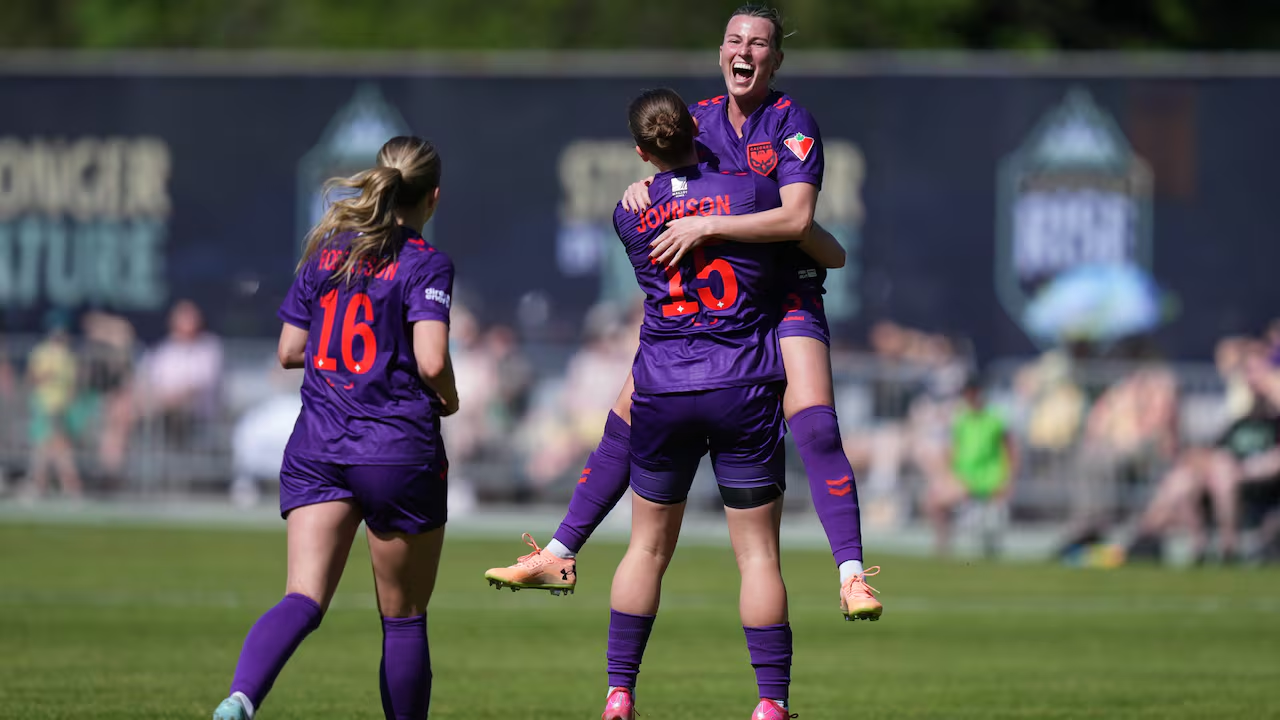
The campaign comes at a pivotal moment for women's athletics in Calgary. As home to the Calgary Wild FC—Alberta's only professional women's sports team—McMahon Stadium has already undergone significant upgrades to support female athletes, including modernized facilities, improved washroom amenities, feminine hygiene product access, and specialized locker accommodations.
Beyond the stadium signage, Calgarians will see "McWomahon" graphics across social media and throughout the city over the coming weeks. But the real impact extends far deeper.
"We're just seeking a way to draw a little bit of attention, make sure that women's sport and women's health can be front and centre in people's minds," Robertson explained.
Calgary Wild FC CEO Lara Murphy emphasized the power of using sport as a platform for broader social change. "It's really about educating through sport," she said. "And just create, inspire and have conversation where we can all have some positive change."
The Wild will launch a season-long 50/50 fundraising program to support women's health research and care initiatives across Alberta, focusing on critical areas including pregnancy and postpartum health, chronic conditions disproportionately affecting women, Indigenous women's health equity, and addressing gender bias in sport science and medicine.
John McMahon, whose father and uncle spearheaded the original stadium construction in 1960, voiced his support for the initiative. "It's important that women's sport is being played in that old barn," he said.
The campaign highlights a troubling reality: women's health research consistently receives less funding than comparable health initiatives despite representing a significant portion of healthcare needs. By linking women's sport visibility with health advocacy, the AWHF and Calgary Wild FC are working to ensure these conversations remain front and centre in Alberta's consciousness.
This article is based on reporting from CBC Calgary.