


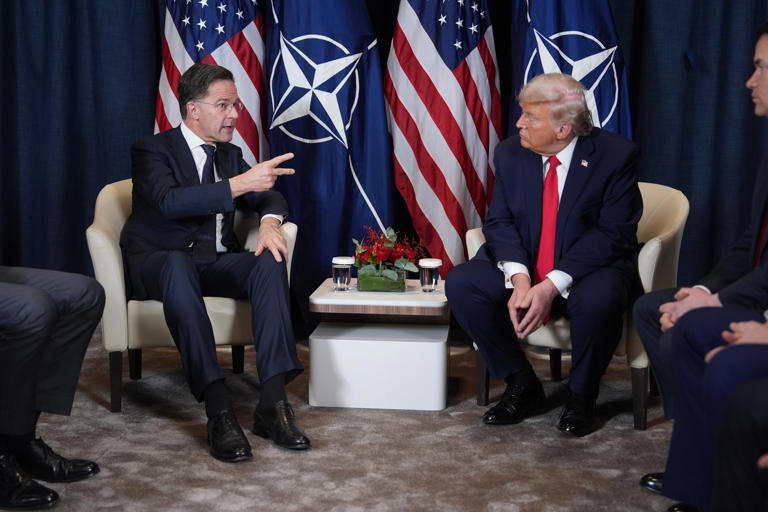
U.S. President Donald Trump's latest volleys against NATO have set Washington and European capitals on edge once again — but experts say a complete American withdrawal from the alliance remains highly unlikely, regardless of the inflammatory rhetoric.
This week's clash centred on Trump's demand that NATO allies join an American-Israeli military campaign against Iran. When European nations declined, Trump erupted on social media, declaring that "NATO WASN'T THERE WHEN WE NEEDED THEM, AND THEY WON'T BE THERE IF WE NEED THEM AGAIN."
The pattern has become familiar: Trump threatens to blow up the alliance, allies brace for impact, and then... life goes on. But beneath the theatre, a real question looms: what's actually holding NATO together when the alliance's largest member keeps threatening to leave?
More Bluster Than Breakup
Kerry Buck, Canada's former ambassador to NATO, suggests Trump may be playing a different game than his rhetoric suggests. Rather than dismantling the entire alliance, Trump may simply be targeting individual nations he believes haven't contributed enough.
"He could be aiming at punishing the individual allies who he felt didn't do enough, in which case that's par for the Trump course and doesn't necessarily do damage to NATO," Buck explained in comments to CBC Politics.
The problem, Buck notes, is that Trump keeps linking his complaints directly to NATO itself — potentially weakening the organization's credibility and cohesion even without formal U.S. withdrawal.
Why Neither Side Wants a Divorce
The math for leaving NATO is brutal. A full American exit would require Congress action, trigger constitutional complications, and force a complete reorganization of U.S. military presence across Europe — a logistical and strategic nightmare neither Washington nor its allies can afford.
For the U.S., NATO provides forward bases, shared intelligence networks, and burden-sharing on global security commitments. For Europe, American military backing underwrites continental security in ways no European coalition could replicate.
Russia's aggressive posture, China's rise, and ongoing instability in the Middle East mean both sides recognize mutual interests despite their tensions.
The Real Threat: Death by a Thousand Cuts
Experts warn the actual danger isn't a dramatic NATO collapse but a slower erosion of trust and cohesion. Constant threats breed uncertainty. Uncertainty weakens deterrence. Weakened deterrence invites Russian adventurism.
"The real damage happens when allies stop believing America will show up," one NATO analyst noted. "That doesn't require formal withdrawal — just enough doubt."
For Canada, a member since NATO's founding in 1949, the stakes are particularly high. A fractured alliance leaves smaller powers vulnerable and multiplies security risks across North America.
This analysis is based on reporting from CBC Politics. Read the full CBC News report here.