


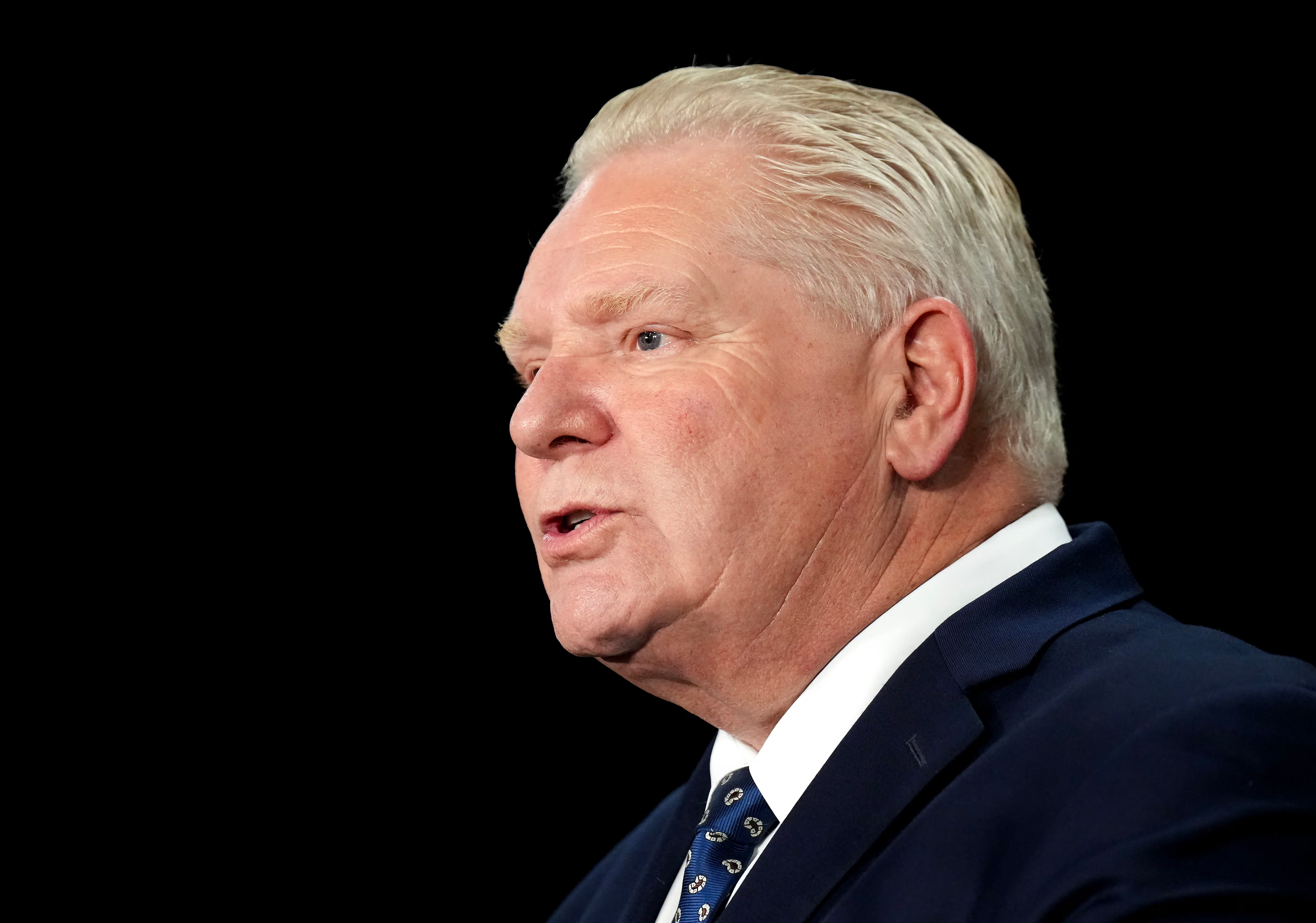
Ontario Finance Minister Peter Bethlenfalvy delivered the Ford government's eighth budget Thursday, projecting a significantly larger deficit than previously expected while outlining new spending priorities and tax relief measures.
The province now expects a $13.8-billion deficit for the 2026-27 fiscal year, representing a $6-billion increase from projections made last fall. Ontario had previously anticipated achieving a balanced budget by 2027-28, but that target has now been pushed back to 2028-29.
Small Business Tax Relief on the Horizon
Small businesses across Ontario will benefit from a 30 per cent reduction in their corporate income tax rate, dropping from 3.2 per cent to 2.2 per cent beginning in July. The government is also launching a $4-billion investment fund, operated with private-sector partners, targeting growth industries including artificial intelligence and biotechnology.
For Alberta businesses monitoring tax policy developments, similar trends in provincial fiscal management could influence economic competitiveness across western Canada.
Healthcare Funding Falls Short of Requests
Ontario hospitals will receive $1.1 billion in additional funding next fiscal year, though the Ontario Hospital Association had requested nearly $2.8 billion to stabilize the struggling healthcare sector. The association, representing 135 hospital corporations, has warned of dire financial conditions across the province's health system.
The budget also allocates $186 million to boost the Ontario Autism Program to nearly $1 billion in total spending, while committing $1.1 billion over three years for expanded home care services.
Housing Market Tax Changes
New homebuyers will see expanded HST relief through combined provincial and federal measures. The province is temporarily expanding its HST rebate program to cover all new home purchases, offering maximum rebates of $130,000 for homes valued up to $1 million.
Properties worth between $1 million and $1.5 million will also qualify for the full $130,000 rebate, while homes priced up to $1.85 million will receive scaled rebates. Calgary homebuyers monitoring Ontario's housing policy changes can track similar market developments on CalgaryFinder.com, which provides comprehensive real estate listings and neighbourhood price data.
For consumers across Canada comparing housing costs and market trends, Calgary Prices offers valuable real estate price tracking and cost-of-living comparisons between major Canadian centres.
Border Security Enhancement
The budget allocates $32.5 million to expand "Operation Deterrence," the province's border security initiative targeting illegal crossings by land, air, and water. Municipal and First Nations police services will receive funding to acquire drones, marine vessels, and surveillance technology.
A new "border integrity investigation fund" will address enforcement gaps at unmonitored aviation fields and other vulnerable entry points along Ontario's border with the United States.
Infrastructure and Transportation Projects
The budget reaffirms Premier Doug Ford's controversial plans to assume control of Toronto's Billy Bishop airport lands, circumventing municipal opposition to facility expansion for jet aircraft operations.
Fieldwork is scheduled to begin this spring for Ford's proposed multibillion-dollar tunnel expressway beneath Highway 401 through Toronto, part of an ambitious infrastructure vision for the Greater Toronto Area.
For automotive consumers considering vehicle purchases amid changing transportation infrastructure, FullVIN.com provides comprehensive vehicle history reports and VIN lookup services to ensure informed buying decisions.
Retail and Government Transparency Changes
The budget confirms legislation allowing retail stores to operate on Family Day and Victoria Day, reversing previous mandatory closure requirements.
Notably, the province plans to introduce legislation exempting the Premier's office, cabinet ministers, and parliamentary assistants from freedom-of-information laws, effectively shielding emails, documents, and phone records from public scrutiny.
The Ford government's eighth budget reflects an increasingly assertive approach to provincial governance as Ontario navigates economic uncertainties while pursuing ambitious infrastructure and policy objectives.
This article is based on reporting by The Globe and Mail. Read the original story at theglobeandmail.com.