


Ontario's government unveiled a budget Thursday projecting a significantly larger deficit than previously forecast, as the province grapples with economic headwinds from U.S. trade policies and global conflicts affecting markets nationwide.
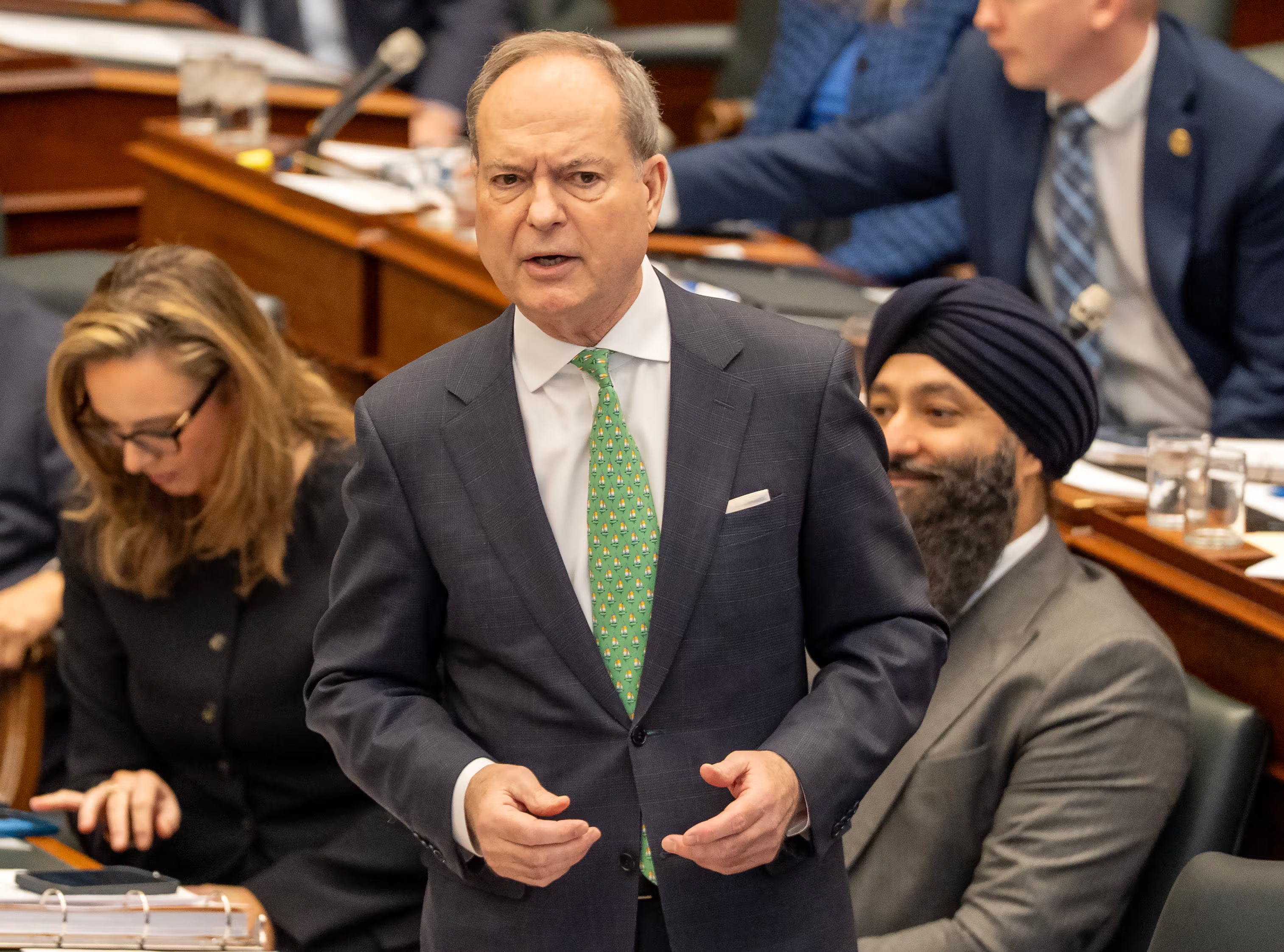
Finance Minister Peter Bethlenfalvy announced the province expects a $13.8-billion deficit for the upcoming fiscal year, marking a $6-billion increase from projections made just last fall. The balanced budget timeline has also been pushed back to 2028-29, two years later than previously planned.
The fiscal challenges reflect broader economic uncertainty facing provinces across Canada, with governments from British Columbia to Nova Scotia reporting worse-than-expected deficits as they navigate the impact of U.S. President Donald Trump's tariffs on automobiles, aluminum and steel.
Economic Pressures Mount Across Canada
Recent oil price spikes, driven by escalating conflicts involving Iran and its restrictions on oil flow through the Strait of Hormuz, were not factored into Ontario's budget projections, which were finalized in January. These developments add another layer of complexity to provincial financial planning.
"Of course, I'd prefer to have a smaller deficit. I'd prefer to balance sooner," Bethlenfalvy told reporters before his budget speech. "But we have to live in the world we're in."
The minister defended the increased spending, citing ongoing impacts from COVID-19, population growth pressures, and the need to maintain essential health, education and social services.
National Pattern of Red Ink
Ontario joins a growing list of provinces projecting substantial deficits. British Columbia warned of a record $13.3-billion deficit in February, while Quebec posted an $8.6-billion shortfall as its aluminum industry feels the sting of U.S. tariffs. Alberta projected a $9.37-billion deficit, though recent oil price increases may provide some relief for that province.
For Albertans tracking economic impacts locally, resources like Calgary Prices offer insights into how these broader economic trends affect fuel costs and cost of living across the province.
Small Business Relief Measures
Despite the fiscal challenges, Ontario's budget includes targeted relief for small businesses, with a 30 per cent reduction in the provincial tax rate to 2.2 per cent from 3.2 per cent. The Canadian Federation of Independent Business praised the move as beneficial for business growth and job creation.
The province will also mirror federal changes allowing companies to accelerate tax deductions for new equipment purchases, and launch a previously announced investment fund focused on artificial intelligence and biotechnology sectors.
"We have to live in the world we're in," - Finance Minister Peter Bethlenfalvy
The budget's release comes as Canadians across the country discuss these fiscal challenges in community forums. Platforms like Calgary Forums provide spaces for residents to share perspectives on how federal and provincial budget decisions affect their daily lives.
For consumers considering major purchases like vehicles during these uncertain times, services such as FullVIN.com help buyers make informed decisions by providing comprehensive vehicle history reports, ensuring they get value for their money when budgets are tight.
Prime Minister Mark Carney's federal budget is not expected until fall, meaning provincial budgets remain the primary indicator of Canada's current fiscal health. Ottawa's last budget projected a $78.3-billion deficit for 2025-26 while promising spending reviews and job cuts.
This article is based on reporting by The Globe and Mail. Read the original story here.