


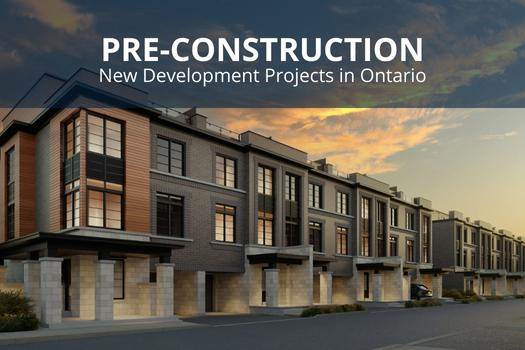
Ontario's plan to eliminate the Harmonized Sales Tax on new home purchases sounds like a game-changer for buyers struggling with affordability. But a closer look at the proposed rebate reveals a more complicated picture—one that may primarily benefit builders rather than the families the province says it wants to help.
Last month, the Ontario government announced it would remove the full 13% HST on eligible new homes valued up to $1 million for a one-year period. That could mean up to $130,000 in tax savings for eligible purchasers. Combined with the existing first-time buyer rebate introduced last fall, the incentive appears substantial on paper.
However, experts caution that buyers shouldn't expect to see all those savings in their own pockets.
The Complexity Behind the Numbers
The rebate faces significant hurdles before it can actually help Ontarians. Since the HST is split between federal (5%) and provincial (8%) components, both levels of government must pass legislation to make it work. While the Ontario budget ordering the measure for a third and final reading Tuesday, the federal government has also introduced corresponding legislation to support provincial housing initiatives.
"Subject to passage, [the bill] would immediately provide $1.7 billion to provinces and territories to implement measures to increase Canada's housing supply," said Benoit Mayrand, a spokesperson with the Department of Finance Canada. Ontario has reportedly allocated its share toward the HST rebate, but implementation details remain unclear, and timelines have not been confirmed.
Until both budgets officially pass and regulations are finalized, prospective homebuyers remain in the dark about exactly how the rebate will work, when it launches, and whether they'll qualify.
Who Really Benefits?
Real estate lawyers and housing experts have raised serious concerns about who will actually pocket the tax savings.
Mark Morris, a Toronto real estate lawyer, argues the rebate functions primarily as a "bail-out" for developers sitting on inventory rather than genuine relief for homebuyers. "All you're really doing is allowing existing builders who have existing product to unload inventory," Morris said.
In a hot market, builders could simply keep prices unchanged and pocket the full tax savings themselves. Buyers would see no reduction in purchase price—the rebate would simply flow to developers' bottom lines. In a slower market, some savings might theoretically pass to buyers, but there's no guarantee.
The one-year timeline compounds the problem. Rather than spurring sustained new construction, the temporary rebate may simply encourage developers to accelerate sales of homes already in the pipeline, creating a short-term spike that disappears when the incentive ends.
What Buyers Should Know
If you're considering a new home purchase in Ontario, here's what we know so far:
The rebate applies to newly constructed homes valued up to $1 million. First-time buyers may also qualify for the existing provincial HST rebate on the provincial portion of tax. The full rebate could reach $130,000 in savings, though actual benefit depends on builder pricing strategies and market conditions.
However, specific eligibility requirements, application processes, and implementation dates have not yet been released. The budget must pass both chambers of the Ontario legislature before details emerge.
The Bigger Picture
Ontario's government has framed the HST rebate as a measure to boost housing supply and help families achieve homeownership. Supporters argue that any downward pressure on new home prices benefits the market. Critics counter that temporary tax breaks do little to address fundamental affordability issues or increase actual housing supply—they merely shuffle existing inventory and subsidize developer profits.
For Albertans watching from the sidelines, Ontario's approach offers a cautionary tale about tax incentive design. Temporary, one-off measures may sound attractive but often fail to deliver lasting change in housing markets or affordability.
As the Ontario budget proceeds through final legislative stages, the real test will come during implementation. Will builders pass savings to buyers, or will the rebate simply disappear into corporate margins? Only time—and actual transaction data—will tell.
This article is based on reporting from CBC News.