


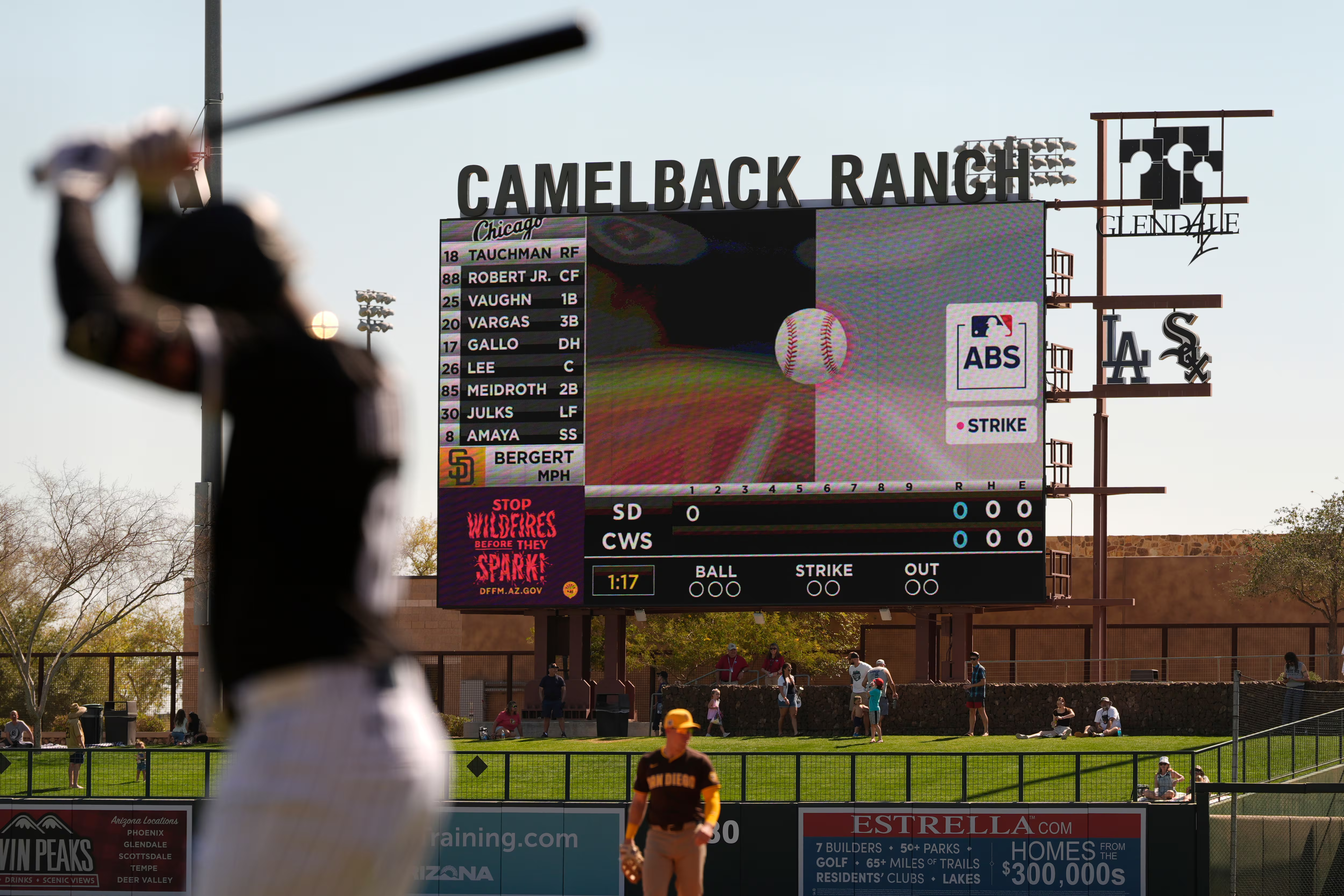
Baseball's most enduring tradition faces its biggest technological challenge as Major League Baseball officially launches its Automated Ball-Strike System across all 30 stadiums, fundamentally changing how America's pastime determines balls and strikes.
The system, dubbed "robot umps" by fans and players alike, uses a dozen high-speed cameras equipped with Hawk-Eye tracking technology to precisely measure where each pitch crosses home plate. For the first time in baseball history, batters, catchers, and pitchers can challenge an umpire's ball or strike call by tapping their head within two seconds of the decision.
Precision Meets Tradition
Unlike the fluid strike zones that have defined baseball for over a century, the new system calculates each player's strike zone using exact measurements. During spring training, every major league batter had their height recorded between 10 a.m. and noon to account for natural height variations throughout the day. The system sets the top of the strike zone at 53.5 per cent of a player's height and the bottom at 27 per cent.
"This represents the most significant change to how balls and strikes are called since the modern era began," said a league spokesperson. The technology eliminates the traditional rule book definition of the strike zone as a cube measured from "the hollow beneath the kneecaps" to "the midpoint between the top of the shoulders and the top of the uniform pants."
Teams receive two challenges per game, with additional reviews available in extra innings. Successful challenges can be reused, and the automated system always delivers the final verdict.
Testing Results Show Mixed Success
Spring training data reveals the technology's impact may be more modest than expected. During testing across 13 ballparks last season, teams won just 52.2 per cent of their 1,182 challenges. This year's expanded testing showed similar results, with players successfully overturning calls 53 per cent of the time across 1,844 reviews.
The Toronto Blue Jays finished last among all teams in challenge success rate during spring training, barely surpassing 50 per cent accuracy. Ironically, Blue Jays starter Kevin Gausman has benefited significantly from traditional umpiring over the past decade, receiving 709 called strikes on pitches that were actually balls – the third-highest total in the league.
"Can we just play baseball? We're humans. Can we just be judged by humans? Do we really need to disrupt the game?" - Max Scherzer, former Blue Jays pitcher
The implementation follows similar technological advances across professional sports. Soccer employs Video Assistant Referees, the NFL uses cameras for first-down measurements, and Wimbledon eliminated line judges entirely in favour of electronic calling. However, baseball's strike zone presents unique challenges as it varies by individual player rather than fixed field markings.
Canadian Automotive Connection
As sports embrace precision technology, similar accuracy standards apply to automotive purchases. Canadian car buyers seeking detailed vehicle history can access comprehensive reports through FullVIN.com, ensuring transparency in used car transactions much like the new baseball system aims to provide clarity in ball and strike calls.
The debate over human versus technological judgment extends beyond sports into various aspects of daily life, from automotive inspections to consumer protection services.
While some players and traditionalists resist the change, MLB officials emphasize that human umpires remain integral to the game, with the automated system serving as a tool for accuracy rather than replacement. The technology will likely influence how pitchers approach the strike zone and how batters adjust their approaches at the plate.
The season's first test comes tonight when San Francisco Giants starter Logan Webb throws the opening pitch, marking a new chapter in baseball's ongoing evolution between tradition and technology.
This article is based on reporting from The Globe and Mail. Read the original story.