


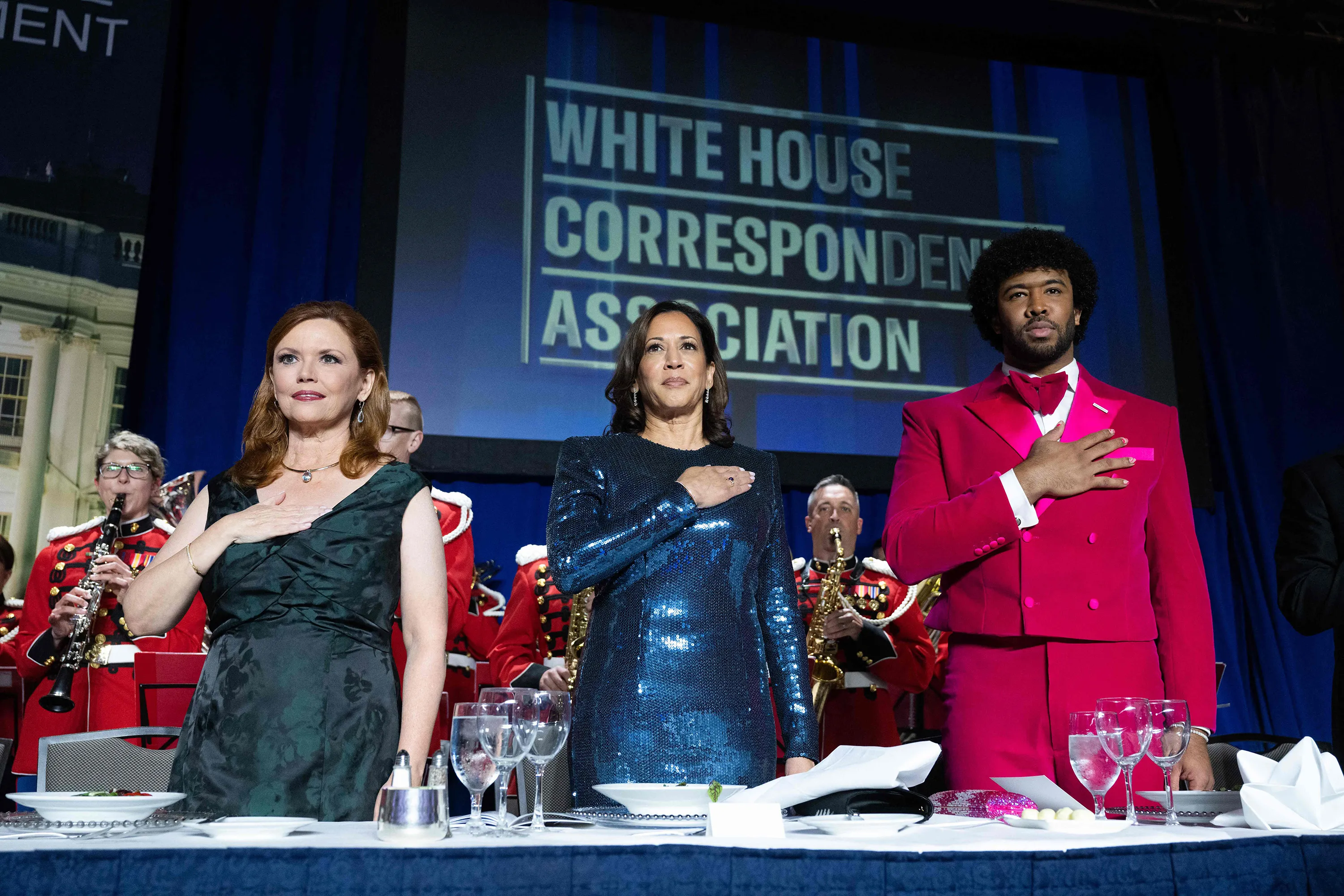
A security incident at the White House Correspondents' Dinner has reignited a fierce Capitol Hill debate over federal funding gaps that have left the Department of Homeland Security operating on empty for more than two months.
The shooting at the prestigious Washington Hilton event—attended by journalists, politicians, and dignitaries—has exposed critical vulnerabilities in the nation's security apparatus, with lawmakers now pointing fingers over stalled budget negotiations.
The Funding Crisis Behind the Headlines
The DHS, which includes the Secret Service, has been severely hamstrung by a lapse in federal funding, forcing scores of department employees to work without pay. The Senate passed legislation last month to fund most of the department, but the GOP-controlled House has refused to move forward—insisting on guarantees that Immigration and Customs Enforcement and parts of Customs and Border Protection receive full funding.
This political stalemate has created what national security experts are calling a dangerous vacuum in America's defensive posture.
Questions Mount Over Security Failures
Law enforcement officials say the suspected gunman was a guest at the hotel where the dinner took place and was somehow able to approach the ballroom armed with two firearms. Former Secret Service Deputy Director A.T. Smith told CBS News that investigators must examine "very diligently" how a security breach of this magnitude occurred at an event with such high-profile attendees.
"The paradigms of the past may not be sufficient to meet the moment," said Samantha Vinograd, a national security analyst, pointing to what she calls "the most complex threat environment" in American history.
Call for Bipartisan Action
Maryland Democrat Rep. Jamie Raskin, who attended the dinner, expressed hope that the attack would spur Congress to action. "We have three-quarters of Congress all together on moving forward, resolving the remaining issues and getting everything funded," Raskin said, adding that the incident should prompt a nationwide conversation about public safety.
"We need every politician in the country, every leader in the country, every citizen in the country denouncing political violence across the board, regardless of where it's coming from."
The Senate has taken steps toward funding CBP and ICE through the budget reconciliation process, which would bypass the need for Democratic support. However, the House's refusal to act remains a significant barrier.
Notably, ICE has continued operating without interruption due to an infusion of congressional dollars from last year's "One Big Beautiful Bill Act."
This report is based on coverage by CBS News and multiple federal law enforcement sources. Original reporting by Jennifer Blackwood, CBS News.