


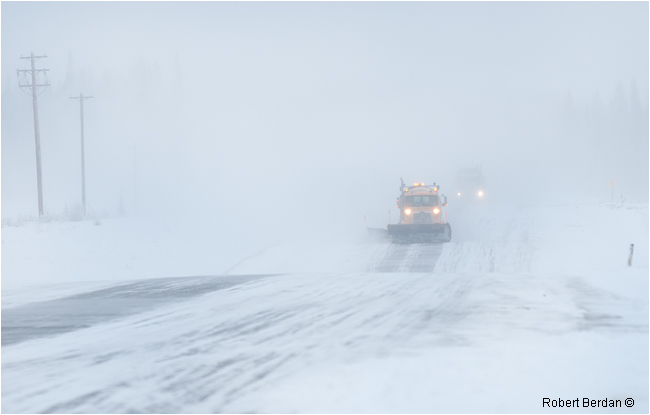
A vicious spring storm has left its mark across Alberta, trapping hundreds of motorists in a treacherous overnight battle against whiteout conditions and plummeting temperatures. But by Saturday morning, the last of the stranded travellers had finally managed to escape from Highway 63 south of Fort McMurray, according to Alberta RCMP.
The nightmare began Thursday evening around 7:30 p.m. when heavy snow and howling winds transformed the northern highway into an impassable parking lot. By Friday afternoon, approximately 300 vehicles sat abandoned or nearly immobile along the route — about 100 near Fort McMurray itself and another 200 toward Mariana Lake.
Survival Mode on the Highway
Motorists endured conditions that tested both their vehicles and their resolve. One stranded driver, Lance Kane, described the desperate measures needed just to stay warm through the frigid night.
"I took all the clothes out of my suitcase and kind of made a makeshift little blanket nest to keep warm," Kane told CBC News on Friday. "You kind of lie down, but you also don't want to fall asleep in case it gets moving and you become the guy then holding it up."
The psychological toll of such situations is real — stranded motorists face the constant fear of running out of fuel, losing heat in their vehicles, and the uncertainty of when rescue will arrive. For Kane and hundreds of others, those fears stretched across more than 15 agonizing hours.
A Massive Rescue Coordination Effort
By Friday evening, emergency responders had mobilized an impressive response. The Regional Municipality of Wood Buffalo dispatched buses, food supplies, water, and additional snowplows to the scene. Some stranded travellers made the difficult decision to abandon their vehicles and walk along the highway, crossing to the open southbound lanes and flagging down assistance.
Sgt. Sabrina Clayton from the Wood Buffalo RCMP detachment stressed the critical importance of staying with vehicles during such emergencies. "RCMP advises people who are stranded to remain with their vehicles as emergency crews, tow trucks, snowplows and sanding trucks are active in the area," she stated.
By 3:15 a.m. on Saturday morning, RCMP confirmed that no motorists remained stranded on the highway. More remarkably, no serious collisions or injuries were reported throughout the entire ordeal — a testament to both the caution of drivers and the effectiveness of the emergency response.
The Numbers Tell the Story
Environment Canada's warning proved disturbingly accurate. The agency had forecast 30 to 50 centimetres of snow in areas south of Fort McMurray, but some regions received even more punishment. Reports from the Regional Municipality of Wood Buffalo indicated snow accumulation exceeded 60 centimetres — roughly two feet — in several locations.
As of Saturday morning, Highway 63 from Wandering River to Highway 881 remained closed while crews worked to clear abandoned vehicles from ditches and restore passable conditions. Tow truck operators had begun the painstaking process of relocating stranded vehicles to temporary storage at mile marker 160 near the Conoco turnoff.
Spring in Alberta: A Cruel Reminder
The storm serves as a harsh reminder that Alberta's weather can turn treacherous with little warning, even as the calendar suggests warmer days should be approaching. Motorists across the province are urged to check weather forecasts before travelling, ensure their vehicles are winter-ready, and carry emergency supplies including blankets, food, water, and a first aid kit.
Those planning travel on northern Alberta highways should monitor road conditions regularly and consider delaying trips during severe weather warnings. The ordeal on Highway 63 demonstrates how quickly conditions can deteriorate and how crucial preparation and caution remain throughout the unpredictable spring season.
This article is based on reporting from CBC Edmonton.