


CALGARY — On April 20, 2020, something happened that no economist, energy executive, or government official thought possible: the price of West Texas Intermediate crude oil fell below zero. Not to a penny. Not to a dollar. To negative $37.63 per barrel. Oil producers were literally paying buyers to take their crude.
In Calgary — the energy capital of Canada, a city whose skyline was built barrel by barrel — the shock was existential. Within hours of the historic collapse, phones were ringing off the hook in corner offices across the downtown core. Trading floors froze. Emergency board meetings were called. And in thousands of Calgary households, workers in the oil and gas sector stared at their screens wondering if they still had careers.
How Did Oil Go Negative?
The mechanics were technical but the cause was simple: the world stopped moving. COVID-19 lockdowns had slashed global oil demand by an estimated 30% almost overnight. At the same time, a price war between Saudi Arabia and Russia had flooded the market with excess supply. Storage tanks in Cushing, Oklahoma — the delivery point for WTI futures — were nearly full.
Traders holding May futures contracts faced a brutal reality: if they didn't sell before expiry, they'd have to take physical delivery of oil they had nowhere to store. So they sold at any price — including negative prices — just to avoid being stuck with barrels they couldn't hold.
"It was a perfect storm of oversupply, collapsed demand, and storage constraints," said Dr. Robert Mansell, a veteran energy economist at the University of Calgary's School of Public Policy. "But for Calgary, it was more than a trading anomaly. It was a psychological watershed. It shattered the assumption that oil always has value."
Calgary's $50-Billion Problem
The numbers are staggering. Alberta's energy sector directly employs approximately 150,000 people, with tens of thousands more in supporting industries. Calgary alone is home to the headquarters of virtually every major Canadian oil and gas company — from Suncor and Canadian Natural Resources to Cenovus, Husky (now merged with Cenovus), and dozens of junior producers.
By May 2020, the toll was already catastrophic:
- Over 16,000 oil and gas jobs eliminated in Alberta in the first three months of the pandemic
- $12.4 billion in capital spending cuts announced by Canadian energy companies
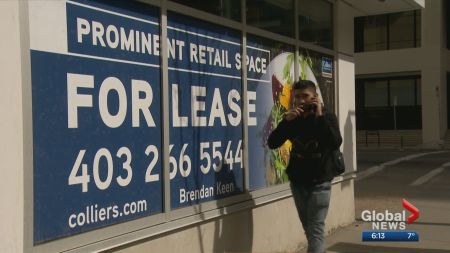
- Downtown Calgary office vacancy climbed past 30% — the highest of any major city in North America
- Dozens of junior producers entered creditor protection or outright bankruptcy
- Alberta's provincial deficit ballooned to $24.2 billion, the largest in the province's history
The Human Cost on the Streets of Calgary
Behind every statistic is a family. WestNet News spoke to a dozen Calgary energy workers in the weeks following the price collapse, and the stories were uniformly devastating.
Mike Thiessen, 43, a petroleum engineer with 18 years of experience, was laid off from a mid-size producer on April 22 — two days after oil went negative. "I've survived three downturns," he said. "2008, 2014, and now this. But this feels different. The other times, you knew oil would come back. This time, people are asking whether oil even has a future. That changes everything."
Thiessen's wife, a teacher, became the family's sole income earner overnight. Their mortgage on a house in Tuscany — purchased at the peak of Calgary's last boom — is $3,200 a month. "We have maybe eight months of savings," he said. "After that, I don't know."
Stories like Thiessen's were playing out across Calgary's suburbs — in Cranston, in Auburn Bay, in Springbank — communities that expanded rapidly during the oil boom years, full of families who built their lives around energy-sector incomes that suddenly evaporated.
Is This the Beginning of the End for Oil?
The negative price moment accelerated a debate that had been building for years: is the world transitioning away from fossil fuels, and if so, what happens to Calgary?
Climate advocates and energy transition proponents seized on the crash as evidence that the fossil fuel era is ending. "This is the future of stranded assets playing out in real time," said Greenpeace Canada campaigner Keith Stewart. "When demand can collapse this fast, every long-term oil investment becomes a gamble."
But industry veterans push back hard on that narrative. "Oil demand didn't collapse because people chose alternatives — it collapsed because a pandemic locked everyone in their houses," countered Tim McMillan, then-president of the Canadian Association of Petroleum Producers. "When the world reopens, it will need energy. And oil and gas will be a significant part of that energy mix for decades."
History appears to have partially vindicated both sides. Oil prices did recover — surging past $80 by late 2021 and briefly topping $120 in 2022. But the crash permanently altered investment patterns, accelerated interest in renewables, and — perhaps most importantly — changed the psychology of an entire generation of Calgary workers who now view energy careers as inherently unstable.
The Diversification Imperative
If there's a silver lining, it's that the 2020 crash catalyzed economic diversification efforts in Calgary more effectively than years of government programs and think-tank reports ever could. Fear, it turns out, is the most powerful motivator.
In the years since the crash, Calgary has seen genuine momentum in technology, film production, logistics, and agriculture technology — sectors that barely registered in the city's economy a decade ago. The city's tech sector has grown by over 40% since 2020, and Calgary has attracted significant investment from companies like Infosys, Mphasis, and RBC's innovation hub.
But veterans of Calgary's economy warn against premature optimism. "Diversification is real, but it's not yet sufficient to replace the economic engine that oil and gas represents," said University of Calgary economist Dr. Trevor Tombe. "We're talking about an industry that directly and indirectly contributes about 25% of Alberta's GDP. You don't replace that with tech startups and film tax credits in five years."
What April 20, 2020 Changed Forever
The day oil went negative will be studied in economics textbooks for generations. For Calgarians, it represents something more personal: the moment the city's foundational assumption — that oil will always sustain us — cracked irreparably.
That doesn't mean oil is finished. It doesn't mean Calgary is finished. But it means the relationship between this city and its primary industry has fundamentally changed. The blind confidence is gone. In its place is something more cautious, more diversified, and perhaps more resilient — but also more anxious about what comes next.
WestNet News will continue covering Calgary's economic transformation. Contact our newsroom at news@wnactionnews.com.