


Alberta's economy is poised for a dramatic upswing as ongoing global oil supply disruptions push crude prices to heights not seen since 2008, with West Texas Intermediate crude trading above $140 per barrel Friday morning.
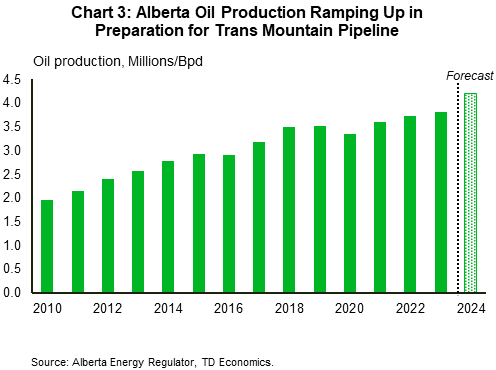
The Alberta government projects the province's GDP could grow by 8.2 per cent this year, marking the strongest economic expansion in over a decade. Premier Danielle Smith announced Friday that oil sands production has increased by 15 per cent since January to meet surging international demand.
"Alberta is uniquely positioned to be a reliable energy supplier to the world during these uncertain times," Smith said during a press conference in Edmonton. "Our energy sector workers are stepping up to meet global demand while creating thousands of new jobs for Albertans."
The surge comes as geopolitical tensions in Eastern Europe and the Middle East continue to disrupt traditional supply chains, forcing international buyers to seek alternative sources. Canadian heavy crude, typically traded at a discount, is now commanding premium prices as refineries scramble to secure stable supply contracts.
Calgary-based energy analyst Sarah Martinez of Petro-Economics Research Group said the current market conditions could sustain elevated prices through 2027. "We're seeing a fundamental shift in global energy security priorities," Martinez explained. "Alberta's stable political environment and established infrastructure make it an attractive long-term partner for energy-hungry nations."
Employment data released by Statistics Canada shows Alberta added 47,000 jobs in February, with 60 per cent concentrated in the energy sector. The unemployment rate dropped to 5.8 per cent, the lowest since 2014.
Fort McMurray Mayor Sandy Bowman reported housing demand has increased dramatically as workers return to the oil sands. "We're seeing families move back to the region after years of uncertainty," Bowman said. "Local businesses that struggled during the downturn are now hiring again."
The provincial treasury projects oil royalties could reach $18.5 billion this fiscal year, compared to $11.2 billion in 2025. Finance Minister Nate Horner indicated the windfall will fund infrastructure projects and debt reduction while maintaining the Heritage Savings Trust Fund.
Energy companies are fast-tracking expansion projects previously shelved during lower price periods. Suncor Energy announced plans to increase Athabasca oil sands production by 200,000 barrels per day by late 2026, while Canadian Natural Resources Limited revealed a $4.2 billion capital investment program.
However, environmental groups warn the expansion could undermine Canada's climate commitments. Clean Energy Canada's executive director Mark Thompson cautioned against over-reliance on fossil fuel revenues. "While short-term economic gains are significant, Alberta must continue investing in renewable energy transition to ensure long-term prosperity," Thompson stated.
The energy boom is rippling through Alberta's broader economy, with manufacturing, construction, and professional services sectors reporting increased activity. Calgary's downtown office occupancy rates have climbed to 78 per cent, the highest since 2015, as energy companies expand their operations.
Economic forecasters predict the current energy price cycle could sustain Alberta's growth momentum well into 2027, potentially transforming the province into Canada's fastest-growing economy for the second consecutive year.