


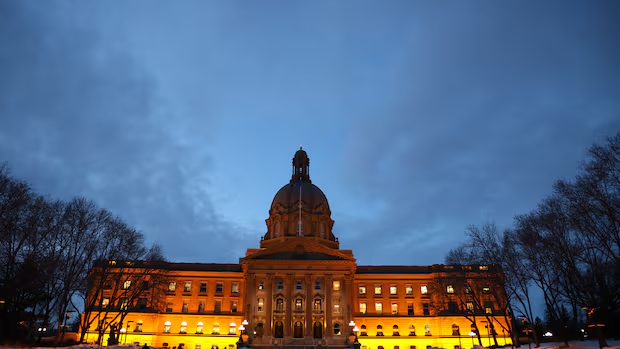
Alberta's newly approved electoral boundaries would significantly reshape the political landscape heading into the 2027 provincial election, according to a detailed analysis of voting patterns and riding geography.
The UCP-dominated legislature approved the controversial new map Wednesday, sparking fierce debate over whether the changes amount to partisan gerrymandering. Under the revised boundaries, the Canmore-Banff riding would shift decisively toward United Conservative Party control, while several Calgary and Lethbridge seats would be redrawn in ways that benefit the governing party.
What the Numbers Show
If voting patterns from the 2023 provincial election were replayed under the newly approved map, the UCP would capture 50 ridings compared to 41 for the NDP—a narrower margin than their actual 49-to-38 victory last time. However, this outcome would be substantially stronger than what an earlier boundary commission had recommended.
The revised map would have cost the NDP the Banff seat by roughly 10.5 percentage points under 2023 voting patterns, effectively handing a competitive riding to the UCP.
The Boundary Battles
The new map incorporates several strategic changes: small communities along the Cowboy Trail were added to Canmore-Banff, rural Rocky View County was merged with three west-end Calgary ridings, and Lethbridge's two urban seats were consolidated into one city-only riding alongside three rural-urban hybrid districts stretching across southern Alberta.
Premier Danielle Smith defended the process Wednesday, arguing that because an independent advisory panel—rather than UCP politicians directly—drew the map, accusations of gerrymandering miss the mark.
"If his conspiracy theory is that someone gerrymandered the advisory panel's maps to benefit the UCP, then they failed miserably," Smith said during question period, responding to NDP Leader Naheed Nenshi's criticism.
Political Scientists Weigh In
Feodor Snagovsky, a political scientist at the University of Alberta, countered that gerrymandering doesn't require wholesale rigging of electoral outcomes—it simply means tilting the playing field.
"All it has to be is putting your thumb on the scale and making it more difficult for the other party to succeed," Snagovsky said.
The NDP has protested the entire process, arguing the government's decision to reject the original boundary commission's recommendation and commission a second panel that produced a more UCP-friendly map represents an unprecedented departure from established electoral procedures.
What Changed From Plan A to Plan B
The initial boundary commission had proposed an 89-riding map that would have produced a 47-to-42 UCP victory under 2023 voting patterns. The approved plan expands to 91 ridings and restores two rural seats in central and northern Alberta that the first commission had targeted for elimination.
While these restorations address rural concerns about representation, they also coincidentally benefit the UCP's electoral prospects—a timing that hasn't gone unnoticed by opposition critics.
As Alberta heads toward fall 2027 elections, the boundary dispute will likely remain a flashpoint in provincial politics, with voters, analysts, and party strategists closely watching whether the redrawn ridings deliver the electoral advantage the data suggests they may provide.
This reporting is based on analysis of Alberta electoral data. Original reporting by CBC Edmonton, November 5, 2026.