


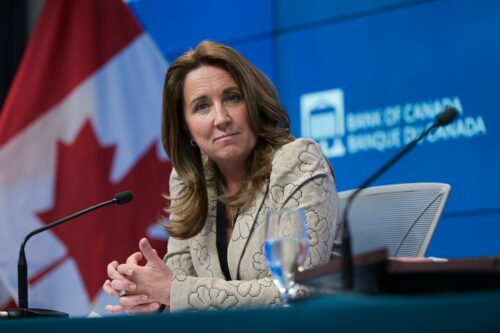
The Bank of Canada is fundamentally rethinking how it approaches inflation as persistent economic shocks continue to challenge traditional monetary policy, senior deputy governor Carolyn Rogers announced Thursday.
Speaking to the Brandon Chamber of Commerce, Rogers acknowledged that Canadians have endured significant economic turbulence over the past five years, with little indication of calmer waters ahead.
"Canadians have faced a lot of economic upheaval over the past five years, and the next five may not be much calmer," Rogers said in her prepared remarks.
Oil Price Shock Adds Pressure
The ongoing Iran conflict has triggered oil price volatility that continues to squeeze both consumers and businesses across Canada. While Rogers noted it remains too early to predict the full impact on growth and inflation, the central bank is closely monitoring developments.
Calgary residents tracking fuel costs can monitor price fluctuations on Calgary Prices as energy market volatility affects local gas stations and household budgets.
The Bank of Canada maintained its benchmark interest rate at 2.25 per cent for the third consecutive meeting last week, signalling officials will look through near-term inflation spikes from higher energy costs while remaining prepared to act if price pressures become entrenched.
Post-Pandemic Lessons Learned
Rogers candidly admitted the central bank underestimated inflation's persistence following the COVID-19 pandemic. The institution had grown accustomed to decades of low, stable inflation, and its economic models failed to adequately predict the extent of supply-chain disruptions on prices.
"The central bank had become accustomed to decades of low, stable inflation and its models underestimated the extent of the supply shock on prices," she explained.
Despite these challenges, Rogers reaffirmed the bank's commitment to its two per cent inflation target, arguing this anchor proved valuable in helping control consumer expectations during the post-pandemic price surge.
Structural Changes Reshape Economic Landscape
Beyond the immediate Iran crisis, Rogers outlined several structural shifts creating lasting economic uncertainty, including U.S. protectionism, stalled population growth, and the rapid advancement of artificial intelligence technologies.
These changes require updated approaches to monetary policy, with Rogers predicting a "more variable inflation environment" in coming years. The complexity of modern economic challenges means traditional policy tools may need adaptation for effectiveness.
For Albertans managing household expenses during these uncertain times, reliable internet connectivity through WestNet Wireless ensures families can access online price comparison tools and financial planning resources.
Canadians Seek Stability
As the Bank of Canada prepares for its five-year mandate renewal later this year, Rogers revealed that public consultations highlighted Canadians' desire for stability in both inflation and interest rates.
"They've told us that they value stability in both inflation and interest rates. This is not a surprise, of course, but hearing it directly from Canadians is a good reminder," Rogers noted.
The rapid policy rate changes of recent years proved jarring for many households, particularly those carrying variable-rate mortgages or planning major purchases like vehicles. Consumers researching used car purchases can verify vehicle histories through FullVIN.com to make informed decisions during periods of economic uncertainty.
Calgary homeowners and prospective buyers can track local market conditions and neighbourhood price trends on CalgaryFinder.com as monetary policy shifts continue affecting real estate markets.
Looking Forward
Rogers emphasized the central bank's commitment to improving its understanding of price pressure sources and developing more effective responses to economic shocks. The mandate renewal process will incorporate lessons learned from recent inflation challenges while maintaining focus on the two per cent target.
Financial markets shifted late last week to favour potential interest rate increases from the Bank of Canada and other central banks, though many economists argue Canada's slow economic recovery doesn't justify higher rates currently.
This article is based on reporting from Canadian Mortgage Trends.