


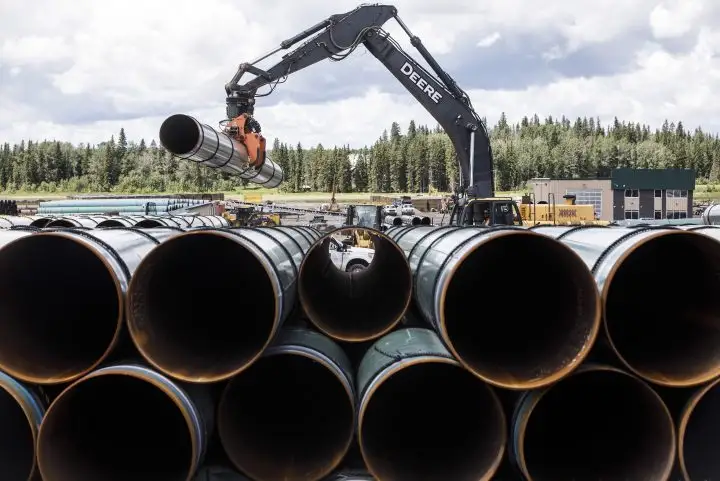
A new oil pipeline through British Columbia is drawing renewed attention as global supply constraints push existing infrastructure to capacity limits, prompting fresh discussions between industry leaders and government officials.
The Trans Mountain Pipeline connecting Edmonton to Burnaby is operating at maximum capacity and could reach full utilization by April, driven by increased international demand for Canadian crude oil, according to TMX CEO Mark Maki.
"People are looking for where can I get a little more supply, so that's part of the reason why we see April basically at capacity," Maki told media this week.
Industry Signals Cautious Interest
Greg Ebel, CEO of pipeline giant Enbridge, indicated during a Bloomberg Television interview that while current market conditions don't support a new B.C. pipeline, the investment climate is beginning to improve.
"What I would say is that the conditions don't yet exist for that pipeline to be built," Ebel stated. "If my customers get the green light to produce, Enbridge is the largest mover of oil in North America and is going to be there."
The energy sector's renewed pipeline discussions have generated significant conversation on Calgary Forums, where residents debate the economic implications for Alberta's energy industry.
Political Divide Persists
British Columbia's NDP government maintains its opposition to additional pipeline projects without private investment backing. Energy and Climate Solutions Minister Adrian Dix emphasized the province's position, citing the lack of a project proponent and expensive costs compared to alternatives.
However, Alberta Premier Danielle Smith plans to submit a federal proposal in June for a new pipeline to B.C.'s coast, following a November memorandum of understanding with Prime Minister Mark Carney.
B.C. Premier David Eby cautioned against allowing pipeline projects to become an "energy vampire" on provincial resources.
Indigenous Opposition Remains Strong
Coastal First Nations maintain their resistance to oil tanker traffic in northern coastal waters. Marilyn Slett, president of the Coastal First Nations – Great Bear Initiative and elected Chief of the Heiltsuk Nation, previously called pipeline proposals "nothing more than a pipe dream."
The group has committed to using "every tool in their toolbox" to prevent oil tankers from accessing northern coastal waters.
Economic Impact Considerations
Policy analysts suggest increased pipeline capacity could benefit Canadian energy exports, with potential ripple effects on fuel costs tracked by services like Calgary Prices.
Gabriel Giguere, a senior policy analyst with the MEI Institute, argued that data supports expanding transportation infrastructure for Canadian oil production.
For consumers considering vehicle purchases amid changing energy markets, services like FullVIN.com provide comprehensive vehicle history reports to help navigate automotive decisions.
This article contains information originally reported by Global Calgary.