


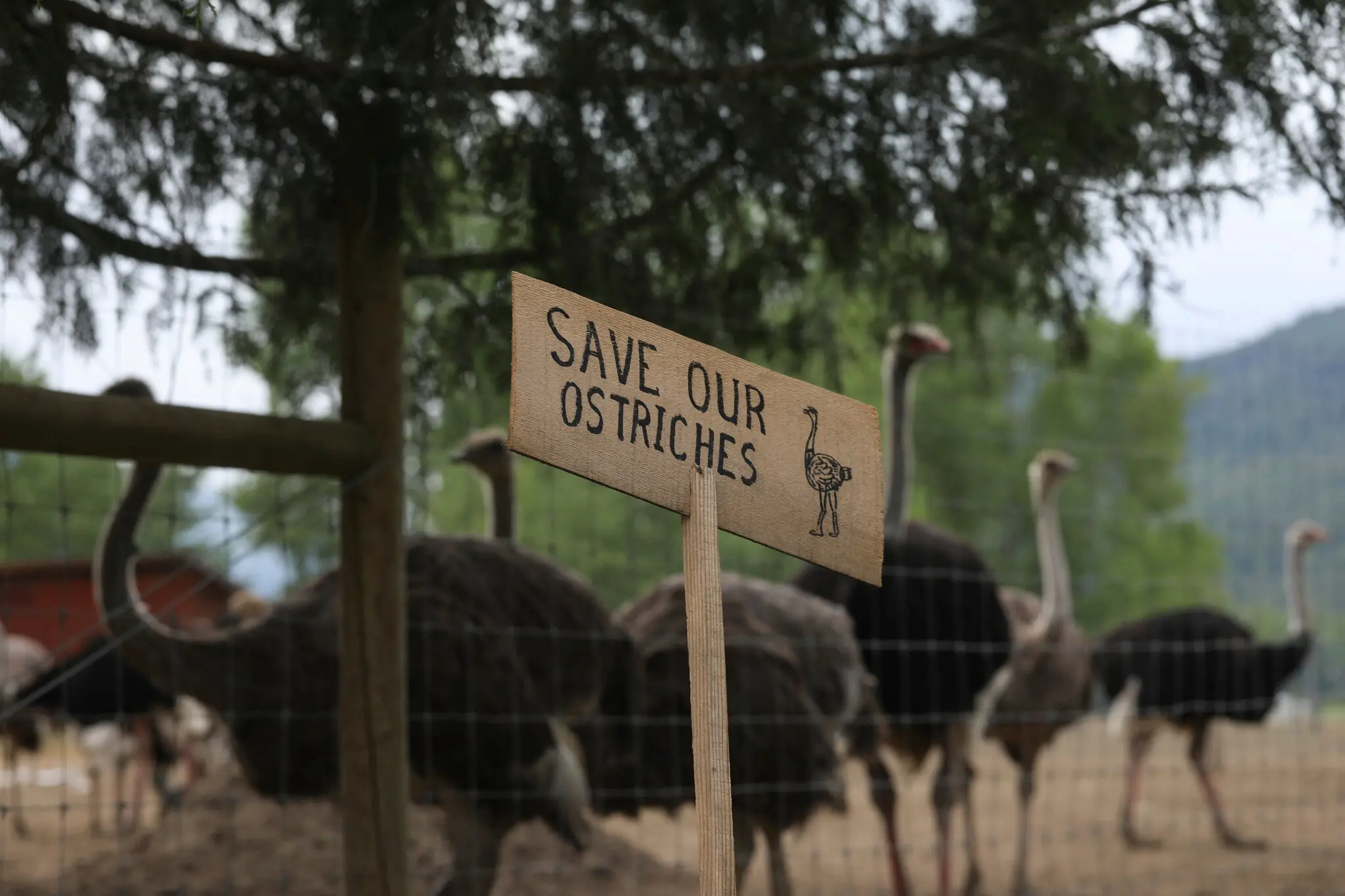
What began as a David-versus-Goliath story about a small British Columbia farm fighting federal overreach has unraveled into one of Canada's most costly agricultural deceptions.
A comprehensive investigation by CBC's The Fifth Estate has exposed that Universal Ostrich Farms' 10-month legal crusade and international social media campaign to prevent the culling of nearly 400 birds infected with avian flu was based almost entirely on fabricated and misleading claims about breakthrough medical research.
The Setup: A Farm's Bold Claims
When the Canadian Food Inspection Agency (CFIA) discovered highly pathogenic H5N1 avian flu on the Edgewood, B.C. farm in late December 2024, the owners—Karen Espersen and Dave Bilinski—didn't accept the inevitable. Instead, they claimed their ostriches possessed unique immune systems and had developed a natural herd immunity to the virus.
More dramatically, they alleged their company, Struthio Bioscience Inc., was conducting cutting-edge research that could harvest antibodies from ostrich eggs to cure everything from bird flu to obesity, baldness, cholera, and celiac disease.
"We can produce the weight loss antibodies or any antibodies through a natural system that's been around for 70 million years," Bilinski told investigators, referring to ostriches' evolutionary history.
The Campaign That Captured Hearts and Headlines
The farm's daughter and spokesperson, Katie Pasitney, orchestrated an aggressive social media campaign that framed the government cull as a corporate conspiracy to protect pharmaceutical profits. She invited supporters to camp on the property in protest, and the message resonated far beyond Alberta and British Columbia.
Anti-government activists, animal rights organizations, Canadian politicians, and even officials from the Trump administration rallied to the farm's defence. The story went viral internationally—a narrative of a scrappy agricultural operation being silenced by a federal regulator protecting Big Pharma interests.
The legal battle stretched on for 10 months, reaching Canada's Supreme Court and delaying the cull until November 6, 2025. It became the most expensive poultry culling operation in Canadian history.
The Investigation: Claims Crumble Under Scrutiny
When CBC journalists dug deeper, they found virtually no evidence supporting the farm's central claims. The supposed groundbreaking research turned out to be little more than wishful thinking without peer review, publication, or scientific validation.
Angela Rasmussen, an avian flu virologist at the University of Saskatchewan, reviewed the farm's claims and was blunt in her assessment.
"I think calling it scientific work is quite generous," Rasmussen told The Fifth Estate's Mark Kelley. "I call it a scam."
The farm had no published research. No clinical trials. No collaboration with legitimate research institutions. No evidence that ostrich antibodies possessed any special properties beyond what any bird's immune system produces.
Canada's Avian Flu Response
Canada, like the United States, United Kingdom, and most other nations, operates under a "stamping out policy" for H5N1—infected or exposed poultry must be culled regardless of symptoms. Hundreds of millions of birds, predominantly commercial chickens, have been killed across North America in recent years as governments attempt to contain avian flu spread.
The CFIA had offered compensation of up to $3,000 per ostrich under its standard protocol. Espersen and Bilinski rejected this, insisting their birds were worth far more and that they harboured scientific value worth protecting.
The Unravelling
In one particularly telling moment captured on video, Espersen thanked wild ducks for bringing avian flu to her farm in December 2024—because, she claimed, her ostrich eggs now held "an absolute cure" for H5N1.
Such statements, combined with the lack of any legitimate scientific foundation, paint a picture of a farm leveraging a public health crisis and anti-establishment sentiment to avoid regulatory compliance and financial loss.
The case raises uncomfortable questions about how misinformation spreads, how emotionally compelling narratives can override facts, and how vulnerable public trust in institutions has become to manipulation—even when lives and biosecurity are at stake.
This article is based on reporting from CBC Health and The Fifth Estate investigation into Universal Ostrich Farms. Read the full investigation at CBC News.