


While leading nations across the Atlantic and beyond are racing to eliminate animal testing from biomedical research, Canada remains stuck in neutral — and it's costing the country dearly, according to scientists pushing for change.
The United States, United Kingdom, and European Union have all committed substantial funding and detailed roadmaps to phase out animal testing. But Canada? The country has a strategy only for replacing animals in chemical and toxicity testing. There is no coordinated national plan for biomedical research, which accounts for 40 to 60 per cent of the up to five million animals used annually in Canadian research — one of the highest figures among G7 nations.
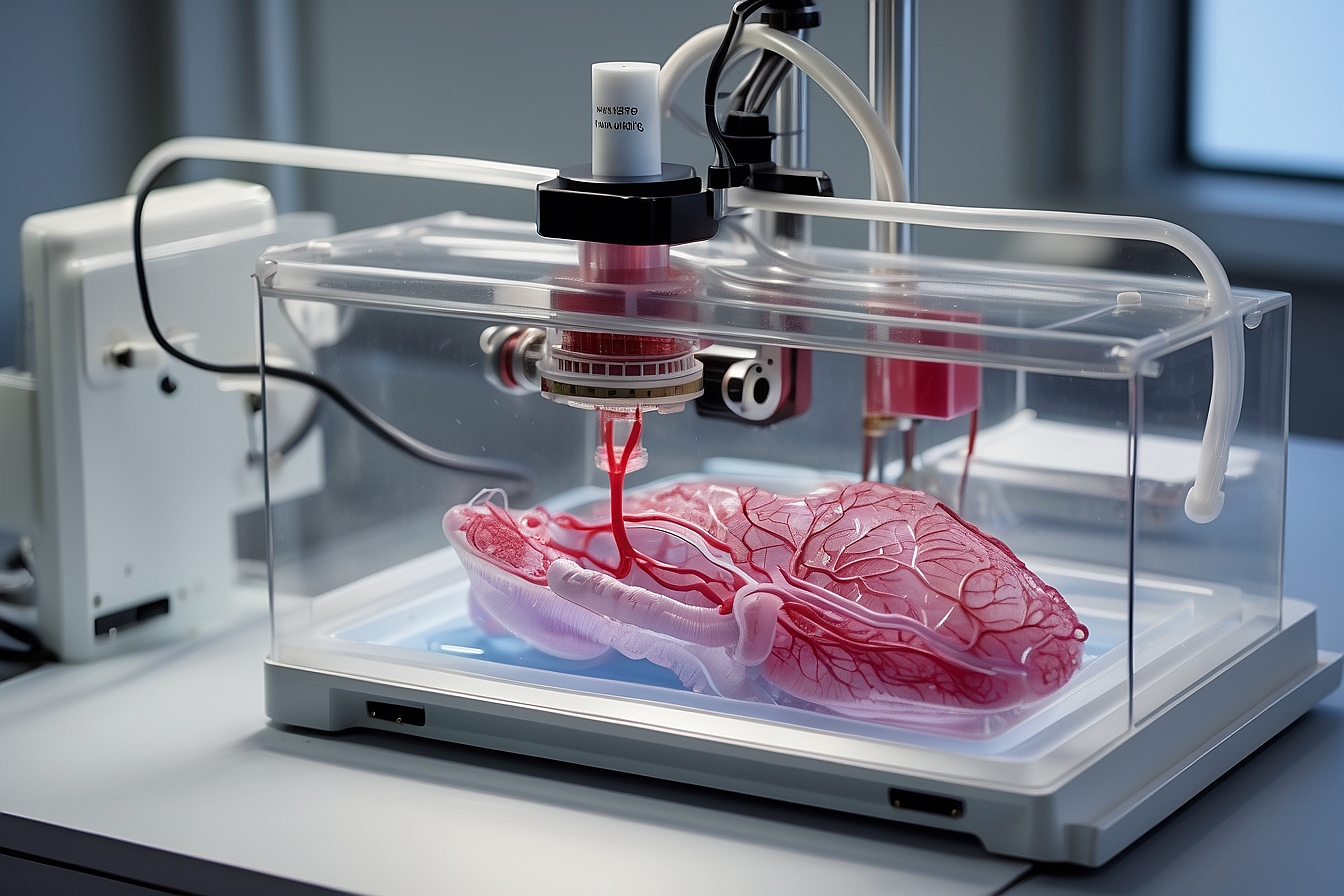
The consequence has been stark. Charu Chandrasekera, a biomedical researcher who founded the Canadian Centre for Alternatives to Animal Methods at the University of Windsor in 2017, was forced to close her lab in 2024 due to insufficient government funding. Her pioneering work on 3D bioprinted human tissues — technology that could monitor health changes in a petri dish instead of an animal — now sits in storage.
"The centre's work changed the animal testing conversation in our country. And then it disappeared. And only because, unlike in other comparable countries, our government didn't see it as a priority to fund it."
Chandrasekera's pivot to alternatives research came after a personal moment of clarity. As a researcher using mice to study heart failure, she watched her father undergo a quadruple bypass surgery. Standing in that hospital ward, she asked herself a question that would reshape her career: "Is the work that I'm doing … ever going to help patients like these?" The answer was no.
That sobering reality reflects a fundamental problem with animal testing: it doesn't work as well as institutions pretend. Ninety per cent of drugs deemed safe and effective in animal trials ultimately fail when tested in humans, according to multiple peer-reviewed studies. The disconnect between mouse models and human biology has long troubled researchers, but recent breakthroughs in stem cell technology have finally made viable alternatives possible.
The Science Is Ready. The Money Isn't.
Since Japanese researcher Shinya Yamanaka won the Nobel Prize in 2006 for his work on stem cells, scientists have been developing human-based testing methods that actually predict how drugs will behave in human bodies. At McMaster University, researchers have created functional lung and colon cell cultures. At the University of Toronto, professor Milica Radisic — Canada Research Chair in Organ-on-a-chip Engineering — has engineered living heart tissue that beats rhythmically, complete with muscle fibres and simulated blood vessels.
These aren't theoretical concepts anymore. They work. They're more accurate than animal models. And they're ready to scale.
"This is really the first time that we can change that," Radisic said, referring to the possibility of moving away from animal testing entirely.
But without government backing and industry investment, these innovations risk remaining lab curiosities rather than becoming the industry standard.
A $30 Billion Market Canada Could Miss
Chandrasekera sees the bigger picture. The global market for alternatives to animal testing is projected to reach $30 billion by 2030. That's not just a humanitarian issue — it's an economic opportunity. Countries investing now in this technology will lead the sector, attract biotech companies, create high-skilled jobs, and position themselves as leaders in the next generation of pharmaceutical and medical device development.
Canada, a nation with world-class research institutions and a strong biotech presence, is positioned to compete. Yet without a coordinated national strategy and dedicated funding, the country risks ceding this advantage to competitors.
"We are going to move away from animal testing, whether Canada likes it or not," Chandrasekera said. "So the question is really: 'Do we want to have a piece of that pie?'"
The answer from Ottawa remains unclear. As other nations double down on alternatives, Canadian researchers continue to wait for the signal that their work matters — and for the investment to prove it.
This article is based on reporting from CBC Tech. Read the original story at CBC Radio's Quirks & Quarks.