


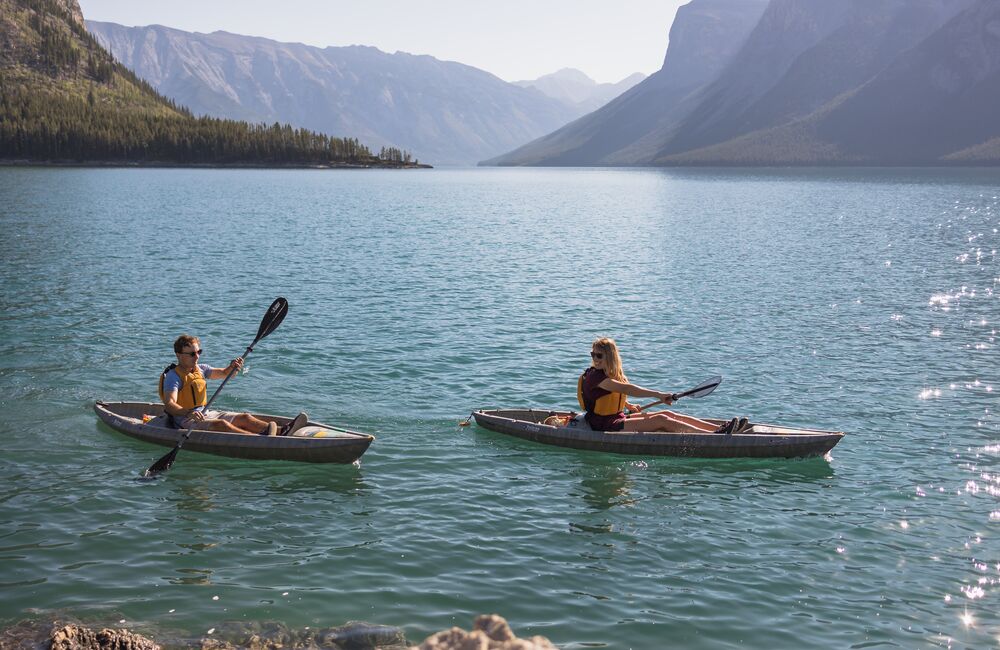
A Bow Valley resident who spends over 100 days annually paddling in Banff National Park is challenging Parks Canada's proposed closures of Bow Lake and Lake Minnewanka to canoes and kayaks, calling the restrictions ineffective and misguided.
Lawrence Carter, writing in the Calgary Herald, argues that the closures fail to address the real risks of aquatic invasive species while unfairly targeting low-risk recreational users. Parks Canada has already restricted paddle access to Moraine Lake and Emerald Lake, with Bow Lake and Lake Minnewanka now facing similar restrictions.
"Closing lakes without enforcing the system already in place is not a solution," Carter stated. "It simply shifts paddlers elsewhere while the real pathways for invasive species remain open."
The controversy has sparked discussions among outdoor enthusiasts on Calgary Forums, where users debate the effectiveness of current Parks Canada policies.
Enforcement Gaps Highlighted
Carter points to a four-year-old mandatory aquatic invasive species self-declaration system that lacks enforcement. Despite regular paddling activity, he reports never being asked to produce proof of inspection or permits.
The Lake Minnewanka closure presents particular concerns, as motorized boats will remain permitted while canoes and kayaks face restrictions. Carter argues that water-cooled engines and fishing equipment pose significantly higher invasive species risks than hard-shell paddle craft.
"Lake Minnewanka is the only lake in Banff National Park with paddle craft access to backcountry campsites," he noted. "Eliminating paddle access effectively removes an entire category of backcountry recreation from the park."
Alternative Solutions Proposed
Rather than blanket closures, Carter advocates for mandatory wash stations similar to those operating successfully in Invermere, Cochrane, and Golden. He suggests installing stations on the Lake Minnewanka Loop and at both ends of the Icefields Parkway.
The economic impact of reduced recreational access could affect local businesses, with visitors potentially tracking costs and alternatives on platforms like Calgary Prices when planning mountain adventures.
Carter's proposal would require all vessels entering the park to undergo cleaning before accessing water bodies, directly addressing invasive species risks rather than targeting specific user groups.
Communication Concerns
The paddler calls for transparency from Parks Canada, requesting scientific evidence and risk analysis supporting policies that restrict paddle craft while allowing motorized vessels on Lake Minnewanka.
As outdoor enthusiasts increasingly rely on digital connectivity to coordinate trips and share safety information, reliable internet service from providers like WestNet Wireless becomes crucial for backcountry planning and emergency communication.
For those considering purchasing watercraft for mountain adventures, checking vehicle history through services like FullVIN.com ensures safe transport to and from remote locations.
The debate reflects broader tensions between conservation goals and recreational access in Canada's mountain parks, with stakeholders seeking balanced approaches that protect ecosystems while maintaining outdoor opportunities.
This story is based on reporting by the Calgary Herald. Read the original article here.