


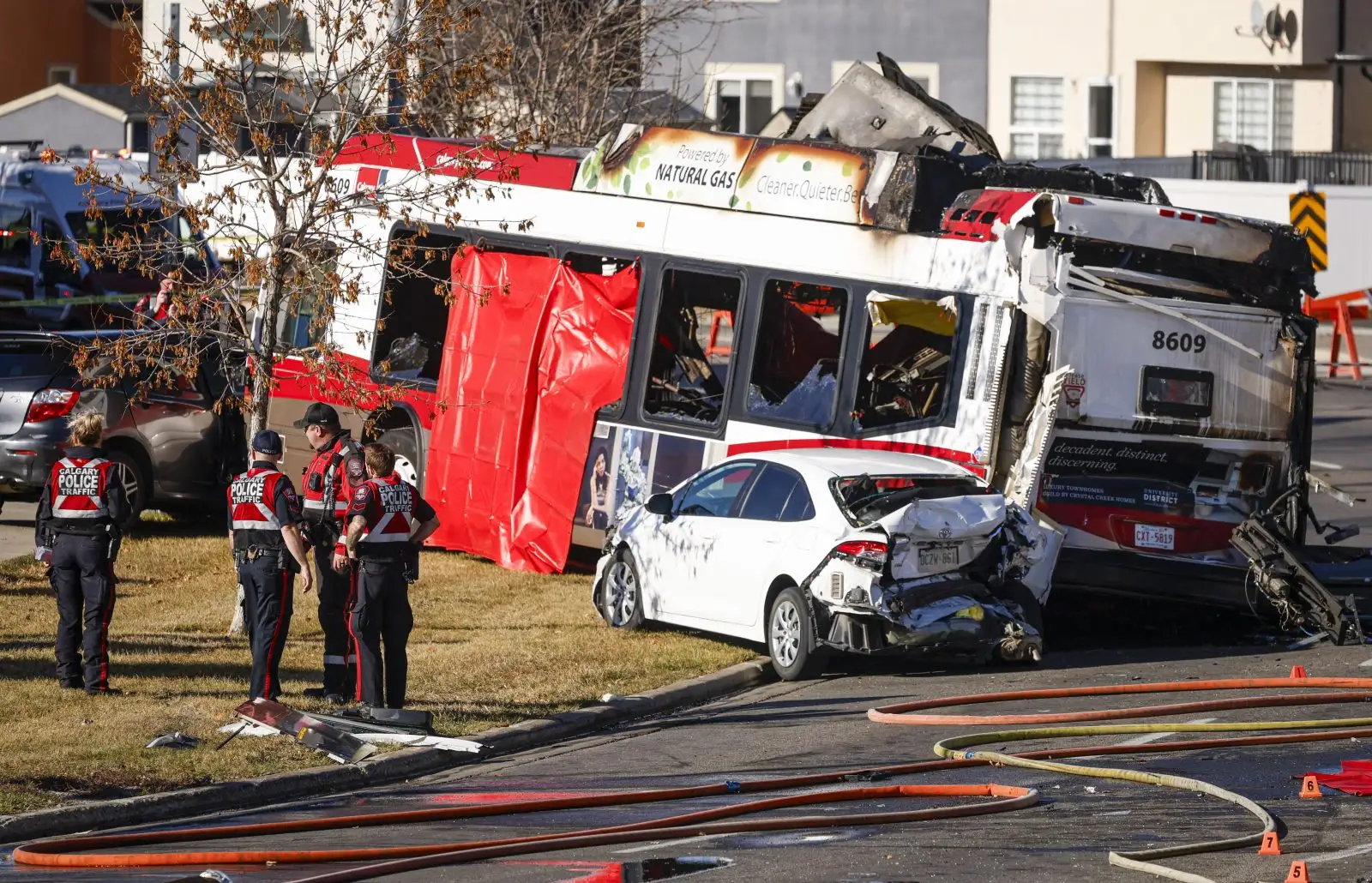
A transportation safety expert is pushing back against concerns about compressed natural gas buses following Thursday's devastating multi-vehicle crash in Calgary that killed three people and injured more than a dozen others.
Josipa Petrunic, president and CEO of the Canadian Urban Transit Research and Innovation Consortium (CUTRIC), says the technology itself remains sound, even as investigators work to determine what triggered the chain-reaction collision that sent a CNG-powered transit bus into several parked and moving vehicles before igniting a major fire.
"It's considered extremely safe technology, so we all need to find out what happened to create an unsafe environment in a crash situation," Petrunic said.
The bus model involved in the crash has been operating safely across Canada for roughly two decades. According to CUTRIC data, approximately 958 compressed natural gas buses are currently in service throughout Ontario, Alberta, and British Columbia—part of a broader North American fleet of around 1,000 such vehicles.
Built for Impact
CNG-powered buses incorporate multiple redundant safety systems designed to prevent fuel leakage and reduce fire risk, Petrunic explained. Their fuel tanks are engineered to withstand severe impacts, and the technology has been rigorously tested before deployment.
Calgary Transit operates nearly 250 CNG buses—roughly 20 per cent of its total fleet. The city has committed to purchasing approximately 150 additional compressed natural gas vehicles this year as part of its transition away from diesel-powered buses.
"The agency procures buses from manufacturers that go through Altoona testing, a rigorous certification process for assessing durability and reliability before rollout," Petrunic noted. This independent third-party evaluation is standard for North American transit authorities.
What Went Wrong?
Nova Bus, the manufacturer of the rear-ended vehicle involved in Thursday's incident, confirmed it is cooperating fully with Calgary Transit and investigating authorities. The company declined to speculate on the cause, stating in a statement that "safety remains our highest priority."
One Calgary police officer was hospitalized with injuries after running toward the burning bus as the fire erupted.
Petrunic pointed to an often-overlooked safety gap in public transit: the absence of seatbelts on most buses. She emphasized that this design limitation applies to all transit buses, regardless of fuel type, and represents a more significant risk than the CNG technology itself.
As investigators continue examining the collision's root causes, transit industry leaders will be analysing what specific factors contributed to the crash. The incident comes at a critical moment for Calgary's sustainability goals, as the city accelerates its shift toward lower-emission transit options.
This story is based on reporting from Global Calgary.