

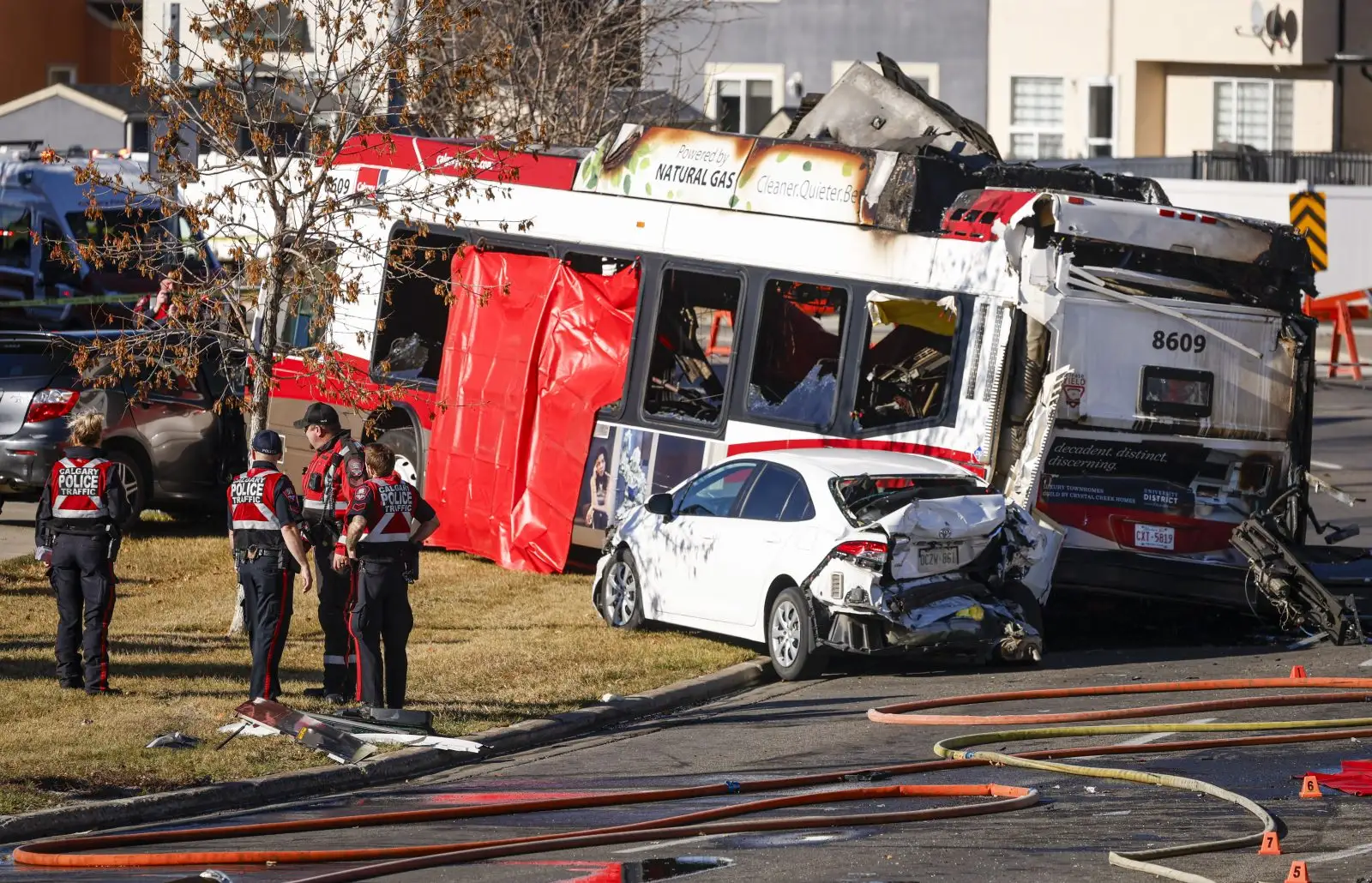
A catastrophic chain-reaction collision in Calgary on Thursday has reignited questions about public transit safety, though transportation experts insist the compressed natural gas bus involved in the incident represents proven, reliable technology that has safely served Canadian communities for two decades.
The crash, which claimed three lives and left more than a dozen people injured, occurred when a transit bus struck multiple vehicles before rear-ending a stationary bus, triggering an explosion and fire that forced nearby officers to rush toward the scene. Calgary police confirmed at least one officer required hospitalization due to injuries sustained while responding to the emergency.
A Technology Under Scrutiny
Josipa Petrunic, president and CEO of the Canadian Urban Transit Research and Innovation Consortium (CUTRIC), a national non-profit dedicated to low-carbon transit research, emphasizes that compressed natural gas buses remain "extremely safe technology."
"It's considered extremely safe technology, so we all need to find out what happened to create an unsafe environment in a crash situation," Petrunic stated.
Across Canada, approximately 958 compressed natural gas-powered buses operate in Ontario, Alberta, and British Columbia, according to CUTRIC data. Calgary Transit operates nearly 250 CNG buses—roughly 20 per cent of its fleet—with plans to purchase approximately 150 additional units this year to replace diesel-powered vehicles.
Built-In Safety Features
CNG buses incorporate multiple heavy-duty safety mechanisms, Petrunic explained. These systems include advanced leak detection and fire-reduction technologies, while fuel tanks are engineered to withstand severe impacts. The technology has proven its reliability across Canada's major transit systems.
Nova Bus, the manufacturer of the bus rear-ended in Thursday's collision, confirmed its ongoing cooperation with Calgary Transit and investigating authorities. The company declined to speculate on the crash's cause before a comprehensive investigation concludes.
"Safety remains Nova Bus's highest priority, and we are offering our full cooperation to Calgary Transit and the relevant authorities as they work to establish the facts," a company spokesperson said.
What Actually Poses Risk
Petrunic raised an important point that safety advocates have long emphasized: the most significant safety vulnerability in public transit buses—including CNG models—isn't the fuel system or engine technology, but rather the lack of seatbelt systems for passengers.
Calgary Transit procures buses only from manufacturers meeting Altoona testing standards, a rigorous certification process that evaluates durability and reliability before vehicles enter service.
As investigators piece together the circumstances leading to Thursday's tragedy, industry leaders will be examining what specific factors contributed to the collision. The incident marks a sobering reminder of the importance of comprehensive safety protocols across all public transportation networks.
This article is based on reporting from Global News. Read the original story at Global News.