


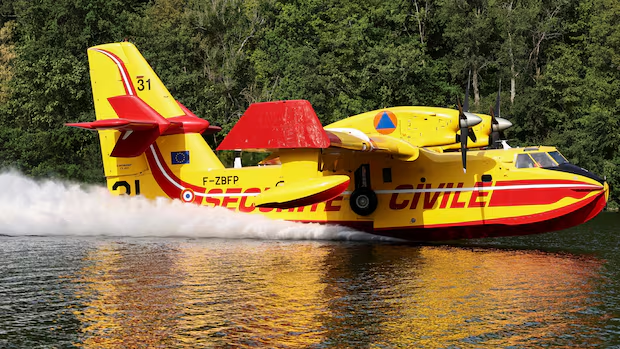
The assembly floor at Calgary's De Havilland plant is humming with urgency. As devastating wildfires consume vast stretches of North America and Europe, the pressure to accelerate production of Canada's legendary Canadair water bombers has reached a critical point.
The company is racing against the clock to complete its first two Super Scooper aircraft, scheduled for delivery in early 2028. But that timeline may not be fast enough. Governments from France to Manitoba are desperate for more of these specialized firefighting planes, and executives at De Havilland acknowledge the weight of responsibility.
Built by Hand in Calgary
The iconic yellow-and-red aircraft have become a symbol of Canadian ingenuity and firefighting capability worldwide. Each plane is painstakingly assembled by hand in Calgary, with components sourced from suppliers across the country. The Super Scooper can scoop 6,100 litres of water directly from lakes, rivers, and oceans in seconds—a capability unmatched by modified cargo planes or helicopters.
"We are under pressure. We know that this is a very important aircraft not only for Canada but for the world," said Neil Sweeney, De Havilland's vice-president of corporate affairs, during an interview at the Calgary facility.
Global Demand Reaches New Heights
First designed in the 1960s to tackle Canada's wilderness fires, the Canadair has become an international asset. Opposition politicians in France and Spain have criticized their governments for failing to secure enough of these aircraft as wildfire seasons intensify. Manitoba Premier Wab Kinew summed up the desperation last year: "We could use every water bomber we can get our hands on."
The political heat is translating into manufacturing reality. De Havilland is seriously considering construction of a second production line—a massive undertaking that would require significant capital investment and workforce expansion.
"We are under pressure. We know that this is a very important aircraft not only for Canada but for the world."
— Neil Sweeney, De Havilland VP of Corporate Affairs
Federal Commitment Could Be Game-Changer
Alberta Premier Danielle Smith has thrown her weight behind securing a firm federal order for the aircraft. A solid commitment from Ottawa would give De Havilland the confidence to green-light that second production line, potentially doubling output and addressing the global shortage.
The Canadair revival represents a significant economic opportunity for Calgary and Alberta. De Havilland acquired the water bomber program from Bombardier in 2015 after production halted. The company's decision to resume manufacturing marks a rare return of high-value aerospace production to Canadian soil.
With each wildfire season bringing new records for destruction, the stakes have never been higher—and neither has the demand for Calgary's world-class firefighting aircraft.
This article is based on reporting from CBC Calgary.