


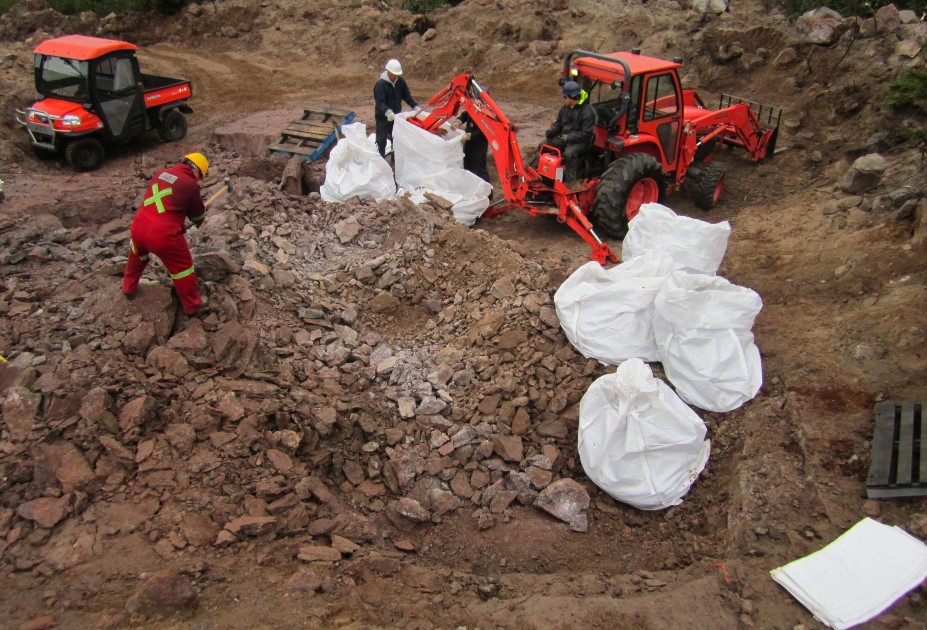
The federal government announced a $175-million investment Friday in a Quebec rare earth mining project, marking Canada's largest commitment to critical mineral extraction despite mounting political tensions with the United States over trade policy.
Natural Resources Minister Jonathan Wilkinson said the funding will support the expansion of Commerce Resources Corp.'s Blue River rare earth deposit in northwestern Quebec, a project expected to produce materials essential for electric vehicle batteries, wind turbines, and military applications.
"This investment positions Canada as a reliable supplier of critical minerals to our allies while reducing dependence on foreign sources," Wilkinson told reporters at a news conference in Montreal. "We're building supply chain resilience in an increasingly uncertain global environment."
The announcement comes as US-Canada relations face strain following the new American administration's threats to impose tariffs on Canadian energy exports and renegotiate existing trade agreements. Industry experts say the timing reflects Canada's push to diversify its economic partnerships while maintaining strategic autonomy in critical sectors.
"Canada cannot afford to be held hostage by American political volatility when it comes to our natural resources," said Dr. Sarah Martinez, director of the Canadian Institute for Critical Minerals. "This investment shows we're serious about building our own supply chains."
The Blue River project contains an estimated 4.7 million tonnes of rare earth oxides, including significant deposits of neodymium and dysprosium used in permanent magnets for clean energy technologies. Commerce Resources expects production to begin by 2028, creating approximately 800 jobs in the region.
Quebec Premier François Legault welcomed the federal investment, noting the province's growing role in North America's critical mineral supply chain. The provincial government has committed an additional $50 million to supporting infrastructure for the project.
However, the investment faces scrutiny from some quarters. Conservative MP Pierre Poilievre criticized the spending as "taxpayer-funded corporate welfare" and questioned whether private markets should determine mining investments without government intervention.
Environmental groups have raised concerns about potential impacts on local waterways and Indigenous territories. The Cree Nation of Mistissini has called for enhanced consultation processes and revenue-sharing agreements before construction proceeds.
Trade analysts suggest the investment represents a calculated response to US protectionist policies that threaten Canadian resource exports. The Biden administration's successor has signalled intentions to prioritize domestic mineral production and impose restrictions on foreign suppliers.
"Canada is hedging its bets by developing domestic capacity while the Americans become increasingly unreliable partners," said University of Calgary economist Dr. Michael Thompson. "This could be the beginning of a broader decoupling in critical sectors."
The project timeline calls for environmental assessments to conclude by late 2026, with construction beginning in 2027 pending regulatory approvals.