


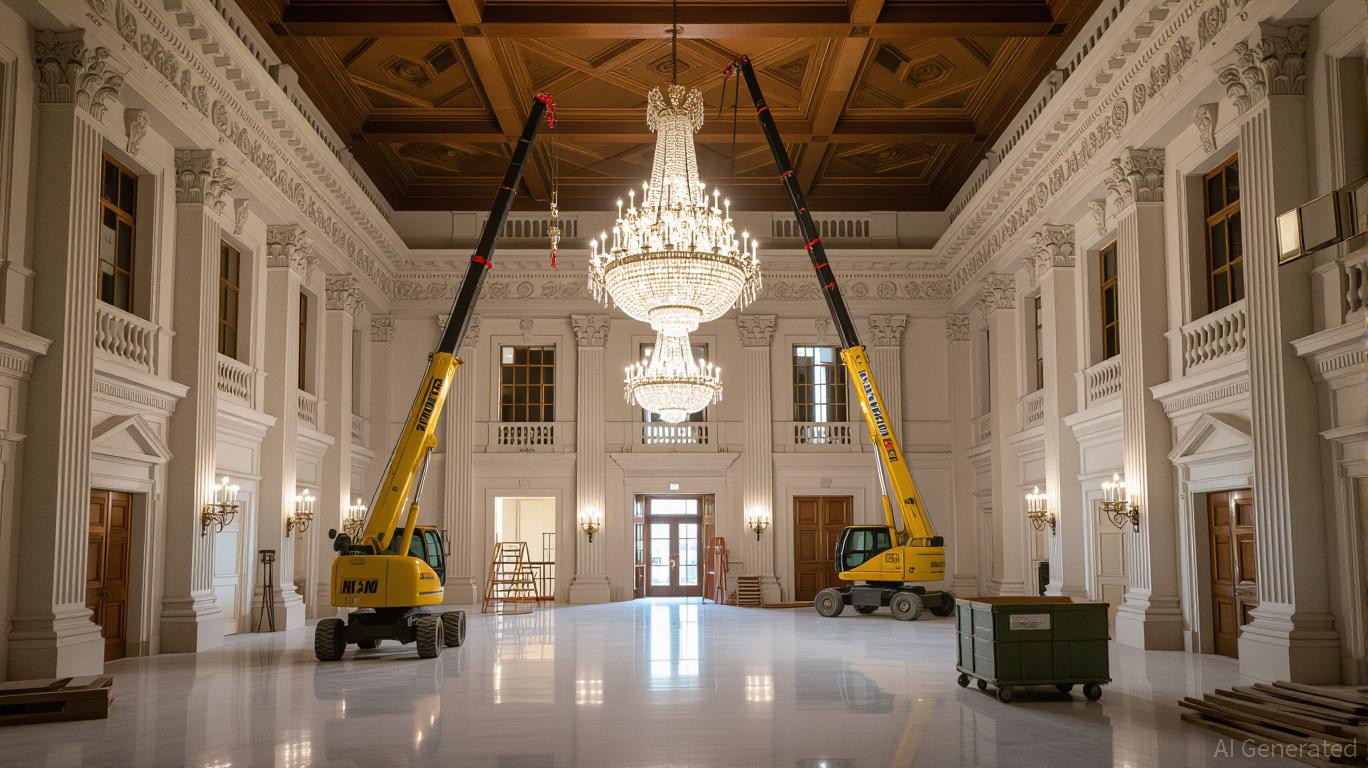
A federal appeals court has ordered a lower court judge to take another look at whether halting construction on President Trump's massive White House ballroom renovation could compromise national security, in a ruling that extends the project's legal limbo through mid-April.
The three-judge panel from the U.S. Court of Appeals for the District of Columbia Circuit said there simply isn't enough information yet to determine how much work can be safely suspended without putting the president, his family, or White House staff at risk.
The case now returns to U.S. District Judge Richard Leon, who in late March blocked the project from moving forward without congressional approval—but gave the administration two weeks to seek a reversal. The appeals court has extended that window until April 17.
The $400 Million Project in Question
The White House ballroom renovation, which would create a 90,000-square-foot event space capable of hosting nearly 1,000 people, has become a flashpoint in a legal battle between the Trump administration and preservationist groups.
The National Trust for Historic Preservation sued in December, just days after the White House finished demolishing the East Wing to make way for the project. The organization argues the president lacks the constitutional authority to undertake such a massive renovation without explicit congressional approval.
Judge Leon agreed with that assessment, writing in his initial ruling that "no statute comes close to giving the President the authority he claims to have." He added pointedly: "The President of the United States is the steward of the White House for future generations of First Families. He is not, however, the owner!"
Security Claims Complicate the Picture
Government lawyers have argued the project includes critical security infrastructure—everything from drone and ballistic missile defences to biohazard protection systems. They claim the work also includes bomb shelters, military installations, and a medical facility built underneath the ballroom itself.
Judge Leon initially reviewed classified materials submitted by the government and determined that pausing construction would not jeopardize national security. However, he did carve out an exception allowing any work "necessary to ensure the safety and security of the White House" to continue.
The appeals court has now flagged a critical inconsistency: the White House initially suggested that security upgrades could be separated from the ballroom construction and could proceed independently. But in recent filings, the administration has suggested those security elements are inseparable from the overall project.
"It remains unclear whether and to what extent certain aspects of the ballroom are necessary for the safety and security of those upgrades," the appeals court wrote.
What Happens Next
Judge Leon must now provide clearer guidance on exactly how his injunction affects the administration's security and safety plans. The appeals court's three-day extension gives the Trump administration until April 17 to potentially seek Supreme Court intervention if it chooses.
Carol Quillen, president and CEO of the National Trust for Historic Preservation, said the organization remains committed to protecting the historic integrity of the White House through broad consultation and public input.
This article is based on reporting from CBS News and the Associated Press.