


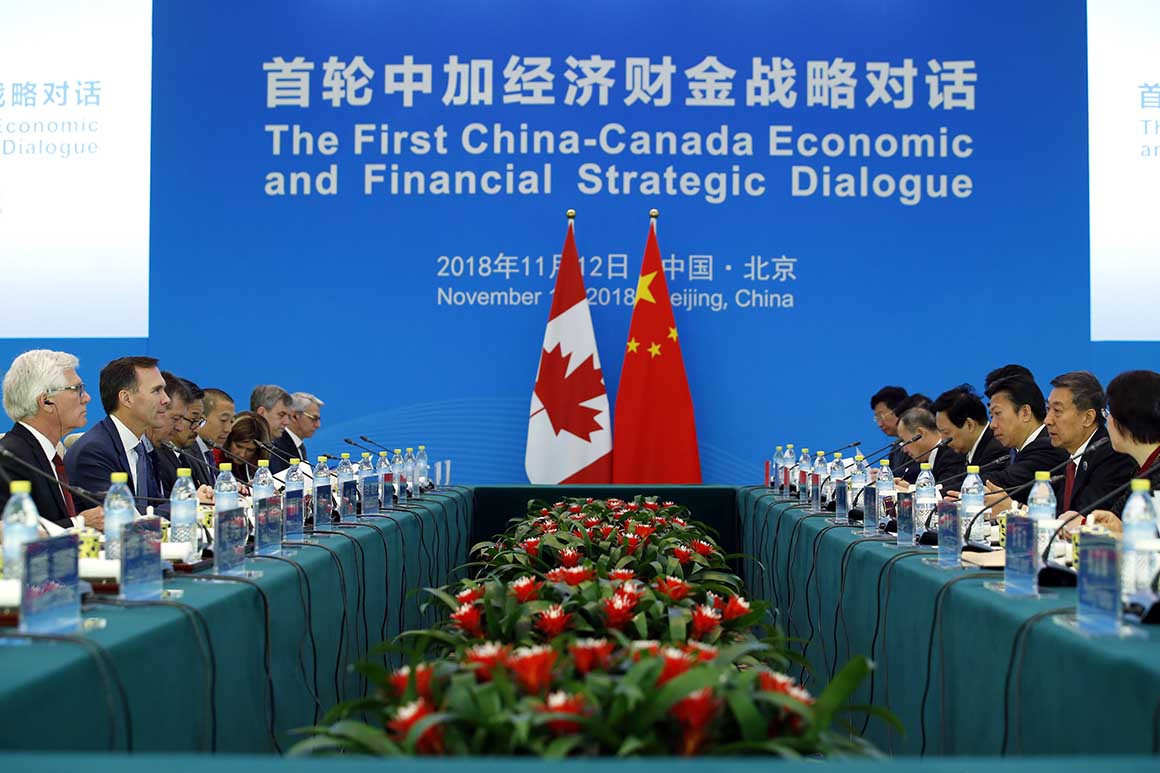
Finance Minister François-Philippe Champagne is in Beijing this week on a crucial trade mission aimed at strengthening Canada's economic relationship with China as the country seeks to diversify its trading partnerships amid ongoing global trade uncertainties.
The two-day visit represents Canada's continued effort to deepen ties with the world's second-largest economy, building on Prime Minister Mark Carney's meeting with Chinese President Xi Jinping in January.
"Everyone has found a strategic way to engage with China," Champagne said ahead of the visit, referring to his G7 counterparts. "China is the second-largest economy and our second-largest trading partner, so you have to engage."
Massive Trade Imbalance Drives Diplomatic Push
The visit comes as Canada grapples with a significant trade deficit with China. While total merchandise trade between the two nations reached $124.8 billion in 2025 — nearly five per cent higher than the previous year — the balance heavily favours China.
Canadian exports to China totalled $34.1 billion last year, while imports from China reached $90.1 billion, highlighting the challenge facing Canadian negotiators.
During his Beijing meetings, Champagne is engaging with high-level financial sector leaders and Chinese government officials to "build strategic partnerships and attract new investments as part of Canada's broader diversification imperative," according to his office.
China's Domestic Focus Creates Opportunities
David Perez-Des Rosiers, director of the Canada-China Business Council's Beijing chapter, sees significant potential in China's latest five-year plan, which emphasizes boosting domestic consumption.
"It is a significant market that cannot be substituted or replaced. And especially for a country like Canada that trades a lot of commodities," Perez-Des Rosiers noted, pointing to China's population of approximately 1.4 billion people.
The business council has long advocated for increased ministerial visits to create a "predictable business environment" between the two nations.
Building on January Breakthrough
Champagne's mission follows Carney's successful January visit, which secured a deal allowing 49,000 Chinese electric vehicles into Canada at a reduced tariff rate of 6.1 per cent — down from 100 per cent — in exchange for reduced tariffs on agricultural products like canola meal.
However, challenges remain, including a 25 per cent retaliatory tariff on Canadian pork that continues to impact agricultural exporters.
Carney characterized the evolving relationship as "a partnership that reflects the world as it is today with an engagement that's realistic, respectful and interest-based."
The diplomatic push reflects Canada's goal of increasing exports to China by 50 per cent by 2030, a target that requires significant improvement in trade relations and market access.
This article is based on reporting by CBC World. Read the original coverage at cbc.ca.