


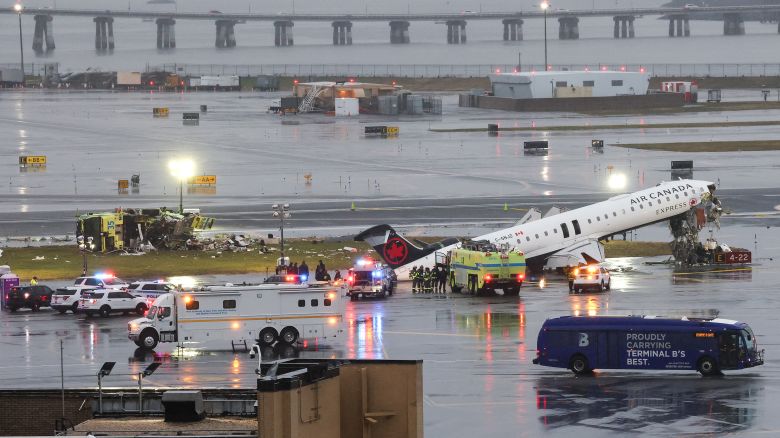
The U.S. Federal Aviation Administration is making a sweeping commitment to aviation safety in the wake of a catastrophic runway collision at New York's LaGuardia Airport that claimed two lives.
The FAA announced Wednesday it will spend $16.5 million U.S. (approximately $22.6 million Canadian) to install Vehicle Movement Area Transmitters—specialized transponders—on roughly 1,900 airport vehicles across 44 major American airports. The initiative directly addresses safety gaps exposed by the March 22 crash involving an Air Canada Express jet and a fire truck.
What Went Wrong That Night
Investigators determined the fire truck involved in the collision at LaGuardia lacked a transponder to alert air traffic controllers of its location. When the aircraft touched down, the airport's surface surveillance system—designed to prevent exactly these types of incidents—failed to trigger warning alarms.
"VMATs help prevent dangerous runway incidents and by accelerating the deployment of this technology, we're closing critical visibility gaps on our nation's runways and taxiways," FAA Administrator Bryan Bedford stated in the agency's announcement.
According to the National Transportation Safety Board's preliminary investigation, the fire truck driver didn't realize a radio warning—"stop, stop, stop"—was directed at their vehicle. The absence of transponder technology compounded the communication breakdown, leaving air traffic controllers unable to track the truck's position in real time.
Long-Planned Initiative Gets Fast-Tracked
While the FAA had been considering this safety upgrade for months, the LaGuardia disaster accelerated the timeline dramatically. One year prior to the crash, the agency had recommended that airports voluntarily equip emergency vehicles with transponders—a suggestion that clearly wasn't universally adopted.
The Port Authority of New York and New Jersey, which operates LaGuardia, committed to adding transponders to its own ground vehicles following the incident. Now the FAA's nationwide mandate ensures consistent safety standards across American airports.
Expanding Beyond Federal Vehicles
The transponder installation program covers airports equipped with advanced surveillance systems including ASDE-X, Airport Surface Surveillance Capability (ASSC), and Surface Awareness Initiative systems. An additional 220 airports that currently have or are acquiring Surface Awareness Initiative technology will also participate.
The FAA's statement Wednesday also encouraged individual airports and airlines to voluntarily outfit their own vehicles with the same technology, recognizing that comprehensive visibility is essential to preventing future tragedies.
For air traffic controllers, these transponders provide real-time tracking on display screens, triggering both visual and audible collision alerts when potential dangers are detected. When functioning properly, the system gives controllers precious seconds to intervene—seconds that may have made the difference at LaGuardia.
This story is based on reporting from CBC World. Read the full investigation at CBC News.