


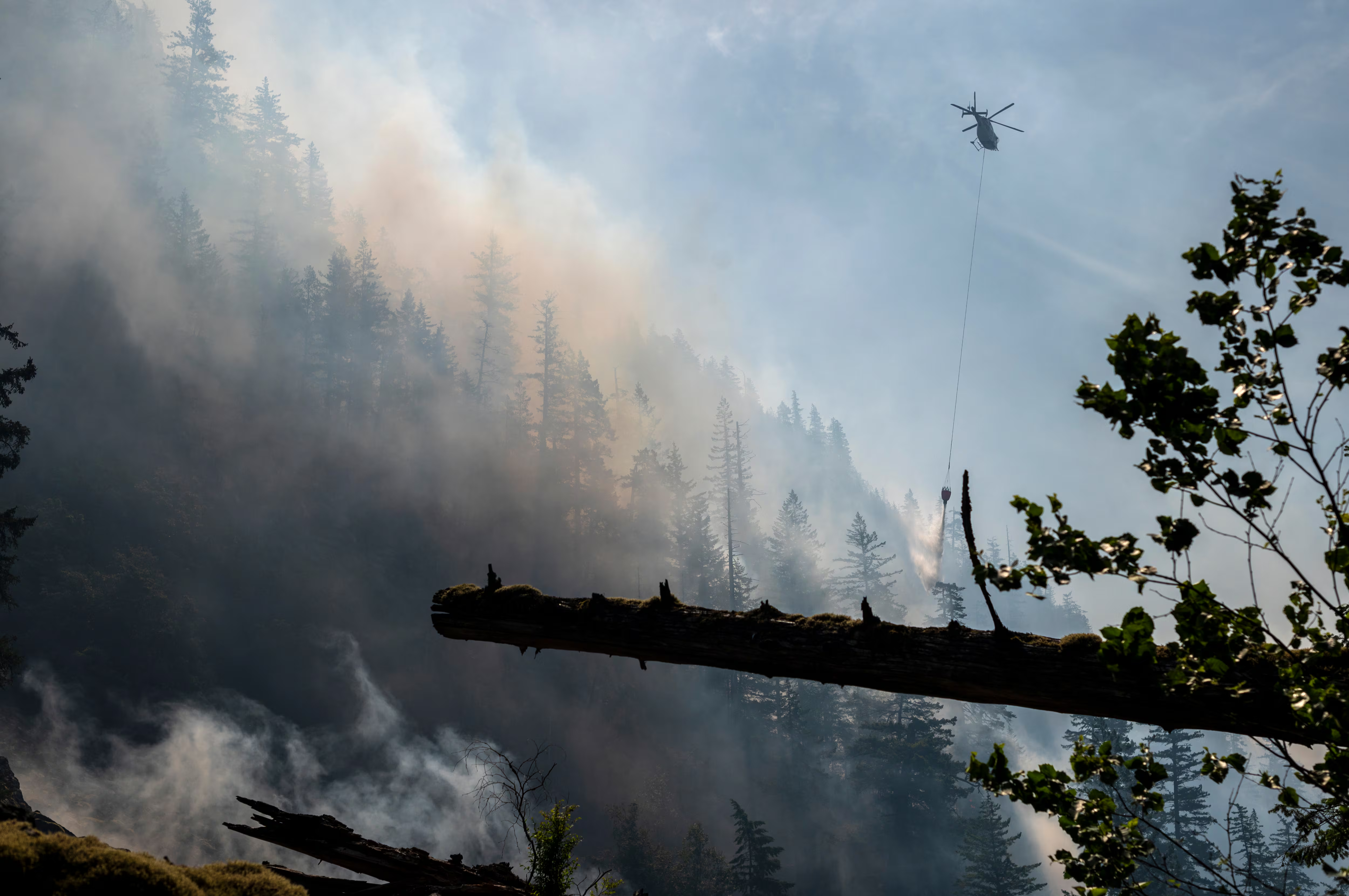
Canada's wildland firefighters are heading into another potentially devastating fire season with a fleet of aging water bombers, chronic staffing shortages, and growing concerns about operational readiness.
Last year's fire season ravaged nearly 8.9 million hectares across the country, displacing more than 75,000 people and testing the limits of provincial and federal response capacity. Natural Resources Canada is already forecasting above-average wildfire risk in southern Canada for May and June, signalling another demanding summer ahead.
A Global Shortage of Firefighting Assets
The challenge extends beyond Canada's borders. Kelsey Winter, executive director of the Canadian Interagency Forest Fire Centre (CIFFC), which coordinates wildfire resources across provinces, points to a critical bottleneck: aircraft availability.
"Aircrafts aren't just in demand in Canada, but globally. There's shortages," Winter explained.
Larger, more intense wildfires have increased reliance on aerial firefighting. The problem intensifies when multiple provinces burn simultaneously—a growing reality that leaves fewer resources to share between jurisdictions when they're needed most.
Provinces Scrambling to Upgrade Aging Fleets
Alberta is investing heavily to modernize its wildland firefighting capabilities. The province is spending $400 million to acquire five new water bombers and upgrade its aging fleet as wildfire risk continues to climb across Alberta. However, don't expect them anytime soon—the aircraft are expected to arrive around 2031.
Currently, Alberta operates four water bombers and has contracts for 19 additional aircraft for the 2026 wildfire season, plus four helitankers. Manitoba is similarly behind the curve, with only six active water bombers and one spare. The province committed $80 million for three additional water bombers, but those won't arrive until the 2031 and 2032 fire seasons.
Federally, the government is investing $316.7 million over five years through CIFFC to boost aerial firefighting capacity, with new aircraft expected by the 2026 wildfire season.
The Age Problem: Planes Built for Yesterday's Fires
John Gradek, a lecturer on aviation management at McGill University, argues provinces have waited too long to sound the alarm. Canada's catastrophic 2023 fire season, he says, should have triggered immediate action.
The current fleet of water bombers ranges from 15 to 40 years old. While these aircraft are structurally sound and built to last, age brings a costly consequence: parts fail more frequently, forcing planes into the shop when they're needed on the front lines.
Matthew Crawley, vice-president of corporate affairs for Babcock Canada, an aerospace and defence firm that maintains Manitoba's water bomber fleet, acknowledges that while older, well-maintained aircraft pose no safety risk, the upkeep is expensive—particularly due to increased inspection requirements as planes age.
The Human Cost: Finding and Keeping Firefighters
Beyond aircraft, Canada faces another crisis: staffing. Recruiting and retaining experienced wildland firefighting pilots remains a persistent challenge. The profession demands physical toll, risk, and long hours, yet compensation and safety protections haven't kept pace with the demands of an intensifying fire season.
As CIFFC prepares to release more details on federal funding in May, the message is clear: Canada's wildfire defence system is under strain, and the relief aircraft won't arrive in time for this summer's fire season.
This article is based on reporting by Sarah Mitchell for The Globe and Mail. Read the original story here.