


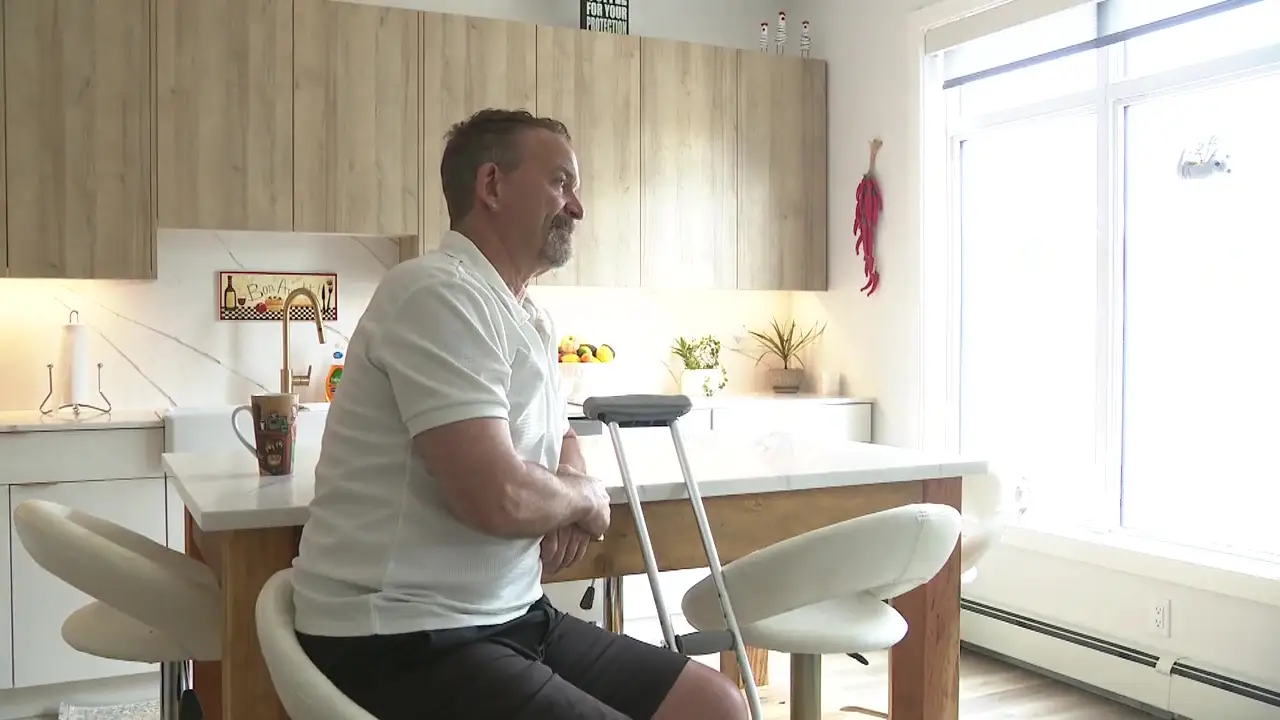
An Edmonton resident is raising alarm bells about Alberta's emergency response system after experiencing what he calls a harrowing situation: suffering severe bleeding from post-operative knee surgery and being directed to take a taxi to hospital instead of receiving an ambulance.
Bruce Tuchsen underwent knee replacement surgery on May 11. Days later, after returning home from visiting friends, he struck his knee against a nightstand—a seemingly minor collision that had catastrophic consequences. The surgical wound burst open, bleeding heavily.
"Tons of blood. It was really horrific. The knee literally exploded," Tuchsen told Global News.
When Tuchsen's partner dialled 911, dispatchers offered grim options: wait six hours for an ambulance, or accept a non-emergent assessment team that could arrive in about an hour. A third option was presented: take a taxi.
With his knee actively bleeding, Tuchsen wrapped the wound in towels and took a cab to the emergency department. He bypassed triage entirely and was seen immediately by a physician.
"What would have happened if I bled out in the cab?" Tuchsen asked.
Surgery Reveals Surgical Failure
The following morning, Tuchsen underwent emergency surgery. Doctors determined his incision had failed to heal properly, allowing pressure to build until the wound ruptured. The blood loss left him in shock.
Now recovered, Tuchsen is demanding answers: "I'd like to know where all the ambulance drivers were. Are we that short? If we're that short, let's change that."
A Strained System Under Pressure
Dr. Raj Sherman, an Edmonton emergency room physician who has been vocal about Alberta's healthcare challenges, says Tuchsen's situation illustrates a larger crisis.
"As a result, your waiting room's packed with sick people whose care is delayed, and the whole EMS fleet ends up stuck in emergency, because they can't just put people on the floor and leave," Sherman explained.
Alberta has used alternative transportation options—including taxis—for non-emergent cases since December 2022 as a measure to reduce pressure on ambulance services.
How the System Defends Its Decision
ALTA Paramedic Health defended the practice in a statement, saying alternative transportation is only offered when patients are assessed as low acuity, stable, and not requiring paramedic care or stretcher transport.
The agency noted that a shared response system launched in 2023 redirects some 911 callers to Health Link 811 for assessment and appropriate care pathways. In a recent seven-day reporting period, more than 900 low-acuity events were assessed, with many directed to alternative care. Of 150 alternative transport outcomes, 65 involved taxi transportation.
However, Tuchsen's case raises the critical question: how accurate are those initial acuity assessments made over the phone by dispatchers who cannot see the actual wound or assess the true severity of active bleeding?
For Calgary and Alberta residents relying on EMS services, the implications are sobering. As the province grapples with ambulance availability and emergency department overcrowding, the stakes for patients in genuine distress have never been higher.
This article is based on reporting by Global News.