


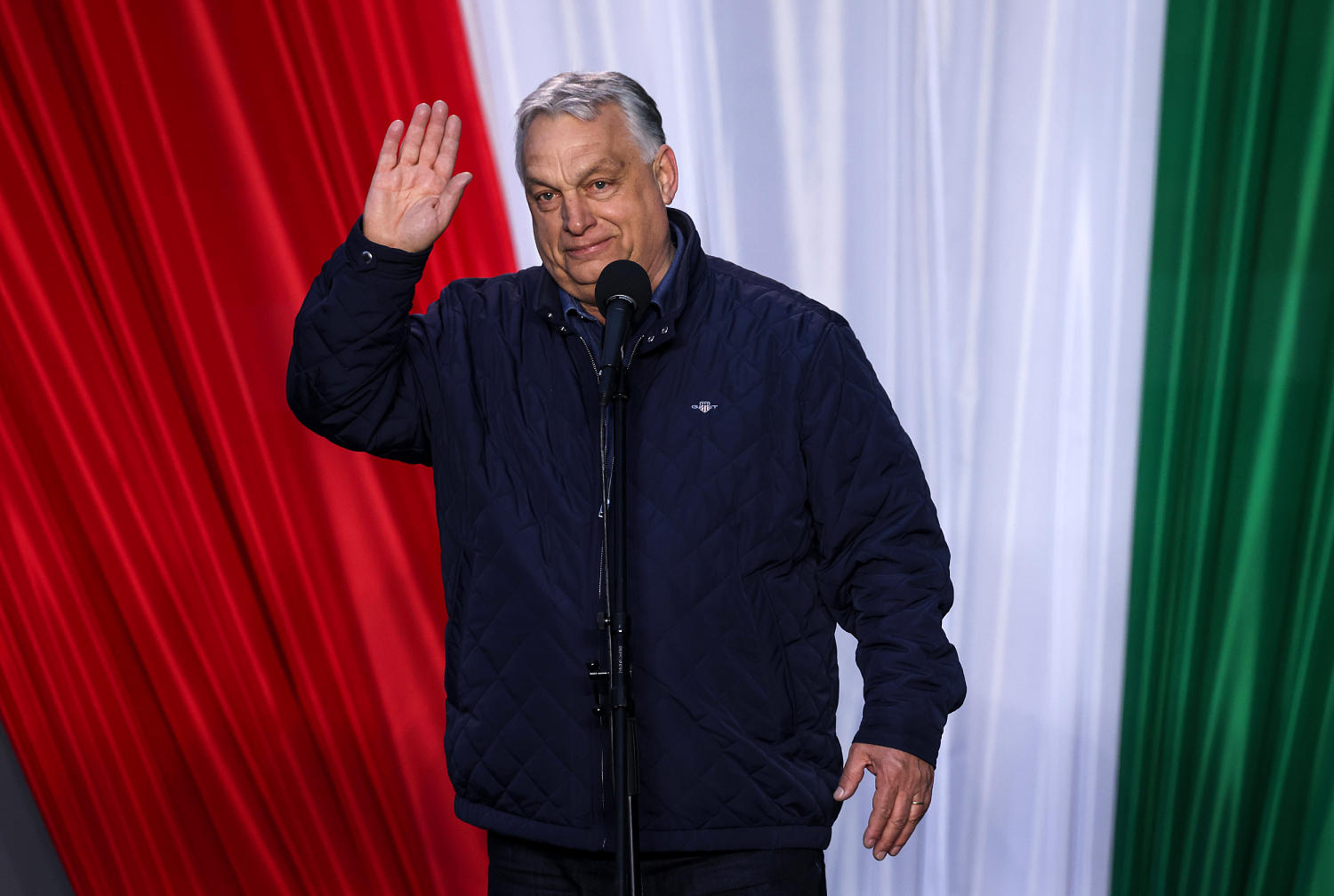
Viktor Orbán, Europe's longest-serving authoritarian leader, is bracing for his most serious political challenge in over a decade as Hungarians prepare to vote Sunday in a parliamentary election that could reshape the nation's political future and its relationship with the Western alliance.
The stakes have never been higher for Orbán, who has maintained an iron grip on Hungary's government since 2010 through four consecutive electoral victories. This time, however, polling data suggests his grip may finally be slipping.
Most independent surveys show Orbán's Fidesz party trailing Peter Magyar's Tisza party—a centrist political movement led by a former Orbán ally who has become the incumbent's most formidable challenger. A Publicus poll released Friday indicated Tisza commanding 52 per cent support among decided voters, compared to Fidesz at 39 per cent, though roughly one-quarter of the Hungarian electorate remains undecided.
The tightening race has drawn international attention. Vice President JD Vance arrived in Budapest this week to campaign on Orbán's behalf, while Russian President Vladimir Putin has also publicly voiced his support for the Hungarian leader—underscoring the geopolitical dimensions of Sunday's vote.
A Referendum on Hungary's Direction
Magyar has framed the election as far more than a simple change of government. Speaking to supporters at a rally Friday, he called it a "referendum" on Hungary's fundamental place in the world.
"We do not want a simple change of government, but a real regime change," Magyar told the crowd, signalling his intention to chart a starkly different course from Orbán's policies.
The choice voters face is stark: Orbán's self-described "illiberal" governance model, which has included gradual consolidation of control over the judiciary and media, versus Magyar's pledge to reintegrate Hungary more fully with European Union institutions and Western democratic norms.
Magyar, while not a traditional liberal, has positioned himself as a moderate conservative who taps into widespread Hungarian frustration over rising living costs, endemic corruption, and deteriorating public services—grievances that have accumulated throughout Orbán's long tenure.
Russia, Ukraine, and Hungary's Future
Orbán's campaign strategy has centred heavily on Hungary's relationship with Russia and the ongoing war in Ukraine. The Hungarian leader has consistently opposed European Union sanctions on Russia and has frequently stood alone among E.U. leadership in advocating warmer ties with Moscow.
Recently, Orbán has intensified attacks on Ukrainian President Volodymyr Zelenskyy, accusing Ukraine of sabotaging a critical oil pipeline serving Hungary. His government has also seized cash shipments from Ukrainian banks, actions critics view as retaliatory measures aligned with Kremlin interests.
Orbán contends his position prioritizes Hungary's border security and energy independence, arguing the Ukraine conflict should be resolved swiftly rather than prolonged through further Western military support. Opposition figures counter that these policies primarily serve to appease his allies in the Kremlin rather than genuinely protect Hungarian interests.
Election Integrity Questions
International observers have raised concerns about the fairness of Hungary's electoral process. The Organization for Security and Co-operation in Europe warned last month that observers noted troubling blurring between state institutions and Orbán's ruling party's campaign apparatus. There are also concerns that emergency powers currently in effect could be misused during voting.
Adding to the uncertainty is Hungary's redrawn electoral map, which critics contend favours Orbán's party, alongside the eligibility of nearly half a million ethnic Hungarians living in neighbouring Romania and Serbia to vote in Sunday's election.
Government-aligned pollsters have painted a rosier picture for Orbán than independent surveys. The Alapjogokért Központ, a Christian-conservative think tank, released polling in late March showing Orbán ahead 50 per cent to 42 per cent—a substantial divergence from independent polling that underscores the polarized information environment Hungarians face.
A Defining Moment
Sunday's vote represents a potential turning point not only for Hungary but for the broader European political landscape. A Magyar victory would signal that even Orbán's sophisticated machinery of political control can be overcome when voter dissatisfaction reaches critical levels. An Orbán victory, conversely, would cement his status as Europe's most durable autocrat and potentially deepen Hungary's estrangement from Western democratic institutions.
This story is based on reporting from NBC News. Read the original article at NBC News.