


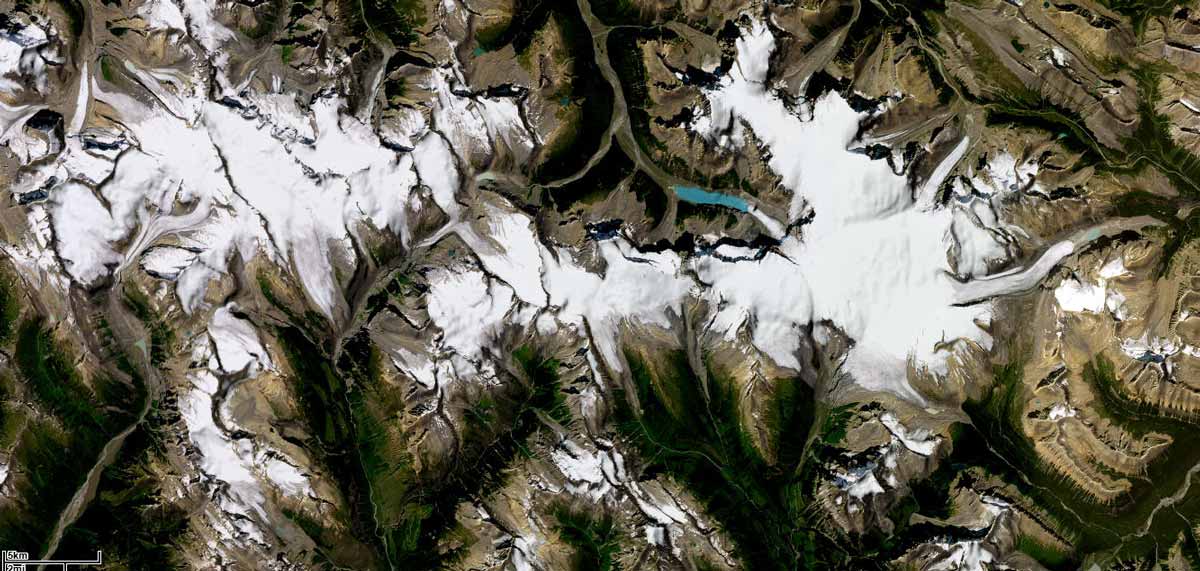
In a stunning discovery that could reshape understanding of Arctic glacier behaviour, Canadian researchers have identified 37 subglacial lakes hidden beneath the ice in Canada's Arctic region—with 35 of them never before documented.
The find represents a significant breakthrough in climate science, revealing a complex underground water system that flows beneath glaciers and directly impacts how quickly ice melts and sea levels rise globally.
A Hidden Water World Beneath the Ice
These subglacial lakes, mostly ranging from 0.3 to 15 square kilometres in size, form an interconnected network of water bodies that operate largely invisible to surface observers. What makes them particularly significant is their dynamic behaviour: while these lakes can take years to fill, they can drain completely in just months—sometimes dramatically shifting glacier surfaces by more than 100 metres in a single season.
"Understanding where water is beneath glaciers is really important in terms of understanding potential changes," said Wesley Van Wychen, an associate professor at the University of Waterloo and co-author of the study. "Will these lakes fill and drain more often as temperatures get warmer in the Canadian Arctic?"
The Climate Connection
The research team, which collaborated with scientists from Taiwan, Japan, and the United Kingdom, used high-resolution satellite imagery from the ArcticDEM initiative to detect the lakes by measuring changes in glacier surface elevation. This remote sensing technology allowed researchers to identify where water was accumulating and draining beneath the ice without direct physical access.
As climate change accelerates Arctic warming, these subglacial systems are becoming increasingly active. The water flowing through these hidden networks eventually reaches the ocean, potentially contributing to sea level rise—a critical concern for coastal communities worldwide.
Opening Doors for Future Research
Shawn Marshall, a research scientist at Environment and Climate Change Canada, noted that this discovery likely represents just the beginning. "More could be found in the coming years, given the hundreds of subglacial lakes already known in Greenland and Antarctica," Marshall said.
A research team from the University of Ottawa has already begun fieldwork at one of the newly identified lakes, taking direct measurements as it slowly fills with meltwater. This hands-on research promises to deepen understanding of how subglacial systems respond to warming temperatures.
The discovery addresses a critical gap in climate science: researchers have long struggled to account for all the meltwater leaving Arctic glaciers. Some water refreezes inside the ice, but much remains unaccounted for. Mapping these hidden lakes and their drainage patterns could help scientists more accurately predict sea level rise and improve climate projections for decades to come.
This article is based on reporting from CBC World.