


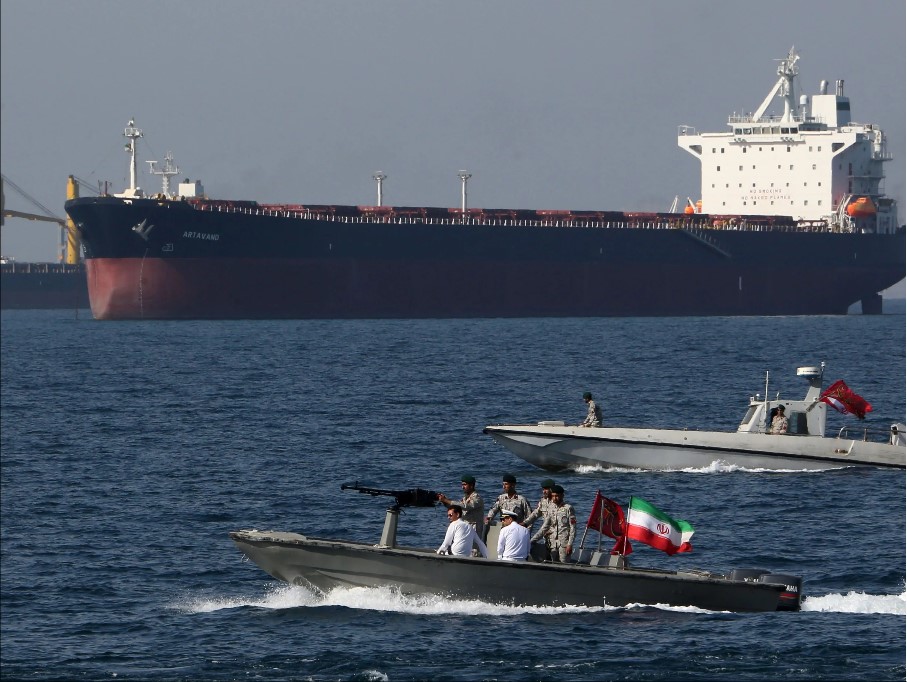
Tensions in the Middle East have dramatically escalated following the breakdown of high-level peace talks between the United States and Iran, with U.S. President Donald Trump announcing immediate military action to blockade one of the world's most strategically important waterways.
Trump declared on Sunday that the U.S. Navy would begin blockading the Strait of Hormuz, a critical chokepoint controlling approximately 20 per cent of global energy supplies. The announcement came after a weekend of intense negotiations in Islamabad, Pakistan failed to produce a deal ending six weeks of conflict that has claimed thousands of lives and destabilized global markets.
Blockade and Beyond
In posts on Truth Social, Trump outlined an aggressive maritime strategy, stating: "Effective immediately, the United States Navy, the Finest in the World, will begin the process of BLOCKADING any and all Ships trying to enter, or leave, the Strait of Hormuz."
The president also ordered the U.S. Navy to intercept vessels in international waters that have paid tolls to Iran and to destroy mines he claimed Iran had deployed in the strait. "Any Iranian who fires at us, or at peaceful vessels, will be BLOWN TO HELL!" Trump added.
Talks Collapse Over Nuclear Standoff
U.S. Vice-President JD Vance, who led the American delegation at the weekend talks, blamed Iran for the failure to reach agreement. "The bad news is that we have not reached an agreement, and I think that's bad news for Iran much more than it's bad news for the United States of America," Vance said.
Trump emphasized the core dispute: "There is only one thing that matters — IRAN IS UNWILLING TO GIVE UP ITS NUCLEAR AMBITIONS!"
Iran's parliamentary Speaker Mohammad Bagher Ghalibaf, who headed Tehran's delegation alongside Foreign Affairs Minister Abbas Araghchi, offered a different perspective. He accused the U.S. of failing to earn Iran's trust despite his team presenting "forward-looking initiatives."
"The U.S. has understood Iran's logic and principles and it's time for them to decide whether they can earn our trust or not," Ghalibaf stated on social media.
Critical Moment for Fragile Ceasefire
The collapsed negotiations represent a critical setback for regional stability. The talks, the first direct U.S.-Iranian discussions in over a decade and the highest-level meetings since the 1979 Islamic Revolution, came after a fragile two-week ceasefire was brokered earlier this week. That ceasefire now faces jeopardy following the failed talks.
Iran's semi-official Tasnim news agency suggested "excessive" American demands had prevented a deal. Both sides appeared to have found common ground on some issues, but disagreements over the Strait of Hormuz and Iran's nuclear program proved insurmountable.
Pakistan's Foreign Affairs Minister Ishaq Dar called the situation urgent, stating it was "imperative" to preserve the ceasefire as the sides attempt to wind down conflict that began on February 28 when the U.S. and Israel launched attacks on Iranian targets.
Global Economic Implications
The blockade threat sends shockwaves through global energy markets. The Strait of Hormuz handles roughly one-fifth of the world's oil supply, making it vital to international commerce. Any prolonged disruption could trigger widespread economic consequences for nations dependent on Middle Eastern energy resources, including Canada.
This article is based on reporting from CBC World.