


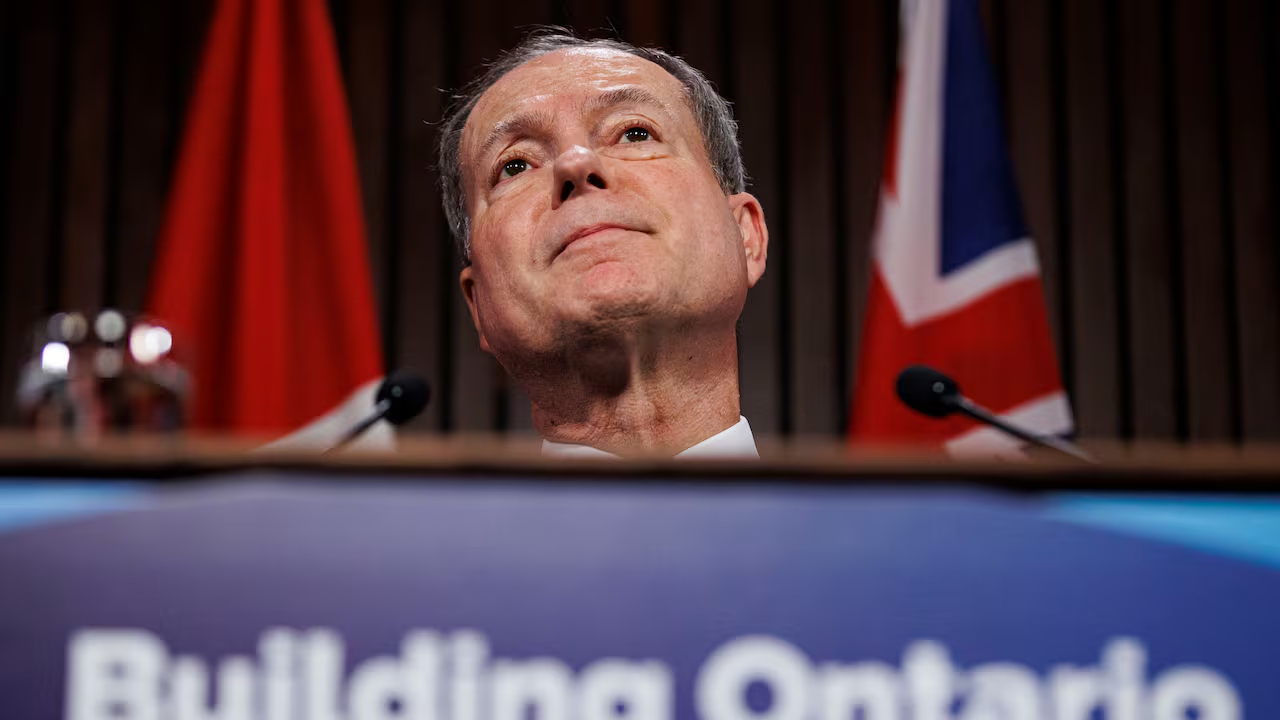
Ontario's Progressive Conservative government is facing mounting criticism over its failure to deliver fresh affordability measures in its latest budget, even as residents across the province struggle with skyrocketing housing, food, and energy costs.
Just weeks after tabling the 2026 spending plan, Finance Minister Peter Bethlenfalvy has found himself on the defensive as opposition leaders and anti-poverty advocates question why the government is holding back on direct cost-of-living relief when Ontarians need it most.
Budget Falls Short on Real Relief, Critics Say
While Bethlenfalvy acknowledged on budget day that Ontarians are being hammered by rising costs stemming from U.S. tariffs, global economic uncertainty, and international conflicts, his defence of the spending plan rang hollow to many observers.
The Finance Minister pointed to a limited HST cut for new home buyers and previously announced policies—some dating back years—as evidence the government is tackling affordability. But for opposition politicians and advocacy groups, these measures simply don't go far enough or arrive quickly enough.
"Ontarians want to know that their government is going to lower their rent and their grocery costs. None of that was in the 2026 budget, life is harder and more expensive for almost every Ontarian,"said NDP Leader Marit Stiles, capturing the frustration felt across the political spectrum.
Liberal Parliamentary Leader John Fraser was more pointed in his criticism, describing the government as "tired and out of ideas" and demanding urgent action on home heating costs and rising unemployment.
Gas Tax Cuts from 2022 Don't Cut It
Bethlenfalvy has repeatedly cited the provincial gas tax cut of 5.7 cents per litre introduced in 2022—and made permanent last year—as proof the government moved early on affordability. He also highlighted the removal of tolls from Highway 407 East in Durham Region.
But critics argue these measures, while helpful, pale in comparison to the scale of the affordability crisis facing average Ontarians today. Grocery bills, rent, and utilities continue climbing at rates that far outpace wage growth, leaving families across the province choosing between paying rent and buying groceries.
Rent Control Emerges as Key Battleground
Tenant advocates and anti-poverty organizations have zeroed in on housing as the most pressing issue the budget failed to address. Craig Pickthorne, communications director for the Ontario Living Wage Network, said rent control reform should be a priority—and doesn't need to wait for the next budget cycle.
"Rent control would be the single biggest thing that anybody could do to impact affordability in Ontario,"Pickthorne said, noting that while first-time home buyer incentives are welcome, renters—often the most vulnerable—were left out in the cold.
Dania Majid, a lawyer with the Advocacy Centre for Tenants Ontario, emphasized that providing security for those at risk of eviction would be a tangible step toward addressing the broader cost-of-living crisis.
The Pressure Builds
As spring unfolds and families face mounting bills heading into summer and beyond, the political pressure on Queen's Park shows no signs of easing. With opposition parties calling for immediate action and grassroots advocates demanding real solutions, the Ford government faces a credibility test on whether it can deliver meaningful relief before the next election cycle.
---
This article is based on reporting from CBC News. Read the original story at CBC News.