


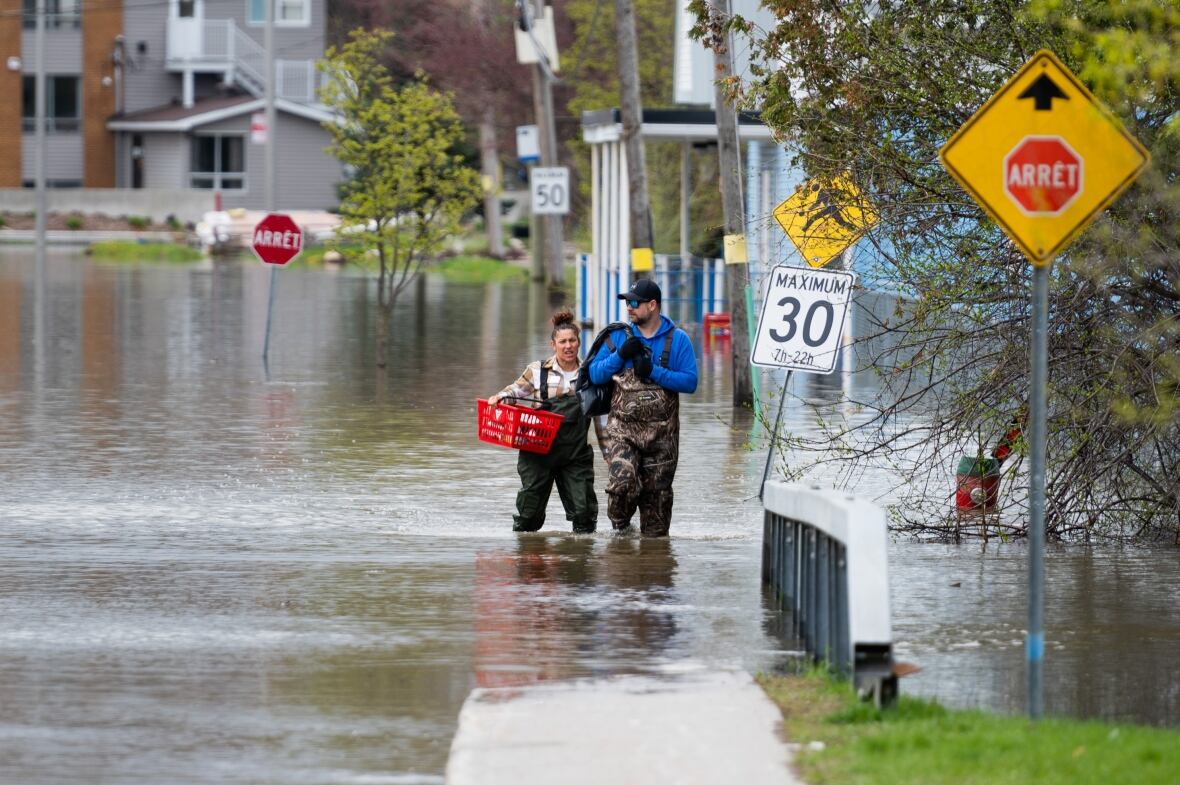
Canada's Federal Emergency Management Minister Eleanor Olszewski has delivered disappointing news for homeowners in flood-prone regions: the long-promised National Flood Insurance Program won't arrive anytime soon.
Speaking to reporters on Parliament Hill this week amid widespread flood warnings across the country, Olszewski acknowledged the government cannot commit to launching the program "in the near future." The admission represents another setback for a initiative first pledged by former Prime Minister Justin Trudeau during the 2019 federal election campaign.
"It's an incredibly complicated discussion and a complicated thing to put in place for Canadians, especially to determine the most viable structure for such an insurance program," Olszewski stated. "But absolutely, it's top of mind for us."
Years of Delays and Broken Deadlines
The timeline tells a frustrating story for Canadians waiting for relief. The federal government didn't begin serious work on the program until 2023—nearly four years after the election promise. By 2024, Ottawa had committed to implementation by the end of 2025, a deadline that now appears abandoned.
The stakes are significant. According to a 2022 report by Canada's Task Force on Flood Insurance and Relocation, residential flooding costs the nation an estimated $2.97 billion annually in combined insured and uninsured losses. Shockingly, the top 10 per cent of highest-risk homes account for nearly 90 per cent of all flooding losses.
The Insurance Industry Points Fingers
Olszewski indicated the government is in ongoing discussions with the Insurance Bureau of Canada, but hasn't detailed what specific obstacles are blocking progress.
Liam McGuinty, vice-president of federal affairs at the Insurance Bureau of Canada, suggested the private sector has already stepped in to fill gaps. "When the notion of a program was first discussed, overland flood insurance barely existed in Canada. Today, the coverage gap is far narrower and concentrated in a relatively small number of extremely high-risk properties, often homes built in known flood-prone areas," McGuinty said in a statement.
McGuinty warned that any federal program risks disrupting the private insurance market, which has already expanded coverage significantly in recent years. The challenge, he suggested, is designing a program that addresses legitimate gaps without distorting market competition.
Experts Warn of Long-Term Subsidies
Ryan Ness, research director on adaptation at the Climate Institute of Canada, raised another concern: federal subsidies could inadvertently encourage permanent settlement in dangerous flood zones.
"This kind of strategy, it's not intended to simply subsidize homes built in risky places forever," Ness told The Canadian Press, suggesting any program must include an exit strategy.
For Canadians in flood-vulnerable communities across Alberta, Ontario, British Columbia, and beyond, the message is clear: don't expect federal help anytime soon. As spring flooding threatens communities from coast to coast, families remain dependent on private insurance or out-of-pocket disaster costs.
This article is based on reporting from CBC Politics and The Canadian Press.