


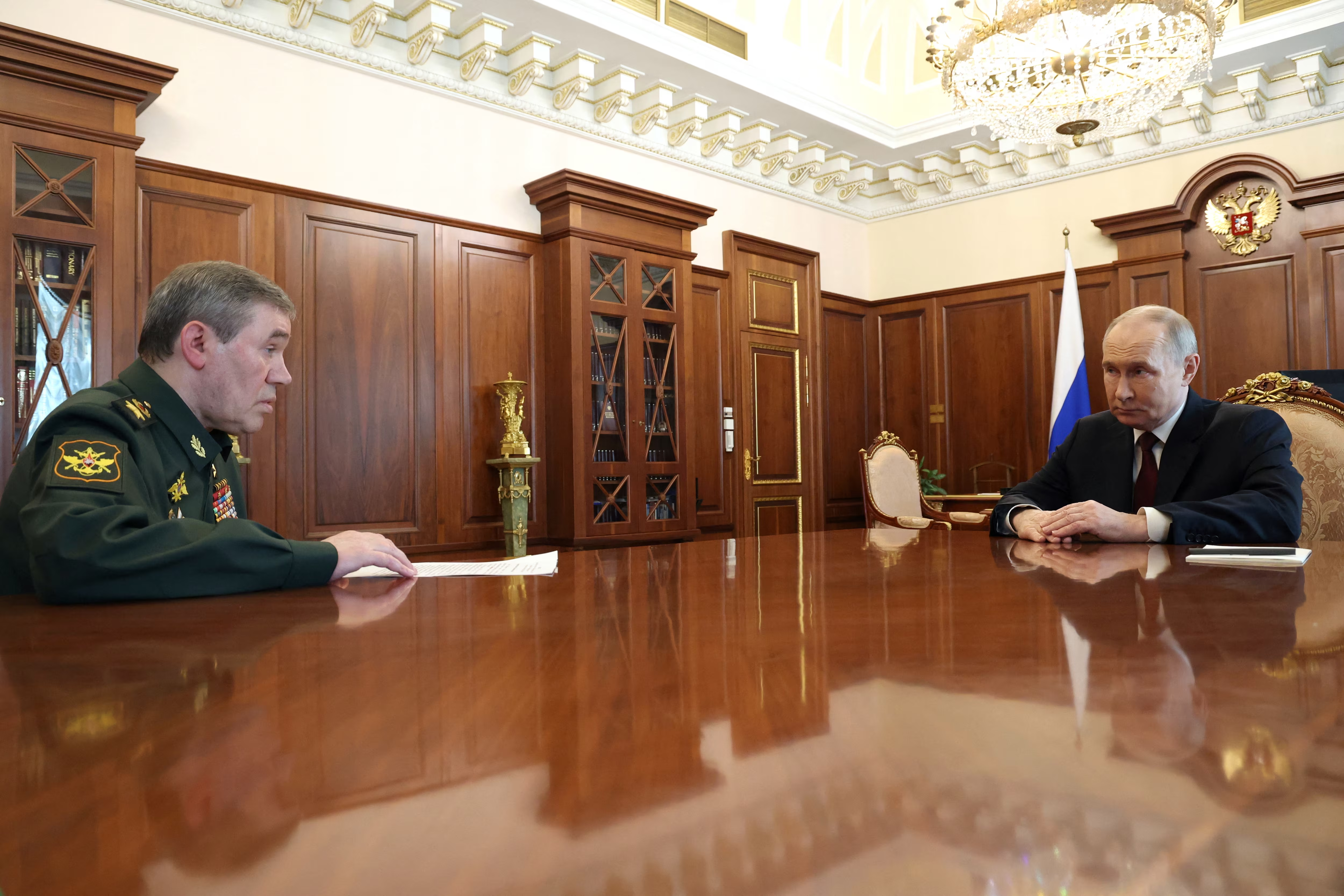
Russian President Vladimir Putin has announced a 32-hour ceasefire over the Orthodox Easter weekend, marking a rare pause in the brutal conflict that has defined Eastern Europe for nearly five years.
The Kremlin's decree, issued Thursday, orders Russian forces to cease hostilities beginning at 4 p.m. Saturday through the end of Sunday—a period that coincides with one of Christianity's most sacred observances.
The move follows Ukrainian President Volodymyr Zelenskyy's earlier proposal for a mutual pause in fighting during the holiday period. Zelenskyy had suggested both sides refrain from targeting energy infrastructure, a critical concern after months of sustained Russian attacks on Ukrainian power facilities.
A Glimmer of Hope?
In a statement posted to social media, Zelenskyy expressed cautious optimism about the ceasefire announcement. "Ukraine has repeatedly stated that we are ready for symmetrical steps," he said, adding that "people need an Easter free from threats and real movement toward peace."
The Ukrainian leader also extended an olive branch to Moscow, suggesting that Russia could choose "not to return to strikes after Easter as well"—a plea for the pause to extend beyond the holiday weekend into a broader commitment to negotiations.
The Kremlin's statement emphasized that Russian forces have been ordered to "cease hostilities in all directions" while remaining "prepared to counter any possible provocations by the enemy."
Skepticism Rooted in History
However, previous ceasefire attempts offer little reason for optimism. Last Easter, Putin announced a similar 30-hour ceasefire that both sides accused each other of violating almost immediately. The pattern reflects the deep mistrust characterizing the conflict, with neither side willing to risk vulnerability.
The broader peace talks mediated by the United States have stalled on fundamental issues. Moscow has rejected proposals for a 30-day unconditional truce, instead demanding a comprehensive settlement that addresses its territorial and political demands—conditions Ukraine has shown little willingness to accept.
With roughly 1,250 kilometres of front line remaining contested and military operations entrenched across multiple regions, the ceasefire represents a symbolic gesture rather than a harbinger of broader peace.
International Attention Elsewhere
The conflict's trajectory has become increasingly obscured by competing international crises. U.S.-led mediation efforts have shifted focus toward the Middle East, leaving the Russian and Ukrainian armies locked in what appears to be a grinding war of attrition.
Whether this Easter pause translates into meaningful dialogue or merely provides brief respite before renewed fighting remains uncertain. For millions of Ukrainians caught in the war zone, even a 32-hour break from bombardment represents a rare opportunity for relief and reflection during their most important religious holiday.
This article is based on reporting from CBC World.