


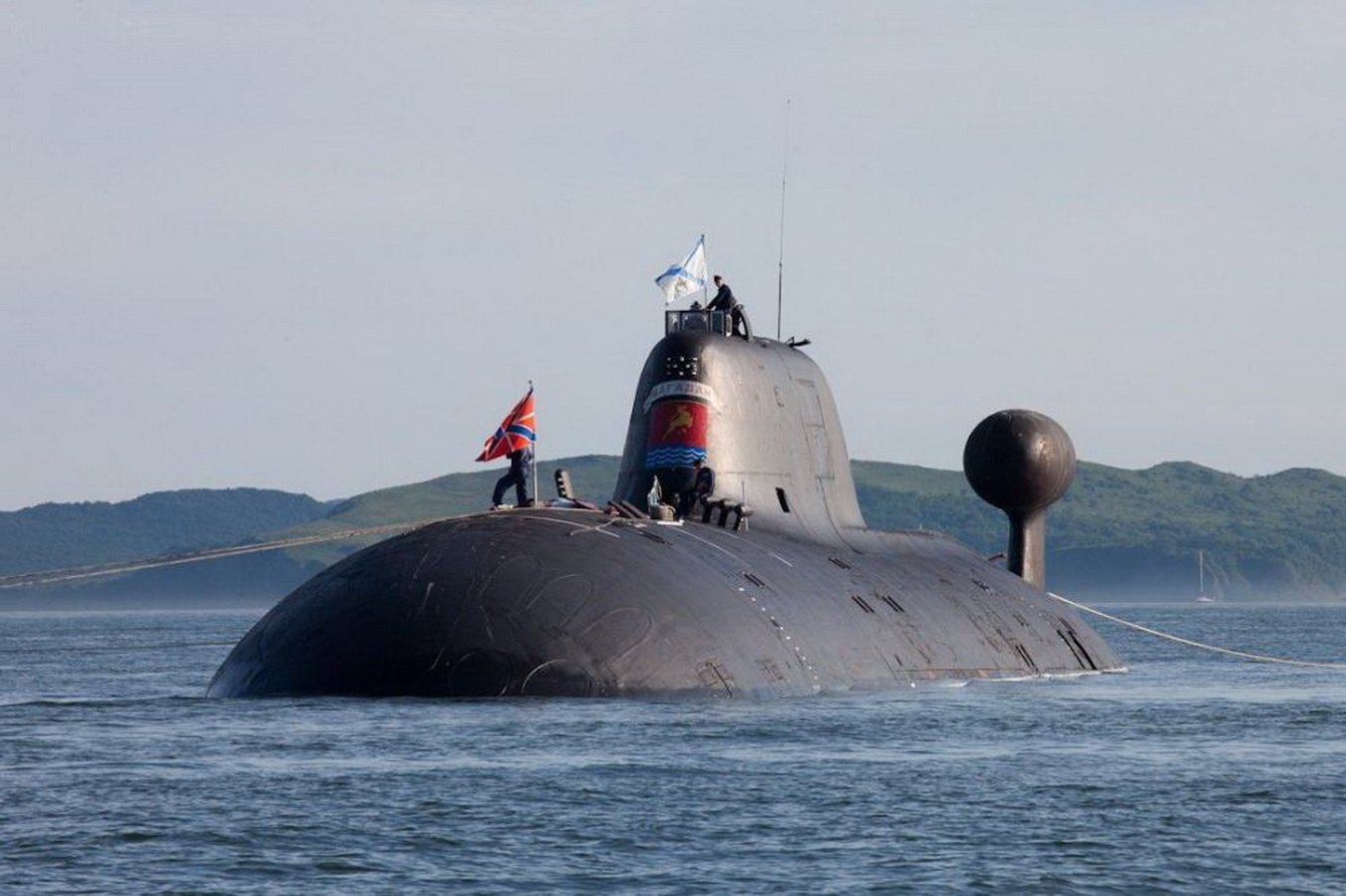
Britain has deployed military vessels to intercept Russian submarines operating near critical undersea infrastructure in a bold show of force that highlights escalating tensions in Northern Atlantic waters.
Defence Minister John Healey announced Thursday that British forces—working alongside Norwegian allies—successfully tracked and deterred Russian submarine activity that lasted more than a month in and around British territorial zones earlier this year.
"To President Putin, I say 'We see you. We see your activity over our cables and our pipelines, and you should know that any attempt to damage them will not be tolerated and will have serious consequences,'" Healey declared at a public news conference, making the normally classified operation public to send a direct message to the Kremlin.
Strategic Location, Critical Infrastructure at Risk
The High North maritime region—where the Russian submarines were detected—serves as a vital corridor for global shipping and houses essential undersea cables that carry internet and telecommunications traffic connecting North America, Europe, and beyond. Damage to these cables could cripple international communications and economic activity.
Britain accused Russia of timing the covert operation to coincide with Middle East distractions, attempting to shield the mission from international scrutiny. The operation involved one Akula-class attack submarine and two specialized deep-sea research vessels from Russia's Main Directorate for Deep-Sea Research (GUGI).
"They are designed to survey underwater infrastructure during peacetime, and sabotage it in conflict," Healey explained, underscoring the strategic nature of the threat.
Allied Response Sends Clear Signal
Upon detecting the Russian vessels crossing into international waters, Britain dispatched a frigate, a support tanker, and a maritime patrol aircraft to monitor every movement. Norway's defence ministry deployed additional assets, including a P-8 maritime patrol aircraft and frigate, demonstrating unified NATO resolve.
Healey confirmed that Russian submarines never penetrated Britain's territorial waters but operated within the nation's Exclusive Economic Zone and the waters of allied partners. No damage to underwater infrastructure has been detected.
"Our armed forces left them in no doubt that they were being monitored, that their movements were not covert, as President Putin planned, and that their attempted secret operation had been exposed," the Defence Minister stated.
Moscow Denies Allegations
Russia's embassy in London quickly dismissed the claims as unverifiable. "Russia does not threaten undersea infrastructure, which is of critical importance to the UK. Nor do we employ aggressive rhetoric in this regard," a diplomatic statement read.
Moscow has consistently denied involvement in a series of undersea cable incidents across Europe in recent years, though intelligence agencies across NATO maintain strong suspicions of Russian involvement in multiple sabotage incidents.
The public revelation of the operation represents an unusual escalation in transparency, signalling Britain's determination to deter future Russian interference with critical infrastructure that underpins modern society.
This report is based on information from CBC World.