


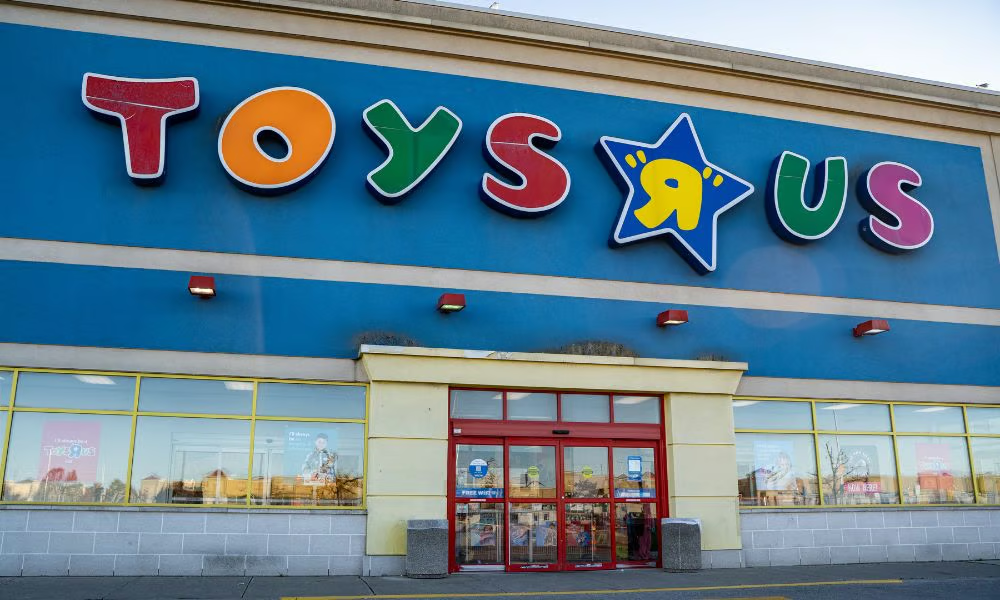
Toys R Us Canada is facing another significant legal challenge as commercial landlords file fresh lawsuits seeking millions in unpaid rent, highlighting the continued struggles facing traditional brick-and-mortar retailers in the post-pandemic landscape.
Court documents filed in Ontario Superior Court on Thursday show that property management company Cadillac Fairview is seeking approximately $2.8 million in unpaid rent from multiple Toys R Us locations across the Greater Toronto Area, including flagship stores in major shopping centres.
The lawsuit represents the latest in a series of financial challenges for the iconic toy retailer, which has been grappling with declining foot traffic, increased competition from online retailers, and shifting consumer purchasing patterns that accelerated during the COVID-19 pandemic.
"This is unfortunately becoming a common story in retail," said retail analyst Jennifer Morrison from Toronto-based consulting firm Retail Insights Canada. "Traditional toy stores are particularly vulnerable because so much toy purchasing has moved online, and parents are increasingly comfortable buying toys through e-commerce platforms."
The legal action affects at least seven Toys R Us locations in Ontario, with landlords arguing that the retailer has fallen behind on rent payments dating back to late 2025. Property owners are seeking immediate payment of outstanding amounts plus interest and legal costs.
Toys R Us Canada, which operates as a separate entity from its former U.S. parent company, has not responded to requests for comment regarding the lawsuit. The Canadian division has approximately 80 stores nationwide and employs roughly 3,000 workers across the country.
Industry experts note that the toy retail sector has faced particular pressure as major competitors like Amazon, Walmart, and Costco have expanded their toy selections while offering competitive pricing and convenient delivery options. Traditional toy stores have struggled to compete with the convenience and often lower prices offered by these retail giants.
The timing of the lawsuit is particularly challenging as it comes during the traditionally slower spring retail period, following the crucial holiday shopping season that typically generates a significant portion of annual toy sales.
"Rent obligations remain one of the biggest fixed costs for retailers, and when sales decline, these payments become increasingly difficult to manage," Morrison explained. "We're seeing this pattern across multiple retail sectors, not just toys."
The legal proceedings could potentially impact job security for hundreds of employees at affected locations, as store closures often follow prolonged rent disputes. Union representatives have expressed concern about potential layoffs if the company cannot resolve its financial obligations.
Local shopping centre operators are also watching the situation closely, as the loss of major anchor tenants like Toys R Us can impact overall mall traffic and the viability of other retailers within the same complexes.
The case is scheduled for initial hearings in early April, with both parties expected to explore potential settlement negotiations before proceeding to full litigation.