


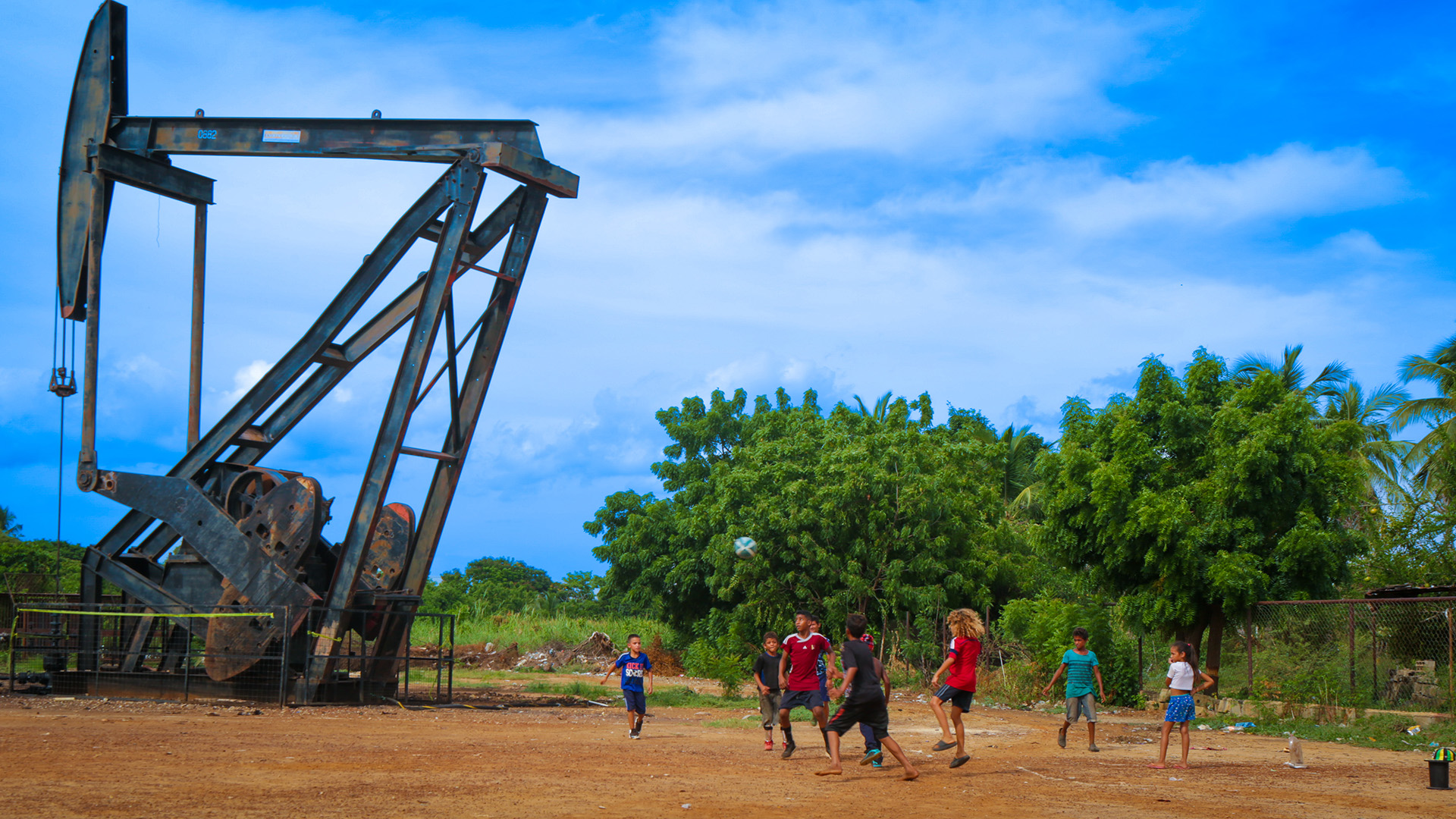
Nearly three months after the fall of former Venezuelan president Nicolás Maduro, the Trump administration is mounting an aggressive push to draw American oil and gas companies into Venezuela's long-neglected energy sector — and so far, the industry response has been lukewarm at best.
U.S. Interior Secretary Doug Burgum travelled to Venezuela last month alongside oil and mining executives in what was described as a fact-finding and pitch trip, aimed at showcasing the investment potential in the South American nation's deteriorating oilfields. Then, last week in Houston at S&P Global's CERAWeek energy conference — one of the most influential gatherings in the global energy industry — Burgum returned to the podium to press the case again.
He used the word "opportunity" three times in his remarks about Venezuela.
"The resources there are quite amazing," Burgum told the assembled executives.
U.S. Energy Secretary Chris Wright echoed the enthusiasm, telling conference attendees that Venezuela's interim government and the Trump administration are well "aligned" on the goal of boosting Venezuelan oil production.
But the energy sector, accustomed to weighing risk against reward with hard-nosed precision, does not appear to be rushing in.
A Giant Sitting Idle
Venezuela holds what are widely considered to be the largest proven crude oil reserves on the planet. Yet the country pumped just 900,000 barrels per day last year — a shadow of the 3.7 million barrels per day it produced at its peak in 1970. Decades of mismanagement under the Maduro government, compounded by sweeping international sanctions, have left the country's oil infrastructure in a state of severe disrepair.
According to energy research firm Rystad Energy, restoring Venezuelan production to three million barrels per day would require approximately $183 billion US in capital investment between 2026 and 2040 — a staggering sum that underscores why investors remain wary.
In January, U.S. President Donald Trump hosted the chief executives of America's largest oil companies at the White House, reportedly asking them to commit at least $100 billion US to grow Venezuelan output as part of a broader strategy to push global energy prices lower.
Expectations Outpacing Reality
Luis A. Pacheco, a visiting fellow at the Baker Institute in Texas and a former senior Venezuelan energy executive, says the Trump administration's moves have generated excitement — but little tangible progress.
"The actions of the Trump administration did trigger a large expectation that has not been fulfilled as of today," Pacheco said. "We're not as close as we would like."
Safety concerns, political instability, and the sheer scale of infrastructure investment required continue to give pause to companies that might otherwise consider entry. While some firms already operating in Venezuela are weighing whether to expand their footprint, a broad wave of new American investment has yet to materialise.
Heavy Oil, Heavy Challenges
Venezuela's oil reserves come with an additional complication: the crude is among the heaviest and most difficult to extract and refine in the world. Unlike the light sweet crude found in places like West Texas or western Canada, Venezuelan oil requires specialised upgrading technology and significantly higher processing costs — factors that further dampen the financial case for large-scale investment without a stable regulatory and security environment in place.
For Alberta's energy industry, which competes in global markets with its own oil sands heavy crude, the prospect of a revitalised Venezuelan sector is worth watching. A significant increase in Venezuelan output could add downward pressure on global oil prices, affecting Alberta producers and royalty revenues for years to come.
Source: CBC World / Kyle Bakx, CBC News. This article is based on reporting originally published by CBC News.